In modern automated manufacturing, particularly within the automotive, aerospace, and heavy machinery sectors, achieving consistent, high-quality welds is paramount. This demand has driven the development and adoption of laser weld seam sensors, sophisticated devices that guide welding robots by precisely locating and tracking the joint before and during the welding process. Unlike traditional tactile or through-arc sensing, laser sensors offer non-contact, high-speed, and highly accurate measurement, significantly improving weld integrity and production efficiency. The core principle involves projecting a laser line or pattern onto the workpiece surface. A camera or photodetector then captures the distorted reflection of this pattern. By analyzing this deformation, the sensor's controller can calculate the exact profile, position, gap, and mismatch of the seam in three dimensions. This real-time data is fed to the robot controller, allowing for dynamic path correction and parameter adjustment.
The market offers several distinct types of laser weld seam sensors, each with unique operating principles and optimal applications. Understanding these categories is crucial for selecting the right tool for a specific welding task.
The most prevalent type is the Laser Triangulation Sensor. This system is based on simple geometric triangulation. A laser diode projects a visible or infrared point or line onto the target surface. A lens in a camera, positioned at a known angle relative to the laser emitter, focuses the reflected light onto a CCD or CMOS imaging sensor. As the distance to the object changes, the position of the laser spot or line on the camera's sensor shifts. This shift is precisely measured to calculate the height or depth profile of the seam. Line laser variants project a full line, creating a 2D cross-sectional profile of the joint with a single capture, making them excellent for tracking butt joints, lap joints, and fillet welds. They are robust, relatively cost-effective, and suitable for a wide range of materials, though highly reflective or dark surfaces can sometimes pose challenges.
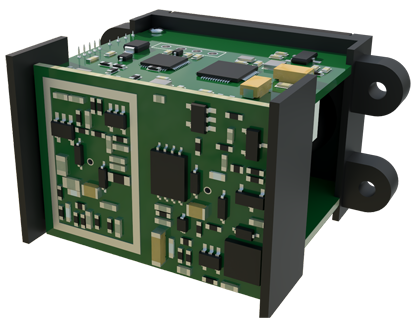
For applications requiring extreme precision and detailed surface characterization, Confocal Chromatic Sensors are employed. These sensors use a white light source where different wavelengths are focused at different distances from the sensor. A spectrometer analyzes the reflected light, and the specific wavelength that is perfectly focused on the surface is identified. This wavelength corresponds directly to a precise distance measurement. Their key advantage is an exceptionally small, focused measurement spot, allowing them to detect very fine seam gaps, small root openings, and subtle surface topography changes with nanometer-level resolution. They are often used in micro-welding, precision electronics, and for welding thin or delicate materials where seam fit-up is critical.
Another advanced category is the Structured Light Projection Sensor. This system projects a complex pattern, such as a grid or multiple parallel lines, onto the workpiece. One or more cameras capture the deformation of this pattern. Using sophisticated algorithms and often principles of phase-shift or Fourier transform analysis, the system reconstructs a detailed 3D map of the surface. This provides a rich dataset not just of the seam path, but also of the surrounding area's geometry. This technology is highly effective for scanning complex, three-dimensional joints, such as those found in tailor-welded blanks or intricate aerospace components, where understanding the global shape is as important as tracking the local seam.
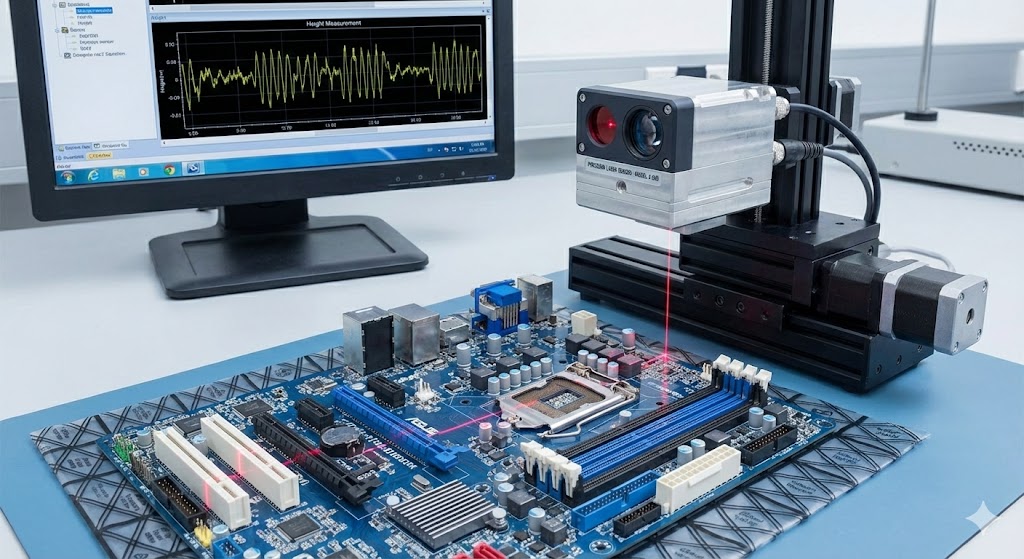
A critical distinction lies between pre-process sensing and real-time process sensing. Pre-process or "seam finding" sensors scan the joint before the arc is ignited. They create a detailed map of the seam's entire length, which the robot then follows. This is ideal for programmed welding where the path is known but part placement may vary. Real-time or "through-the-arc" sensing using lasers, however, operates concurrently with the welding arc. These systems must filter out the intense light from the arc and weld pool, often using specific spectral filters and synchronized pulsed lasers. They provide live feedback for adaptive welding, compensating for thermal distortion, gap variation, and other dynamic changes during the weld itself.
Selecting the appropriate laser weld seam sensor depends on multiple factors. Application requirements are primary: joint type (butt, lap, fillet, V-groove), required accuracy (microns vs. millimeters), welding speed, and material surface condition (reflectivity, color, roughness). Environmental robustness is vital; sensors in welding cells must be protected from spatter, dust, and electromagnetic interference with appropriate air-purge housings and cooling jackets. Integration capability with the existing robot controller and welding power source is a practical necessity, often dictated by communication protocols like Ethernet/IP or PROFINET. Finally, ease of calibration and programming impacts setup time and long-term usability.
The implementation of laser seam tracking brings substantial benefits. It dramatically reduces the need for costly, time-consuming fixture precision, as the robot can adapt to part variances. This leads to a significant decrease in scrap and rework by preventing weld defects like lack of penetration or misalignment. Overall equipment effectiveness (OEE) increases due to fewer stoppages and higher first-pass yield. Furthermore, it enables the automation of welding tasks that were previously too variable for a blind robot, expanding the scope of automated manufacturing.
In conclusion, laser weld seam sensors are not a monolithic technology but a family of solutions including triangulation, confocal, and structured light types. Their non-contact, precise measurement capabilities form the cornerstone of adaptive robotic welding. As welding processes evolve towards greater complexity and quality demands, and as sensor technology becomes more robust and intelligent, their role will only become more central to achieving the goals of Industry 4.0—flexible, efficient, and zero-defect production.