In the realm of industrial automation and smart devices, the Proximity Sensor F stands as a pivotal component, enabling machines to perceive their environment without physical contact. This sophisticated device operates on the principle of detecting the presence or absence of an object within a specified range, triggering an electrical signal for further processing. Unlike mechanical switches, Proximity Sensor F offers unparalleled reliability, high-speed response, and longevity, as it eliminates wear and tear associated with moving parts.
The core technology behind Proximity Sensor F typically involves electromagnetic, capacitive, or inductive sensing mechanisms. Inductive variants, for instance, generate an oscillating electromagnetic field. When a metallic object enters this field, it induces eddy currents, causing a change in oscillation amplitude that the sensor detects. This makes it ideal for harsh industrial environments where dust, oil, or moisture is prevalent. Capacitive versions, on the other hand, can detect both metallic and non-metallic objects by sensing changes in capacitance, finding applications in liquid level detection or material handling.
One of the key advantages of Proximity Sensor F is its versatility. In manufacturing assembly lines, it ensures precise positioning of components, counts items on conveyor belts, and provides end-of-travel detection for robotic arms. In the automotive sector, these sensors are integral to safety systems, such as detecting seat occupancy for airbag deployment or monitoring brake pedal position. Beyond heavy industry, they are embedded in consumer electronics; for example, in smartphones, a Proximity Sensor F disables the touchscreen during calls to prevent accidental inputs, conserving battery life and enhancing user experience.
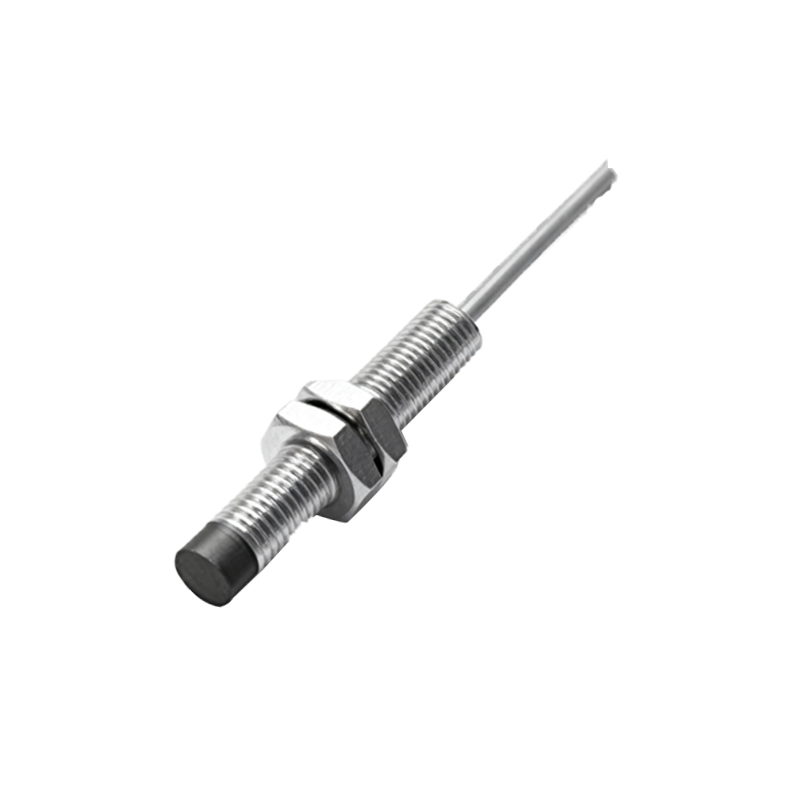
Installation and configuration of Proximity Sensor F require attention to detail. Factors such as sensing distance, target material, environmental conditions, and output type (e.g., NPN or PNP) must be carefully considered. The sensing distance, often specified by manufacturers, can vary based on the target's size and composition. Shielding is another critical aspect—shielded sensors have a narrower field, suitable for flush mounting in metal, while unshielded types offer longer ranges but require non-metallic surroundings. Regular maintenance, though minimal, involves checking for contamination or physical damage that could impair performance.
Looking ahead, the evolution of Proximity Sensor F is intertwined with trends like the Industrial Internet of Things (IIoT) and Industry 4.0. Modern sensors are increasingly equipped with digital interfaces, such as IO-Link, enabling real-time data exchange, remote diagnostics, and predictive maintenance. This connectivity transforms simple detection tasks into smart, data-driven decisions, optimizing overall system efficiency. Furthermore, advancements in miniaturization and power efficiency are expanding their use in wearable devices and medical equipment, where space and energy constraints are paramount.
In conclusion, Proximity Sensor F is more than just a switch; it is an enabler of automation and intelligence across diverse sectors. Its ability to operate reliably in demanding conditions, coupled with ongoing technological innovations, ensures its continued relevance in an increasingly automated world. For engineers and system integrators, understanding its principles and applications is essential for designing robust, efficient, and future-ready solutions.