In the realm of modern sensing technology, proximity capacitive sensors have emerged as a pivotal component, enabling touchless interaction and precise detection across a diverse range of industries. Unlike mechanical switches or optical sensors, these devices operate on the fundamental principle of capacitance change. At its core, a capacitive sensor generates an electrostatic field. When a target object, which can be conductive or even non-conductive with a different dielectric constant than air, enters this field, it causes a measurable change in capacitance. This subtle alteration is detected by the sensor's circuitry, which then triggers a predefined output signal.
The operational principle hinges on the fact that all objects possess electrical properties that can influence an electric field. A standard setup involves a sensor electrode connected to an oscillator circuit. The presence of a target alters the capacitance between the electrode and ground, thereby changing the oscillation characteristics. Sophisticated signal processing techniques are employed to filter noise and reliably detect this change, even through non-conductive materials like glass, plastic, or wood. This ability for "through-wall" sensing is a defining advantage, allowing for sealed, robust designs that are immune to contaminants such as dust, oil, or moisture.
Key characteristics define the performance and selection of proximity capacitive sensors. Sensing range is typically limited, often from a few millimeters up to several centimeters, which is ideal for precise, short-distance detection. The sensitivity is highly adjustable, allowing engineers to tune the sensor to ignore background interference and respond only to the intended target. Furthermore, these sensors exhibit no moving parts, leading to exceptionally long operational life and minimal maintenance requirements. They are also agnostic to the color or optical properties of the target, focusing solely on its electrical influence.
The applications of proximity capacitive sensors are vast and continually expanding. In consumer electronics, they are the invisible force behind touchscreens, touchpads, and touch-sensitive buttons, providing a sleek, durable interface. In the automotive sector, they enable innovative features like touchless trunk opening, interior lighting control, and driver presence detection on seats, enhancing both convenience and safety. Industrial automation heavily relies on them for non-contact liquid level sensing in tanks, material presence detection on conveyor belts, and as part of complex human-machine interfaces (HMIs) on control panels. Even in the realm of the Internet of Things (IoT), these sensors facilitate smart home devices, from touchless faucets to proximity-aware lighting systems.
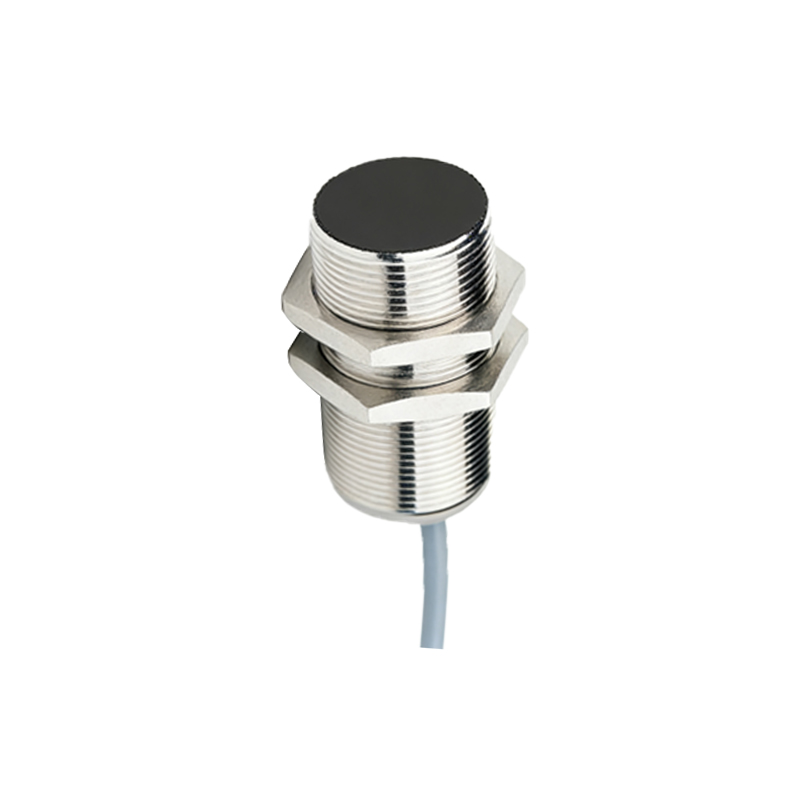
Designing a system with a capacitive proximity sensor requires careful consideration. The sensor's performance can be influenced by environmental factors such as humidity and temperature, though modern designs incorporate compensation algorithms. Proper shielding is crucial to prevent false triggers from stray electromagnetic interference or the sensor's own field coupling into nearby grounded objects. The choice of the sensor's dielectric cover material and its thickness directly impacts the effective sensing range and sensitivity. Engineers must also consider the power consumption profile, especially for battery-operated devices, where low-power sensing modes are essential.
Looking ahead, the evolution of proximity capacitive sensing is geared towards higher integration, lower power consumption, and enhanced intelligence. Microcontrollers with dedicated capacitive sensing peripherals, known as CapSense technology, have simplified implementation. Future trends point towards multi-electrode systems capable of gesture recognition and advanced material discrimination. As the demand for intuitive, reliable, and hygienic touchless interfaces grows—a trend accelerated by global health considerations—proximity capacitive sensors are poised to become even more ubiquitous, seamlessly integrating into the fabric of our interactive world, from industrial machines to everyday household items.