Capacitive proximity sensors are versatile non-contact detection devices widely utilized across industrial sectors for their ability to sense a broad range of materials, including metals, plastics, liquids, powders, and granular substances. Operating on the principle of capacitance change, these sensors generate an electrostatic field. When a target object enters this field, it alters the capacitance, triggering the sensor's output. This article delves into the primary types of capacitive proximity sensors, their operational characteristics, and typical industrial applications.
The first major category is Standard Shielded (Flush-Mountable) Sensors. These sensors feature a metal ring surrounding the active face, which confines the electrostatic field radially. This shielding allows them to be installed flush with metal mounting surfaces without false triggering from the surrounding material. Shielded sensors offer a shorter sensing range compared to unshielded types but provide excellent immunity to interference and are ideal for detecting small objects or in confined spaces. Common applications include level detection of liquids or granular materials in metal tanks, part presence verification on conveyor belts, and assembly machine positioning.
Conversely, Unshielded (Non-Flush) Sensors lack the surrounding metal ring, allowing the electrostatic field to project forward and laterally. This design grants them a longer sensing range. However, they must be installed with a clearance from any surrounding metal to prevent unwanted activation. Unshielded sensors are particularly effective for detecting materials with low dielectric constants, such as thin plastics, paper, or glass. They are frequently employed in packaging machinery, wood processing, and detecting non-metallic container fill levels.
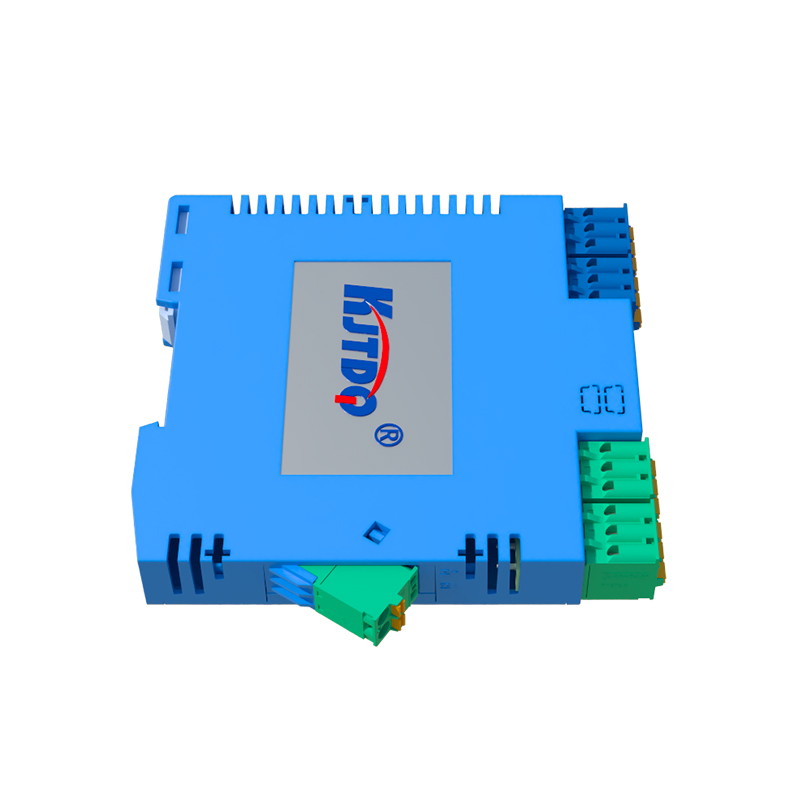
A specialized variant is the Cylindrical Capacitive Sensor. Housed in a robust metallic or polymer threaded barrel, these sensors are designed for easy installation into standard mounting holes. Available in both shielded and unshielded configurations, cylindrical models are highly durable and suitable for harsh environments. They are commonly used for liquid level control in pipelines or vessels, bulk material monitoring in hoppers, and as part of complex automated systems requiring reliable object detection.
For applications requiring precise adjustment, Sensors with Sensitivity Adjustment Potentiometers are essential. These devices feature an integrated potentiometer that allows engineers to fine-tune the sensing distance. This adjustability is crucial when dealing with varying target sizes, material properties, or environmental conditions like humidity or dust. They prevent false triggers by enabling calibration to ignore background objects. Typical uses involve detecting inconsistent material batches, monitoring adhesive or coating thickness, and complex sorting systems.
High-Temperature and Chemically Resistant Models constitute another critical type. Constructed with specialized housing materials (like PEEK or PTFE) and high-temperature stable electronics, these sensors operate reliably in extreme conditions, such as foundries, food sterilization processes, or aggressive chemical environments. Their hermetic sealing protects internal components from steam, oils, and corrosive substances.
Furthermore, Analog Output Capacitive Sensors provide a continuous voltage or current signal proportional to the distance to the target or the material's dielectric properties. Unlike standard digital on/off sensors, analog variants enable precise measurement tasks, such as monitoring tension, controlling winding processes, or gauging material thickness in real-time. They are integral to process control and quality assurance systems.
In practice, selecting the appropriate capacitive sensor type hinges on several factors: the dielectric constant of the target material, required sensing distance, installation constraints, environmental conditions, and the needed output signal. For instance, a shielded cylindrical sensor with sensitivity adjustment might be chosen for reliable plastic pellet level detection in a metal silo, while an unshielded analog sensor could be selected for monitoring paper roll diameter on a converting machine.
Their ability to sense through non-metallic container walls makes capacitive sensors indispensable for contactless liquid or powder level control. In food and pharmaceutical industries, sensors with smooth, hygienic housings ensure compliance with sanitation standards. In automotive assembly, they reliably detect composite materials and fluids. As Industry 4.0 advances, modern capacitive sensors increasingly integrate IO-Link communication for digital parameter setting, diagnostics, and process data integration into networked control systems.
In summary, the diverse portfolio of capacitive proximity sensors—from shielded and unshielded standard models to specialized cylindrical, adjustable, high-temperature, and analog-output versions—provides engineers with tailored solutions for myriad detection challenges. Their non-contact nature, material versatility, and evolving smart features solidify their role as fundamental components in enhancing efficiency, safety, and automation intelligence across modern industrial landscapes.