In the realm of industrial automation, the reliability and precision of sensing technology are paramount. Among the myriad of components that form the backbone of modern control systems, the M18 proximity sensor stands out for its versatility and widespread adoption. Specifically, the X5D model represents a significant evolution within this category, offering enhanced performance characteristics tailored for demanding environments. This article delves into the technical specifications, operational principles, and practical applications of the M18 Proximity Sensor X5D, providing a detailed guide for engineers and technicians.
The M18 designation refers to the sensor's cylindrical housing with an 18-millimeter diameter, a standard size that facilitates easy installation in a vast array of machinery and fixtures. The X5D model typically incorporates a robust, threaded metal body, often constructed from stainless steel or nickel-plated brass, ensuring high resistance to mechanical stress, corrosion, and industrial contaminants such as coolants and metal chips. This durability is critical for applications in machining centers, packaging lines, and automotive assembly plants where sensors are exposed to harsh conditions.
At its core, the X5D is an inductive proximity sensor. It operates on the principle of electromagnetic induction. The sensor generates a high-frequency oscillating electromagnetic field from its active face. When a metallic object (the target) enters this detection field, eddy currents are induced within the target. This causes a change in the oscillation amplitude within the sensor's internal LC circuit. This change is detected by the sensor's circuitry, which subsequently triggers a switching action in the output stage. The key advantage of this non-contact sensing method is the elimination of physical wear, leading to a dramatically longer operational lifespan compared to mechanical limit switches.
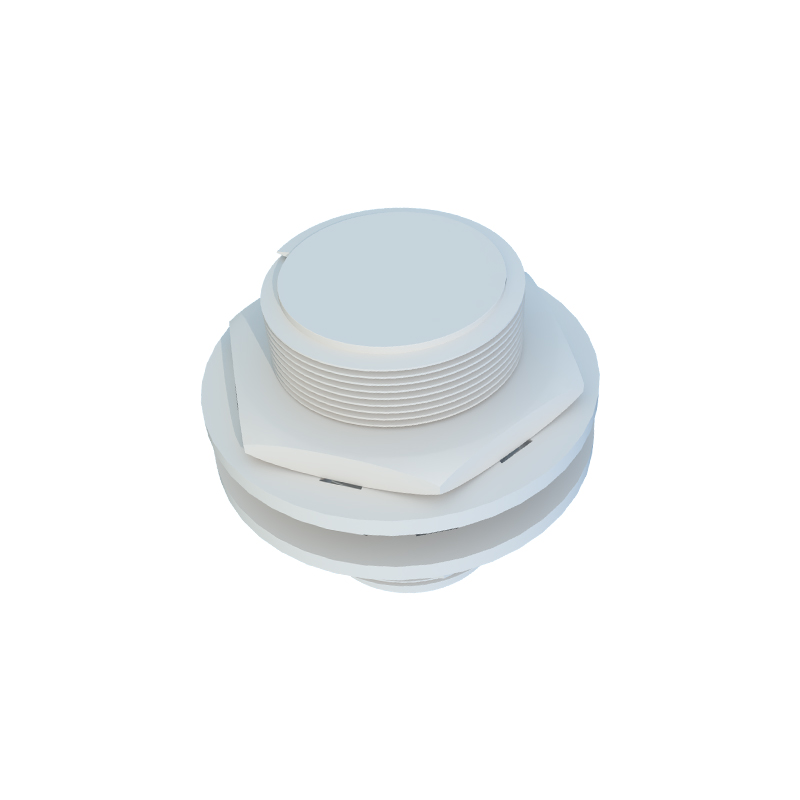
The performance specifications of the X5D model are where it distinguishes itself. A critical parameter is the sensing distance, or nominal range. For a standard M18 inductive sensor, this is typically up to 8mm. The X5D variant often features a precise and stable sensing range, with minimal variance due to temperature fluctuations or supply voltage changes. It is designed to detect ferrous metals (like iron and steel) at its full nominal range, while for non-ferrous metals (such as aluminum or copper), the effective sensing distance is reduced, a factor that must be carefully considered during system design.
Another vital characteristic is the switching frequency, which defines how quickly the sensor can respond to targets passing by. The X5D typically offers a high switching frequency, often in the range of 1 kHz to 5 kHz, making it suitable for high-speed applications like counting small parts on a conveyor or detecting positions on a rapidly rotating cam. The output configuration is equally important. The X5D is commonly available in both NPN (sinking) and PNP (sourcing) transistor outputs, as well as NO (Normally Open) or NC (Normally Closed) logic, providing flexibility to interface with various programmable logic controllers (PLCs) and control systems. Many models also feature a built-in LED status indicator for visual confirmation of operation and power.
Electrical ratings are engineered for industrial standards. The operating voltage range usually spans from 10-30V DC, compatible with common 24V DC control circuits. The sensor incorporates protection against short-circuit, reverse polarity, and overvoltage conditions, enhancing system reliability and reducing downtime. The housing is typically rated IP67 or higher, meaning it is dust-tight and can withstand temporary immersion in water, ensuring reliable operation in washdown environments found in food processing or pharmaceutical industries.
In practical application, the M18 X5D sensor is ubiquitous. It is extensively used for position sensing—verifying if a cylinder is fully extended or retracted, confirming the presence of a workpiece in a fixture, or detecting the end of a material roll. In automated assembly, it ensures components are correctly positioned before a robotic arm performs an operation. On conveyor systems, it acts as a part presence sensor to trigger subsequent actions like sorting, labeling, or robotic pickup. Its robustness also makes it ideal for use in metal stamping presses and CNC machine tools for tool breakage detection or monitoring slide positions.
Installation and alignment are straightforward but require attention to detail. Engineers must ensure the target material and size are appropriate for the selected sensor. The sensor should be mounted securely, with adequate clearance from surrounding metal structures to prevent false triggering—a consideration known as the flush-mounting or non-flush-mounting capability. Regular maintenance, though minimal, involves periodic cleaning of the sensing face to remove any buildup of dirt or metal shavings that could attenuate the sensing field.
In conclusion, the M18 Proximity Sensor X5D embodies a mature yet continually refined technology. Its combination of mechanical robustness, precise and reliable non-contact detection, high-speed response, and environmental resilience makes it an indispensable component in the engineer's toolkit. By understanding its