In the realm of industrial automation and control systems, proximity sensors stand as fundamental components, enabling machines to "sense" the presence or absence of an object without physical contact. These non-contact devices are pivotal for enhancing efficiency, safety, and reliability across countless applications. This article delves into the operational principles, primary types, key applications, and essential selection criteria for proximity sensors.
At its core, a proximity sensor detects the presence of a nearby object, typically referred to as the target. It does so by emitting an electromagnetic field or a beam of electromagnetic radiation (like infrared light) and then looking for changes in the field or return signal. The absence of physical contact eliminates mechanical wear and tear, allowing for high-speed operation and a long operational life. The output is usually a digital switch signal that can interface directly with programmable logic controllers (PLCs), motor drives, or other control circuitry.
Several technologies underpin the functionality of proximity sensors, each with distinct advantages and ideal use cases. The most prevalent types include:
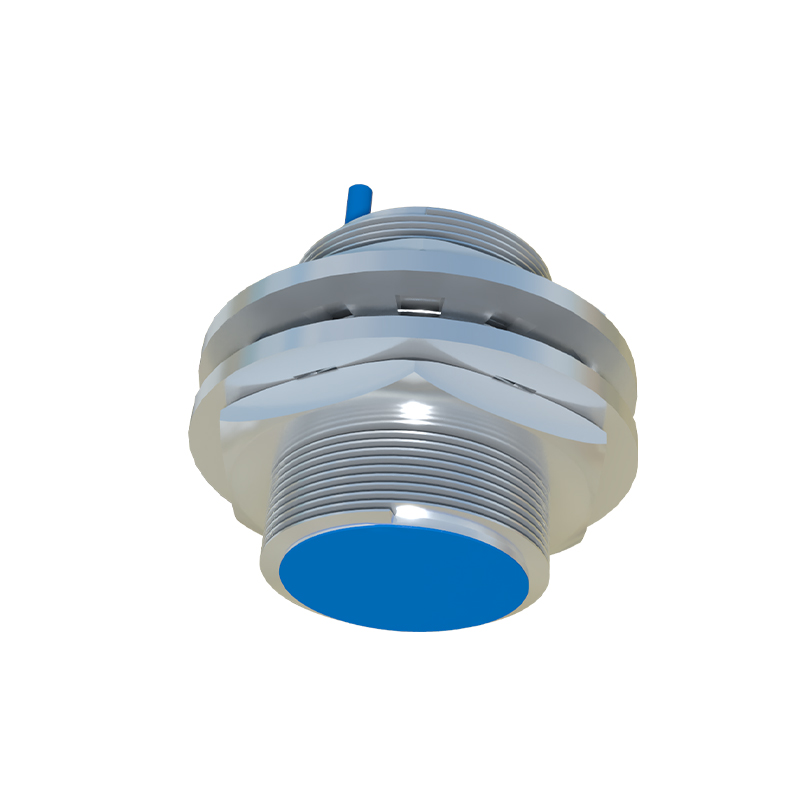
1. Inductive Proximity Sensors: These sensors generate an oscillating electromagnetic field. When a metallic object (ferrous or non-ferrous) enters this field, it induces eddy currents within the target, causing a change in the oscillation amplitude. This change is detected, triggering the sensor's output. Inductive sensors are robust, resistant to environmental factors like dust and oil, and are exclusively for metal detection. Common applications include part positioning on conveyor lines, limit switching in cylinders, and detecting metal parts in machinery.
2. Capacitive Proximity Sensors: These sensors can detect both metallic and non-metallic objects (liquids, plastics, wood, etc.) by measuring changes in capacitance. The sensor forms one plate of a capacitor, the target acts as the other plate, and the air gap is the dielectric. As a target approaches, the capacitance increases, and once it reaches a threshold, the sensor switches. They are ideal for level detection in tanks (for liquids or granules), material handling, and detecting non-metallic objects through thin barriers.
3. Photoelectric Sensors: Utilizing a light emitter (often LED) and a receiver, these sensors detect objects based on the interruption or reflection of a light beam. They are categorized into through-beam (separate emitter and receiver), retro-reflective (uses a reflector), and diffuse (reflective) types. Photoelectric sensors offer long sensing ranges and can detect virtually any material. They are ubiquitous in packaging, material handling, and assembly line automation for counting, positioning, and break detection.
4. Ultrasonic Sensors: These sensors work on the principle of echolocation. They emit high-frequency sound waves and evaluate the echo received back. The time lapse between sending the signal and receiving the echo is used to calculate the distance to the target. Ultrasonic sensors are excellent for precise distance measurement, level sensing of bulk materials or liquids, and detecting clear or irregularly shaped objects where photoelectric sensors might struggle.
The selection of an appropriate proximity sensor is critical for system performance. Engineers must consider several factors:
Target Material: The primary determinant. Is the object metallic, non-metallic, liquid, or transparent?
Sensing Distance: The required nominal range and the necessary safety margin (often derated for reliability).
Output Type: Digital (PNP/NPN) or analog (4-20mA, 0-10V) outputs suit different control interfaces.
Environmental Conditions: Exposure to temperature extremes, moisture, chemicals, dust, or washdown pressures dictates the required housing material and ingress protection (IP) rating.
Mounting and Size: Physical constraints in the machinery often determine the sensor's form factor (barrel, rectangular, etc.) and mounting style.
Response Time and Switching Frequency: How quickly the sensor must detect an object and how many operations per second it must handle.
In conclusion, proximity sensors are indispensable in modern industrial systems. From ensuring precise positioning in a high-speed bottling plant to safeguarding personnel by monitoring machine guard doors, their role is versatile and critical. A thorough understanding of their operating principles and a methodical approach to selection—considering the target, environment, and performance requirements—empowers engineers to design robust, efficient, and intelligent automated solutions. As Industry 4.0 and the Industrial Internet of Things (IIoT) advance, the integration of smart sensors with diagnostic capabilities and network connectivity will further elevate the role of these reliable components.