In the world of industrial automation and smart devices, a small component plays an outsized role in enabling efficiency, safety, and precision: the proximity switch sensor. Often unseen, these devices are fundamental to countless operations, from manufacturing assembly lines to the smartphone in your pocket. But what exactly are they, and how do they work?
At its core, a proximity sensor is a non-contact device that detects the presence or absence of an object within a specified range without any physical contact. It achieves this by emitting an electromagnetic field or a beam of radiation, then looking for changes in the field or return signal. The key advantage is the lack of mechanical wear and tear, leading to higher reliability and longer service life compared to mechanical limit switches.
The technology behind these sensors is diverse, leading to several main types, each suited for specific applications. Inductive proximity sensors are among the most common. They generate an oscillating electromagnetic field. When a metallic object enters this field, it induces eddy currents within the object, which causes a change in the sensor's oscillation amplitude. This change triggers the switch. These sensors are ideal for detecting metals and are widely used in machine tools, automotive manufacturing, and material handling systems due to their robustness and resistance to environmental factors like dirt and oil.
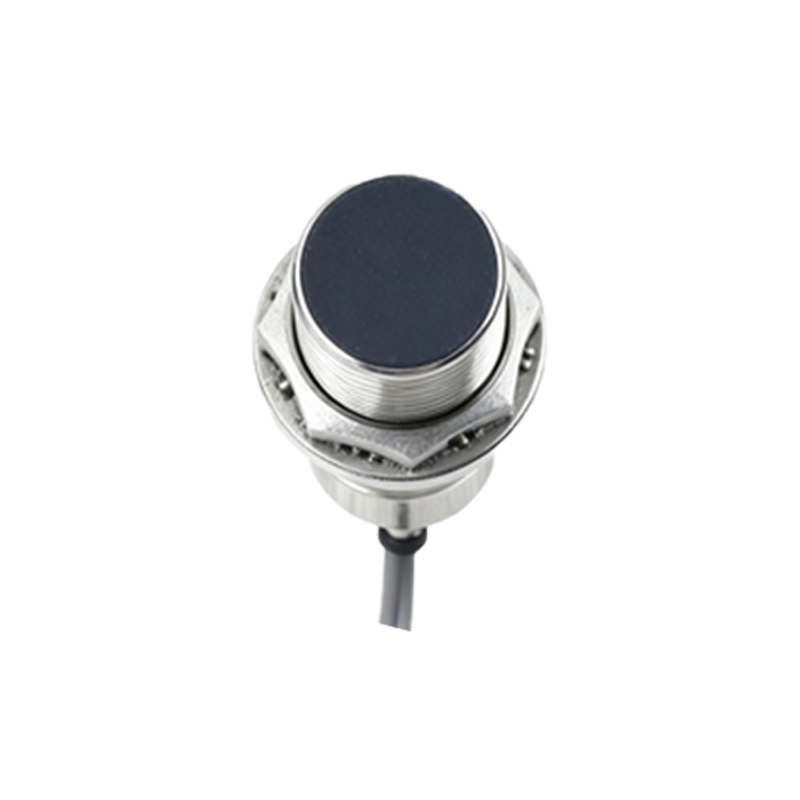
Capacitive proximity sensors, on the other hand, can detect both metallic and non-metallic materials, including liquids, plastics, wood, and granules. They function by generating an electrostatic field. Any object that enters this field changes the capacitance of the system, which is detected by the sensor's circuitry. This makes them perfect for applications like level detection in tanks, presence detection of plastic bottles on a conveyor, or touch-sensitive interfaces.
For longer-range detection and applications requiring sensing of all material types, photoelectric sensors are the go-to choice. They operate by emitting a light beam (usually infrared, visible red, or laser) and detecting its reflection or interruption. They come in various configurations: through-beam (separate emitter and receiver), retro-reflective (bounces light off a reflector), and diffuse (reflects light off the target itself). These sensors are essential in packaging, material handling, and safety light curtains.
Another critical type is the ultrasonic proximity sensor. It works on the principle of echolocation, similar to sonar. The sensor emits high-frequency sound waves and measures the time it takes for the echo to return. This allows it to detect objects of virtually any material and is particularly effective for distance measurement, transparent object detection, and challenging environments with dust or vapor.
Selecting the right proximity sensor requires careful consideration of several factors. The first is the target material. Is it metallic, non-metallic, or liquid? This directly points to inductive or capacitive technology. The required sensing distance, or range, is next. Inductive sensors typically have shorter ranges than photoelectric or ultrasonic ones. The operating environment is crucial; factors like temperature extremes, presence of chemicals, washdown requirements, or electrical noise can dictate the sensor's housing material (e.g., stainless steel, PBT plastic) and protection rating (IP67, IP69K).
Output type is another key decision. Most sensors provide a digital on/off signal. Common output configurations include NPN (sinking) and PNP (sourcing) transistor outputs, or relay contacts. The choice depends on the control system's input requirements (e.g., PLC). Finally, physical characteristics like size, shape (barrel, rectangular), and mounting style must align with the mechanical constraints of the application.
The applications are virtually limitless. In automotive plants, inductive sensors count gears or detect piston position. In food and beverage, capacitive sensors monitor liquid levels in stainless steel vats. Photoelectric sensors ensure correct box placement on pallets. Ultrasonic sensors guide autonomous mobile robots in warehouses. Beyond industry, they are embedded in everyday life, detecting when a smartphone is held to the ear to turn off the screen, or automating faucets and soap dispensers for hygiene.
In conclusion, proximity switch sensors are the silent workhorses of modern technology. Their ability to provide reliable, non-contact detection translates into smoother automation, enhanced safety, and improved product quality. Understanding their operating principles, types, and selection criteria is the first step toward leveraging their full potential in any system design or maintenance task. As industries move towards greater connectivity and the Industrial Internet of Things (IIoT), these sensors will continue to evolve, becoming smarter and more integrated into the data-driven fabric of intelligent operations.