In the complex and often hazardous world of industrial automation, the ability to detect objects reliably and safely is paramount. Among the myriad of sensing technologies available, the high voltage resistant proximity sensor stands out as a critical component for operations conducted in electrically noisy or high-potential environments. Unlike standard inductive or capacitive sensors, these specialized devices are engineered to maintain stable performance and structural integrity when exposed to high voltage fields, transient spikes, or strong electromagnetic interference (EMI). Their design and construction address a fundamental challenge: ensuring that the sensing electronics are completely isolated from the influence of the high voltage present in the machinery or process they are monitoring.
The core principle of a proximity sensor—detecting the presence or absence of a metallic or non-metallic target without physical contact—remains unchanged. However, the implementation for high-voltage resistance involves several key enhancements. First and foremost is superior electrical insulation. The sensing face, housing, and cabling are constructed from materials with exceptionally high dielectric strength, such as specialized ceramics, high-grade plastics, or composite polymers. This insulation barrier prevents electrical breakdown and leakage currents that could otherwise damage the sensor's internal circuitry or cause false triggering. Furthermore, the internal electronics are meticulously shielded. Advanced shielding techniques, often involving multiple layers of metal enclosures and ferrite cores, are employed to protect the sensitive oscillator and evaluation circuits from external EMI. This ensures that the sensor's switching signal remains crisp and accurate, even when installed near variable frequency drives, large motors, welding equipment, or high-voltage power lines.
Another defining characteristic is the use of robust output configurations. Many high voltage resistant sensors feature relay outputs or opto-isolated solid-state outputs. Optical isolation is particularly effective, as it uses a light beam to transmit the switching signal across an air gap, creating a complete galvanic isolation between the sensor's input and output circuits. This means that any voltage surge on the load side cannot travel back into the control system, thereby protecting programmable logic controllers (PLCs) and other downstream equipment. The sensors are also designed to withstand voltage transients, such as those described by IEC surge immunity standards, ensuring they do not fail during power-up sequences or lightning-induced spikes.
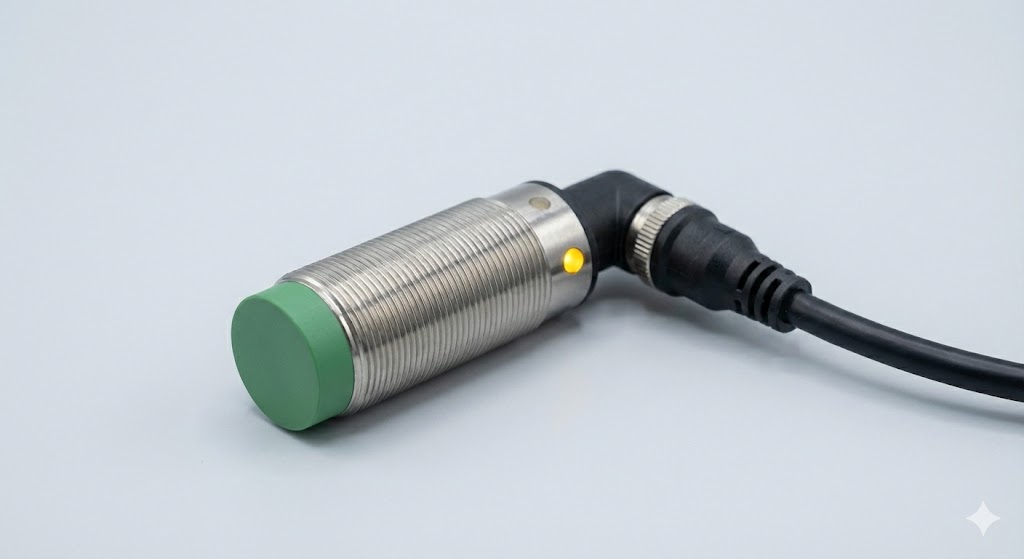
The applications for these rugged sensors are found in industries where operational safety and equipment longevity are non-negotiable. In the power generation and distribution sector, they are used for position sensing in high-voltage switchgear, circuit breaker status monitoring, and transformer tap changer control. Within the railway industry, they perform vital tasks in overhead line equipment (catenary) monitoring and in the traction systems of electric locomotives and trams, where voltages can exceed 25 kV AC. Industrial welding machines, particularly resistance and spot welders, generate tremendous electrical noise; high voltage resistant sensors reliably detect electrode position or workpiece presence in these hostile conditions. They are also indispensable in large industrial furnaces, plasma cutting systems, and certain types of medical imaging equipment like CT scanners, where high electrical fields are inherent to the process.
Selecting the appropriate high voltage resistant proximity sensor requires careful consideration of several parameters beyond standard sensing range and output type. The rated insulation voltage or withstand voltage is the most critical specification, indicating the maximum continuous AC or DC voltage the sensor can endure between its active parts and its housing. The creepage distance and clearance distance—the paths over the surface and through the air between conductive parts—are deliberately lengthened to prevent arcing. Environmental sealing, typically to IP67 or IP69K standards, is also crucial, as many high-voltage applications may also involve exposure to coolants, dust, or high-pressure washdowns. Engineers must also verify the sensor's EMI immunity and emission ratings to ensure compatibility with the specific electromagnetic landscape of the application.

In conclusion, the high voltage resistant proximity sensor is not merely a variant of a standard sensor; it is a purpose-built solution for extreme electrical environments. By integrating advanced insulation, shielding, and isolation technologies, it delivers the reliable, non-contact detection that modern automation demands, while acting as a guardian for the broader control system. Its deployment mitigates risk, reduces unscheduled downtime caused by electrical interference, and enhances the overall safety of industrial operations. As industries continue to push the boundaries of power and automation, the role of these specialized sensors will only grow in importance, forming an invisible yet essential layer of protection and precision in the most electrically demanding applications.