In the seamless interaction between humans and technology, a tiny, often overlooked component plays a pivotal role: the proximity sensor chip. This sophisticated piece of silicon is the silent guardian of our device experiences, enabling intuitive, efficient, and power-saving functionalities that we now take for granted. From preventing accidental screen touches during a call to enabling gesture controls, proximity sensors are embedded in the fabric of modern electronics.
At its core, a proximity sensor chip is designed to detect the presence of nearby objects without any physical contact. It achieves this by emitting a field or a beam of electromagnetic radiation, typically infrared (IR) light, and then analyzing the changes in the return signal. The chip integrates the emitter, the photodetector, and the necessary signal processing circuitry into a single, compact package. When an object enters the sensor's field, it reflects the emitted light back to the detector. The chip's internal logic measures the intensity or the time-of-flight of the reflected signal to calculate the distance to the object. This information is then relayed to the device's main processor, triggering a predefined action.
The most ubiquitous application is in smartphones and tablets. Here, the proximity sensor performs a crucial duty during voice calls. By detecting the proximity of your face to the screen, it automatically turns off the display. This prevents accidental cheek-triggered inputs, such as muting the call or launching apps, while also conserving battery life by disabling the power-hungry backlight. Beyond phones, this technology is fundamental in laptops and tablets that feature automatic display sleep when the lid is closed or when a user walks away.
The utility of proximity sensing extends far beyond personal electronics. In the automotive industry, these chips enhance safety and convenience. They are integral to systems like automatic trunk opening, where a simple foot gesture under the rear bumper triggers the latch, a boon when hands are full. Interior cabin systems use them to detect occupant presence for optimized airbag deployment or to activate interior lights and infotainment screens as a hand approaches. Advanced driver-assistance systems (ADAS) also leverage proximity sensors for short-range object detection in parking scenarios.
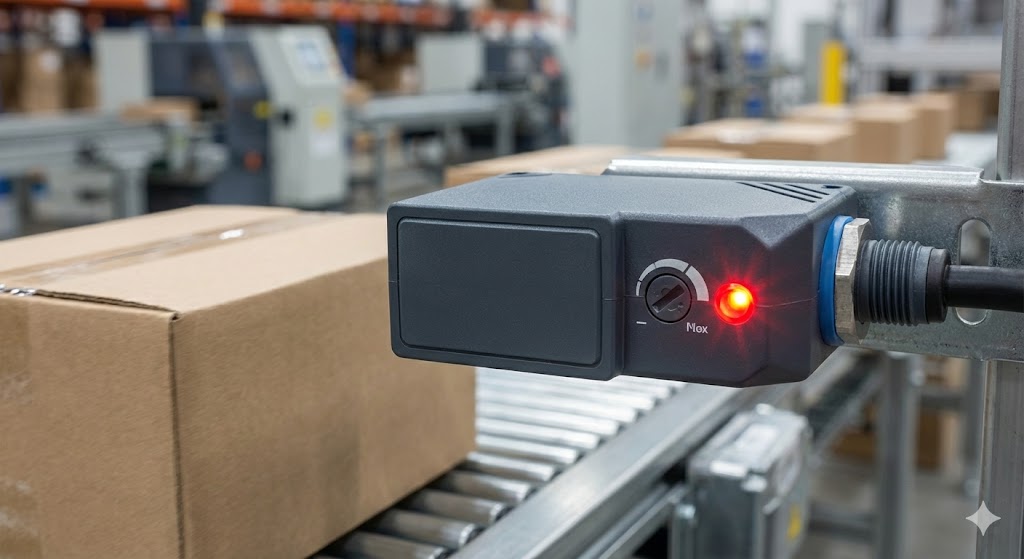
Industrial automation and smart home devices represent another major frontier. On factory floors, proximity sensor chips provide non-contact detection of parts on assembly lines, ensuring precise counting, positioning, and safety by halting machinery when a worker is too close. In smart homes, they bring touchless interaction to faucets, soap dispensers, and trash cans, promoting hygiene. They also enable energy efficiency in lighting systems, where lights turn on or off based on room occupancy.
The evolution of these chips is marked by a drive towards greater integration, miniaturization, and intelligence. Modern variants often combine proximity sensing with ambient light sensing (ALS) in a single chip, allowing a device to adjust screen brightness based on both the surrounding light level and the user's proximity. Time-of-Flight (ToF) sensors, a more advanced type, use pulsed laser light to measure distance with high accuracy, enabling features like portrait-mode photography and precise 3D mapping for augmented reality applications. Furthermore, advancements in low-power design are critical for always-on sensing in Internet of Things (IoT) devices, where battery life is paramount.
Designing with proximity sensor chips requires careful consideration of several factors. The sensing range, response time, and power consumption must be matched to the application. Environmental robustness is also key; the sensor must reliably operate under varying ambient light conditions and must be immune to interference from other IR sources. Optical design, including the placement of the chip behind the device cover glass and the use of infrared-transmissive windows, is crucial for optimal performance.
Looking ahead, the role of the proximity sensor chip will only expand. As devices become more context-aware and interactive, the demand for reliable, low-power, and multi-functional sensing will grow. They will be fundamental in creating more natural user interfaces, where gestures and presence replace buttons and taps. From making our current devices smarter to enabling the next generation of robotics, wearables, and smart environments, the humble proximity sensor chip remains an indispensable, though invisible, engine of innovation.