In the rapidly evolving landscape of industrial automation and smart systems, the demand for reliable, flexible, and efficient sensing solutions has never been greater. Among the most transformative innovations are remote proximity switch sensors. These devices represent a significant leap from traditional wired proximity sensors, offering unparalleled freedom in installation, maintenance, and system design. This guide delves into the core principles, diverse applications, and critical considerations for implementing these wireless sentinels.
At its essence, a remote proximity switch sensor is a non-contact device that detects the presence or absence of an object within a specified range without any physical connection to the central control system. It transmits this detection signal wirelessly. The core sensing technology remains similar to its wired counterparts, utilizing methods like inductive sensing for metals, capacitive sensing for both metallic and non-metallic materials, or photoelectric sensing using light beams. The revolutionary difference lies in the integration of a wireless communication module. This module converts the sensor's "on/off" state into a digital signal and transmits it via radio frequency (RF) protocols such as Bluetooth Low Energy (BLE), Zigbee, LoRaWAN, or proprietary industrial wireless standards.
The advantages of adopting remote proximity sensors are compelling. First and foremost is the drastic reduction in installation cost and complexity. Eliminating extensive conduit runs, cable trays, and associated labor leads to significant savings, especially in large facilities or applications involving moving parts like rotating machinery or crane systems. Maintenance becomes simpler as there are no cables to degrade, fray, or be damaged by environmental factors or moving equipment. This also enhances system scalability; adding new sensing points is as straightforward as mounting and pairing a new sensor unit, without the need for disruptive rewiring.
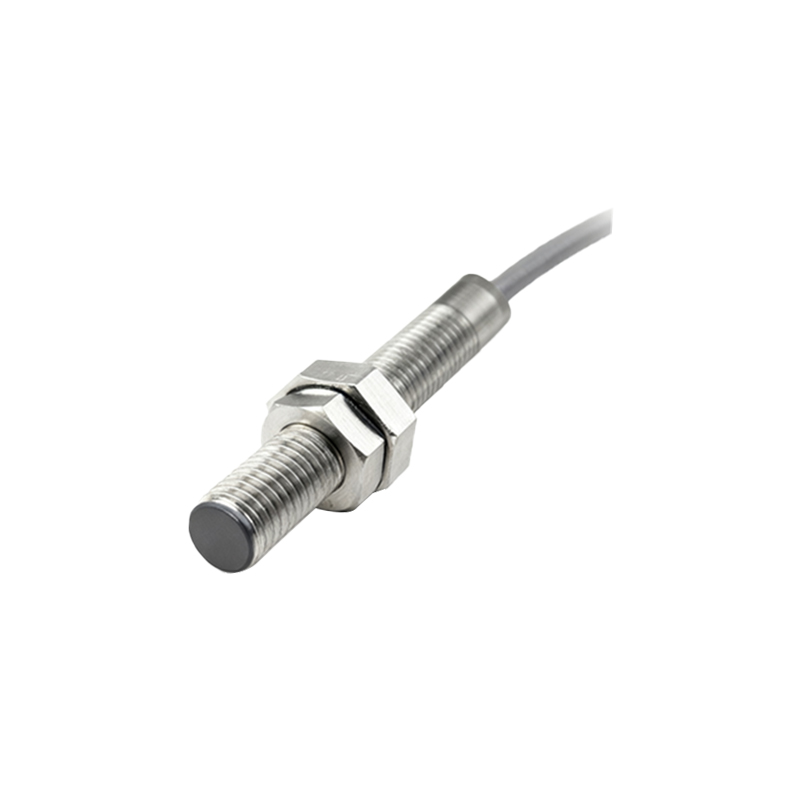
Furthermore, these sensors enable monitoring in previously inaccessible or hazardous locations. They can be deployed in areas with extreme temperatures, high vibration, or constant motion where wiring is impractical. The flexibility in placement allows for optimized data collection, leading to improved process control and efficiency. In asset tracking and logistics, small, battery-powered remote proximity tags can be attached to items, pallets, or vehicles, providing real-time location data within a warehouse or factory floor.
Applications span across numerous industries. In manufacturing, they monitor tool positions, detect jams on conveyor belts, and manage automated guided vehicle (AGV) traffic. In agriculture, wireless sensors monitor gate positions, equipment status, and storage bin levels. Building automation utilizes them for occupancy detection in lighting and HVAC control, window/door position sensing, and parking space management. The Internet of Things (IoT) ecosystem heavily relies on such wireless sensors as fundamental data nodes.
Selecting the right remote proximity sensor requires careful evaluation of several parameters. Operating range is twofold: the sensing distance to the target object and the wireless transmission range to the receiver or gateway. Power consumption and source are critical; battery-powered sensors offer maximum placement freedom but require battery management, while energy-harvesting options (using solar, vibration, or thermal energy) are emerging for maintenance-free operation. The choice of wireless protocol dictates network topology, data speed, power use, and interoperability. Robustness is paramount; the sensor housing must have an appropriate Ingress Protection (IP) rating for its environment, resisting dust, water, oils, and chemicals. Finally, latency and network reliability must meet the application's demands, whether it's a non-critical status check or a safety-related interlock.
Security is an inherent concern with wireless systems. Reputable industrial remote sensors incorporate robust encryption and authentication mechanisms to prevent unauthorized access, data interception, or signal jamming that could disrupt operations. Implementing sensors within a secure network architecture is a non-negotiable best practice.
In conclusion, remote proximity switch sensors are not merely a wireless replacement for cables; they are enablers of smarter, more adaptive, and cost-effective automation. By removing the physical tether, they unlock new possibilities for monitoring, control, and data analytics. As wireless technology continues to advance in reliability, security, and energy efficiency, the adoption of these remote sensing devices will undoubtedly become standard practice, forming the invisible nervous system of the intelligent industrial world and beyond. Their role in driving efficiency, reducing downtime, and enabling innovative applications makes them a cornerstone of modern operational technology.