Selecting the ideal infrared laser sensor for your application can be a complex task, given the wide array of options available on the market. These sensors, which utilize infrared laser light for detection, measurement, or communication, are critical components in industries ranging from manufacturing and automation to security and consumer electronics. Making an informed choice requires a clear understanding of your specific needs and the key technical parameters that define sensor performance.
The first and most crucial step is to precisely define the application's requirements. What is the primary function? Common applications include distance measurement, object detection, presence sensing, gesture recognition, or data transmission. For instance, in an automated assembly line, a sensor might need to detect the precise position of a component for a robotic arm, requiring high accuracy in distance measurement. In a security system, it might need to sense movement within a defined area, prioritizing reliability over extreme precision. Clearly outlining the task will immediately narrow down the sensor type, such as choosing between a time-of-flight (ToF) sensor for distance or a simple break-beam sensor for detection.
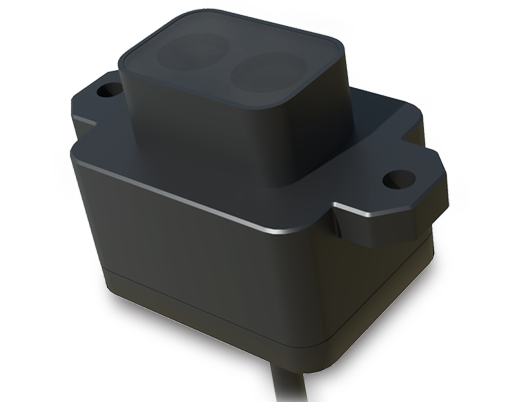
Once the application is defined, several core technical specifications must be evaluated. The operating range is paramount. This includes both the minimum and maximum distances over which the sensor must perform reliably. A sensor with a 100-meter range is unnecessary and potentially less accurate for a close-range task of 5 centimeters. Similarly, ensure the sensor can detect objects at the required minimum distance. Resolution and accuracy are often confused but are distinct. Resolution refers to the smallest change in distance the sensor can detect, while accuracy indicates how close the measurement is to the true value. For quality control in manufacturing, high accuracy is essential. For basic object counting, resolution might be less critical.
The response time or sampling rate determines how quickly the sensor can take and output readings. High-speed automation, like sorting items on a fast conveyor belt, demands a sensor with a very fast response time to keep up with the process. For environmental monitoring where changes are gradual, a slower sensor may be perfectly adequate. The size of the spot or beam is another key factor. A focused, narrow beam is excellent for precisely targeting a small object or avoiding background interference. A wider beam or diffuse reflection sensor is better for detecting objects regardless of their exact position or surface orientation.

Environmental conditions pose significant challenges for infrared sensors. Ambient light, especially direct sunlight which contains intense infrared radiation, can saturate a sensor's receiver and cause false readings or failure. Many industrial-grade sensors incorporate optical filters and sophisticated modulation techniques to mitigate this. Temperature fluctuations can affect laser output and detector sensitivity. If the sensor will operate in an environment with wide temperature swings, checking its specified operating temperature range is non-negotiable. Dust, fog, or rain can scatter or absorb the infrared light, reducing effective range. For outdoor or harsh industrial use, a sensor with a higher IP (Ingress Protection) rating for dust and water resistance is vital.
The physical and electrical interface of the sensor must be compatible with your system. Consider the mounting requirements, housing material, and connector type. Output signals vary widely: analog outputs (0-10V, 4-20mA) are common for continuous measurement, while digital outputs (I2C, SPI, UART, or simple switch/NPN/PNP) are used for direct communication with microcontrollers or PLCs. The supply voltage (e.g., 5V DC, 12-24V DC) must match your power source. Ease of integration can save considerable time and cost during installation and programming.
Finally, consider the manufacturer's reputation, technical support, and documentation. A sensor from a reputable supplier with clear datasheets, application notes, and accessible support can prevent project delays. Availability and long-term supply are also important for production systems. While cost is always a factor, it should be evaluated against total value—considering performance, reliability, durability, and support—rather than just the initial purchase price.
In summary, selecting an infrared laser sensor is a systematic process. Begin with a detailed application analysis, then meticulously compare sensors based on range, accuracy, speed, beam characteristics, environmental robustness, and interface compatibility. By prioritizing the parameters that matter most for your specific use case, you can invest in a sensor that delivers reliable, accurate performance and integrates seamlessly into your system for years to come.