In the rapidly evolving landscape of industrial automation, proximity switch sensors have become indispensable components. These non-contact sensing devices detect the presence or absence of an object within a defined range without any physical contact, offering reliability, longevity, and precision that mechanical switches cannot match. The core principle involves generating an electromagnetic field or a beam of radiation. When a target object enters this field, it causes a change in the signal, which is then converted into an electrical output by the sensor's circuitry. This fundamental operation makes them ideal for harsh environments where dirt, oil, or repeated mechanical action would degrade traditional limit switches.
Several primary technologies dominate the proximity sensor market, each with distinct advantages. Inductive proximity sensors are the workhorses for detecting metallic objects. They generate an oscillating electromagnetic field from a coil. A metallic target entering this field induces eddy currents, damping the oscillation and triggering a switch. These sensors are exceptionally robust, immune to environmental contaminants, and perfect for counting metal parts or determining position in machinery. Capacitive proximity sensors, on the other hand, can detect both metallic and non-metallic materials like plastic, wood, or liquids. They function by measuring changes in capacitance between the sensor's electrode and the ground. The presence of any material with a different dielectric constant alters this capacitance, prompting a state change. This makes them versatile for applications such as liquid level detection, material handling, and packaging.
For longer-range detection or where the target is non-metallic, photoelectric sensors are often the preferred proximity solution. These devices consist of a light emitter (usually LED) and a receiver. They operate in three main modes: through-beam, retro-reflective, and diffuse. The diffuse, or proximity, mode has the emitter and receiver in the same housing. It detects an object when the emitted light is reflected back to the receiver. While offering the longest ranges, they can be sensitive to environmental factors like dust, fog, or color variations of the target object. Ultrasonic sensors use sound waves beyond human hearing to measure distance or detect presence. They emit ultrasonic pulses and calculate the time for the echo to return. Excellent for detecting clear objects, uneven surfaces, or in dusty conditions, they are commonly used in level monitoring and collision avoidance systems.
Selecting the optimal proximity switch sensor solution requires a careful analysis of the application parameters. Key considerations include the sensing distance or range required, the nature of the target material (metal, plastic, liquid), the required output type (PNP/NPN, NO/NC), environmental conditions (temperature, pressure, exposure to chemicals), and the required switching frequency. For instance, a high-speed bottling line would demand a sensor with a very fast response time and high switching frequency, while a wastewater treatment plant might prioritize a sensor with a completely sealed, corrosion-resistant housing.
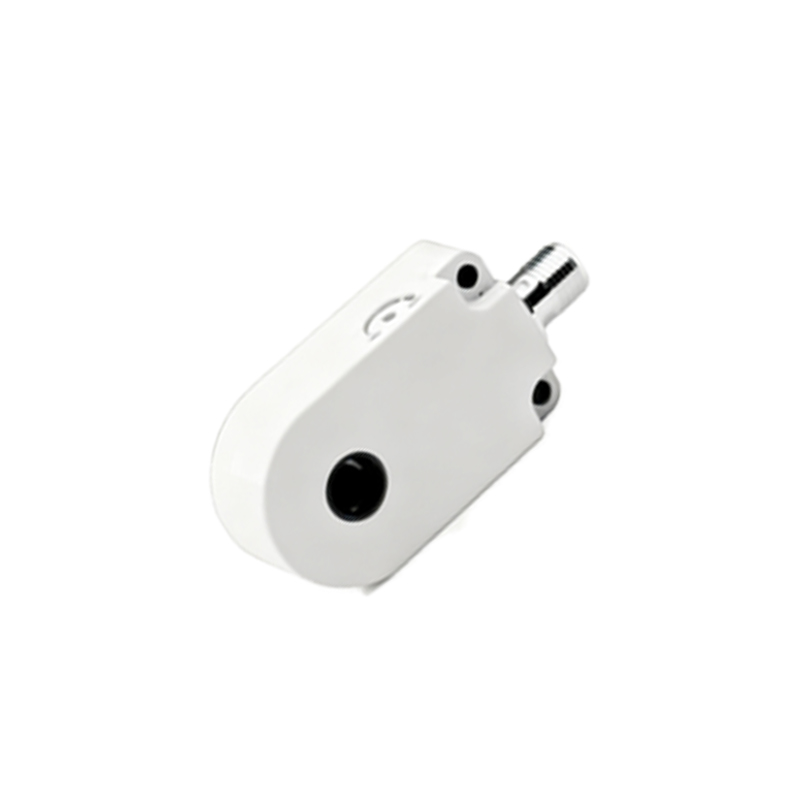
The integration of these sensors into modern control systems, particularly with the Industrial Internet of Things (IIoT), is a significant trend. Smart sensors now come equipped with IO-Link communication, a point-to-point serial communication protocol. This allows for not just binary on/off signals but also the exchange of parameter data, diagnostic information, and remote configuration. This enables predictive maintenance, as the sensor can report its operating health or warn of potential failures before they cause downtime. Furthermore, the data collected from networks of proximity sensors can be analyzed to optimize machine cycles, improve quality control, and enhance overall equipment effectiveness (OEE).
Installation and implementation best practices are crucial for maximizing performance and lifespan. Proper mounting, ensuring adequate clearance from metal surfaces (especially for inductive types), and protecting cables from excessive stress or abrasion are fundamental. Electrical considerations, such as correct wiring, using shielded cables in electrically noisy environments, and incorporating surge protection, are essential for signal integrity. Regular functional checks, while minimal due to their solid-state design, should be part of a routine maintenance schedule to ensure continued reliable operation.
From automotive assembly robots and food packaging machines to elevator door safety systems and automated warehouse cranes, proximity switch sensors provide the essential "eyes" for automated systems. Their ability to operate reliably in demanding conditions, coupled with advancing digital capabilities, ensures they will remain a cornerstone of efficient, safe, and intelligent industrial automation for the foreseeable future. By understanding the different technologies and carefully matching the sensor to the application's specific needs, engineers and system integrators can build more resilient, productive, and data-aware operations.