In today's rapidly evolving technological landscape, off-the-shelf proximity sensors often fall short of meeting the unique and complex demands of specialized applications. This is where the power of custom proximity sensor design becomes indispensable. Customization allows engineers and system integrators to overcome specific challenges related to environment, form factor, detection range, material composition, and integration protocols, creating a solution that is perfectly aligned with the operational requirements of a project.
The journey towards a custom proximity sensor begins with a deep dive into the application's core needs. Will the sensor operate in an environment with extreme temperatures, high humidity, or corrosive chemicals? Does it need to detect specific materials, such as non-metallic objects, transparent glass, or ferrous metals only? What are the spatial constraints for installation? Answering these questions determines the fundamental choice of sensing technology—whether inductive, capacitive, ultrasonic, or optical—and its subsequent tailoring. For instance, an inductive sensor designed for a food processing plant might require a specific housing material like FDA-approved stainless steel and a particular ingress protection (IP) rating to withstand frequent washdowns, aspects not typically prioritized in standard industrial models.
Beyond environmental ruggedness, performance parameters are fine-tuned during customization. Detection range, repeat accuracy, response time, and output signal type (e.g., analog voltage, current loop, digital IO-Link) are calibrated to precise specifications. In automated assembly lines, a custom capacitive sensor might be developed to consistently detect the presence of a plastic component at a distance of just 2mm with micron-level repeatability, a task impossible for a generic sensor. Similarly, in automotive testing, a custom ultrasonic sensor array could be designed to measure the precise gap between body panels with high resolution in varying lighting conditions.
Integration is another critical facet. Custom sensors can be designed with mechanical housings that fit into existing machinery without costly modifications. Connector types, cable lengths, and mounting brackets are all specified to ensure a plug-and-play experience. Furthermore, with the rise of Industry 4.0, sensors are increasingly expected to communicate rich diagnostic data. Customization allows for the embedding of smart features like self-monitoring, predictive maintenance alerts, and seamless integration with specific industrial networks like PROFINET or EtherCAT. A custom optical sensor for a packaging machine, for example, could include built-in logic to differentiate between product types and communicate directly with the robotic arm controller, streamlining the entire process.
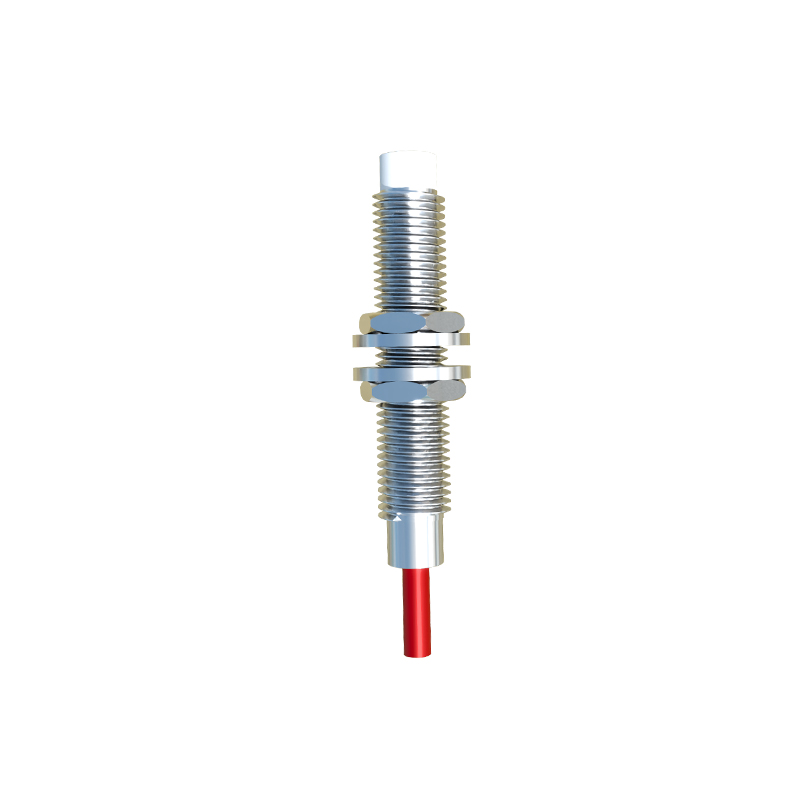
The development process for a custom sensor is collaborative. It involves close partnership between the client's engineering team and the sensor manufacturer's application experts. This partnership moves from concept and feasibility studies through prototyping, rigorous testing (both in lab and in-situ), and finally to volume production. This ensures the final product is not just a modified standard part but a purpose-built component that enhances system reliability, efficiency, and longevity.
Ultimately, investing in custom proximity sensors is an investment in optimization. While the initial development phase may require more time and resources than purchasing catalog items, the long-term benefits are substantial. These benefits include reduced downtime due to sensor failure, increased production quality through precise and reliable detection, lower total cost of ownership by eliminating workarounds, and enabling innovative product designs that were previously not feasible. From advanced medical devices and aerospace systems to intricate consumer electronics and robust agricultural equipment, custom proximity sensors are the silent, intelligent enablers of innovation, providing the exact "sense of touch" required for tomorrow's technology to function flawlessly today.