In the world of industrial automation and electronic control, a small yet powerful component plays a crucial role in enabling non-contact detection and precise operation: the proximity switch, also commonly referred to as a proximity sensor. This device is fundamental to modern manufacturing, robotics, and countless smart systems, operating silently and reliably to detect the presence or absence of an object without any physical contact.
At its core, a proximity switch is a sensor that detects the presence of nearby objects. The key principle is its non-contact nature. Unlike mechanical limit switches that require physical touch to activate, proximity switches use various fields or beams of radiation to sense an object. This eliminates mechanical wear and tear, leading to significantly higher reliability and a longer operational lifespan. The absence of physical contact also means there is no need for direct force, making them ideal for fragile objects or high-speed applications where mechanical impact could cause damage or inaccuracies.
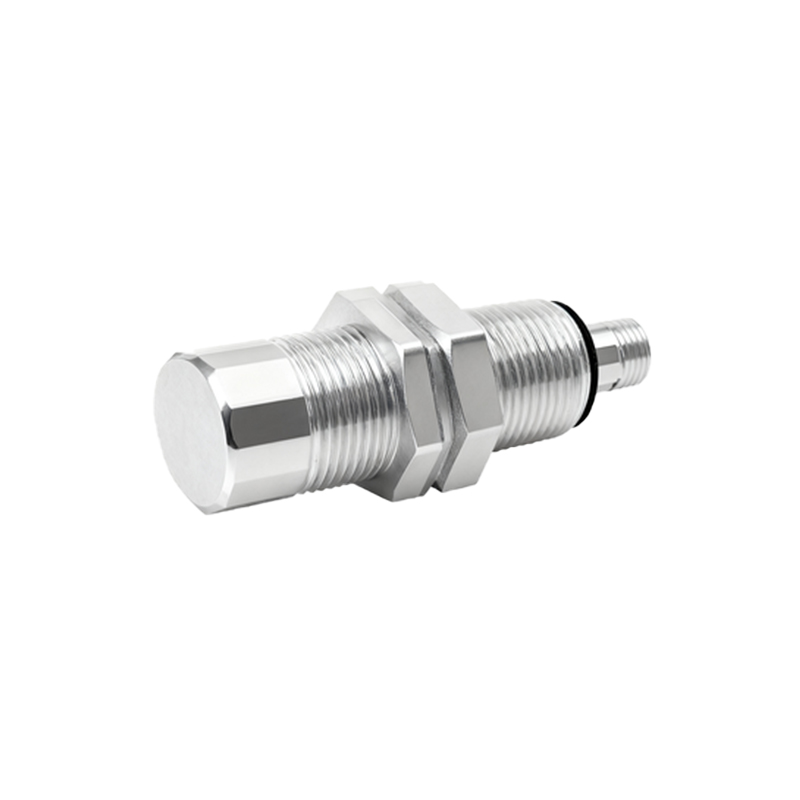
The working principle depends on the specific type of technology employed. The most common categories include inductive, capacitive, ultrasonic, and photoelectric proximity sensors. Inductive proximity switches are widely used for detecting metallic objects. They generate an electromagnetic field. When a metal target enters this field, it causes a change in the oscillation amplitude, which the sensor's circuit detects and converts into a solid-state output signal, typically turning a load on or off. These are exceptionally robust and immune to environmental factors like dust, oil, or moisture, making them staples in machine tools and automotive assembly lines.
Capacitive proximity sensors, on the other hand, can detect both metallic and non-metallic materials such as liquids, plastics, wood, or granules. They work by generating an electrostatic field. Any object that enters this field alters its capacitance, triggering the switch. This makes them versatile for applications like liquid level detection, material handling, and presence sensing of packaging materials.
Ultrasonic sensors emit high-frequency sound waves and evaluate the echo received back. They measure the time interval between sending the signal and receiving the echo to determine the distance to an object. These are excellent for distance measurement, level control of bulk materials, and detecting objects with complex surfaces. Photoelectric sensors use a light beam, often infrared, LED, or laser. The presence of an object is detected by either the interruption of the beam (through-beam), reflection from the object (retro-reflective), or diffusion of light (diffuse reflective).
The output from these devices is typically a digital signal. Common output types include NPN (sinking) and PNP (sourcing) transistor configurations, which interface seamlessly with programmable logic controllers (PLCs), relays, and other control systems. Some advanced models offer analog outputs (4-20 mA or 0-10V) proportional to distance, providing more granular data for process control.
The benefits of using proximity switches are substantial. Their non-contact operation ensures no damage to either the sensor or the target object. They offer high switching rates, capable of detecting objects at speeds impossible for mechanical switches. With no moving parts to wear out, they provide exceptional long-term stability and require minimal maintenance. Furthermore, they perform reliably in harsh industrial environments, often featuring rugged housings rated for water and dust resistance (IP67, IP69K).
Applications are virtually limitless. In automotive manufacturing, they count parts, control robotic arms, and verify door closures. In packaging lines, they detect labels, monitor fill levels, and control conveyor belts. In the food and beverage industry, capacitive sensors check liquid levels in tanks, while inductive sensors confirm the position of metal lids. They are integral to anti-collision systems in automated guided vehicles (AGVs), security systems, and even consumer electronics like smartphones that turn off the screen when held to the ear.
Selecting the right proximity sensor requires careful consideration of several factors. The material of the target object is primary: inductive for metals, capacitive for a wider range. The required sensing distance, or range, must be specified, noting that manufacturers provide both a nominal sensing distance and practical operational considerations. Environmental conditions such as temperature, presence of chemicals, or washdown requirements dictate the housing material and ingress protection rating. Finally, the electrical requirements—operating voltage, output type (NPN/PNP), and connection method—must match the existing control system.
Installation is generally straightforward, but attention to detail is key. Sensors must be mounted securely to prevent vibration from causing false triggers. For inductive sensors, it's important to maintain a minimum distance from other metal objects and other sensors to prevent mutual interference, a concept known as "shielding." Always refer to the manufacturer's datasheet for specific mounting clearances and electrical wiring diagrams.
In summary, the proximity switch, or proximity sensor, is an indispensable workhorse of automation. By providing accurate, reliable, and wear-free detection, it forms the sensory foundation upon which efficient, safe, and