In the world of automation and smart devices, a small, often unseen component plays a crucial role in enabling intuitive interactions and safety features: the infrared (IR) proximity sensor. This technology, which allows machines to "sense" the presence or absence of nearby objects without physical contact, has become ubiquitous. From the smartphone in your pocket to complex industrial robots, IR proximity sensors are fundamental to modern electronics. But how exactly do these silent sentinels work, and what principles allow them to detect objects so reliably?
At its core, an infrared proximity sensor operates on a simple principle of light emission and reception. It contains two key elements: an infrared light-emitting diode (IR LED) and a photodetector, typically a photodiode or a phototransistor. The IR LED emits a beam of infrared light, which is invisible to the human eye. This light travels outward from the sensor. When an object enters its detection range, the infrared beam reflects off the object's surface. The photodetector, tuned to be sensitive to the same infrared wavelength, then captures this reflected light. The sensor's internal circuitry measures the intensity of the reflected signal. The fundamental rule is straightforward: the closer the object, the stronger the reflected infrared signal received by the photodetector. By calibrating the sensor to a specific intensity threshold, the system can determine not just the presence of an object, but also estimate its approximate distance or proximity.
This process involves careful engineering to ensure accuracy. The emitted infrared light is usually modulated, meaning it is pulsed at a specific frequency. This helps the photodetector distinguish between the reflected signal from the LED and ambient infrared noise from other sources, such as sunlight or indoor lighting. Filters are often used to block unwanted light wavelengths, further enhancing reliability. The detection range, accuracy, and response time of a sensor depend on factors like the power of the IR LED, the sensitivity of the receiver, and the design of the optical components that shape and direct the light beam.
The applications of infrared proximity sensors are vast and varied, demonstrating their versatility. One of the most common everyday uses is in smartphones and tablets. Here, the sensor detects when the device is held close to the user's ear during a phone call. It then signals the screen to turn off, preventing accidental touch inputs and saving battery power. Similarly, many automatic faucets, soap dispensers, and hand dryers in public restrooms use IR proximity sensors to activate when hands are placed beneath them, promoting hygiene and conserving water and energy.
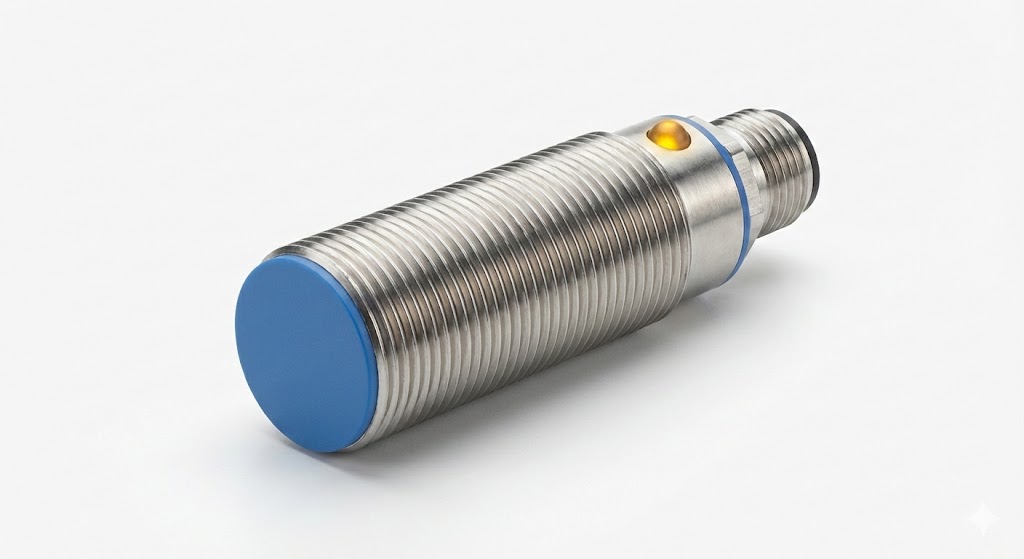
In the realm of robotics and automation, these sensors are indispensable. Mobile robots and automated guided vehicles (AGVs) use arrays of IR sensors for obstacle detection and avoidance, allowing them to navigate spaces safely. In industrial settings, they are used for object detection on assembly lines, counting items, and ensuring proper positioning. Consumer electronics like robotic vacuum cleaners rely on them to avoid bumping into furniture and falling down stairs.
Another critical application is in safety systems. Some garage door operators incorporate IR sensors that create an invisible beam near the floor. If the beam is broken while the door is closing, the system immediately reverses the door's motion, preventing injury or damage. They are also found in certain security systems for detecting movement in specific zones.
When compared to other sensing technologies like ultrasonic sensors or capacitive sensors, IR proximity sensors offer distinct advantages. They are generally low-cost, have a fast response time, and are effective for short to medium-range detection. They are also less susceptible to acoustic noise interference than ultrasonic sensors. However, they have limitations. Their performance can be affected by the color and reflectivity of the target object; dark, non-reflective surfaces absorb infrared light and may not be detected as reliably. Environmental factors like dust, fog, or direct strong ambient IR light can also interfere with operation.
Looking ahead, the evolution of IR proximity sensors continues. Modern versions are becoming smaller, more power-efficient, and smarter. Some now integrate digital output and advanced signal processing directly on the sensor chip, simplifying design for engineers. As the Internet of Things (IoT) expands, these sensors will find new roles in smart homes, wearables, and interactive installations, always working quietly in the background to make our interaction with technology more seamless, efficient, and safe. Their simple yet elegant principle of using invisible light to bridge the gap between the physical and digital worlds ensures they will remain a cornerstone of sensor technology for years to come.