In the realm of industrial automation, sensors play a pivotal role in enabling precise control, safety, and efficiency. Among the diverse array of sensing technologies, diffuse sensors and proximity switches are two widely utilized devices that, while sometimes confused, serve distinct functions based on their operational principles. This article delves into the technical nuances, applications, and selection criteria for these critical components, providing insights for engineers and technicians in the electrical and automation fields.
Diffuse sensors, often referred to as diffuse reflective sensors, operate on the principle of light reflection. They emit a light beam—typically infrared, visible red, or laser—toward a target object. The sensor’s receiver detects the light reflected directly from the object’s surface. Unlike through-beam sensors that require a separate receiver, diffuse sensors integrate both emitter and receiver in a single housing, making them easier to install in space-constrained environments. However, their performance is influenced by the target’s color, texture, and material. Light-colored or reflective surfaces yield stronger signals, while dark or absorbent materials may reduce sensing range and reliability. Advanced models feature background suppression or foreground suppression to mitigate interference from objects beyond the set distance, enhancing accuracy in complex applications such as packaging, material handling, and object detection on conveyor lines.
Proximity switches, on the other hand, are non-contact sensors that detect the presence or absence of metallic objects without physical contact. They primarily rely on electromagnetic fields, with inductive proximity switches being the most common type for metal detection. These switches generate an oscillating electromagnetic field from a coil; when a metallic object enters this field, it induces eddy currents that dampen the oscillation, triggering a switching output. Capacitive proximity switches can detect both metallic and non-metallic materials (e.g., plastics, liquids) by sensing changes in capacitance caused by the object’s dielectric properties. Proximity switches are valued for their robustness, high switching frequency, and immunity to environmental factors like dust, dirt, or ambient light. They are extensively used in position sensing, limit switching, and counting tasks in machinery, automotive assembly, and robotics.
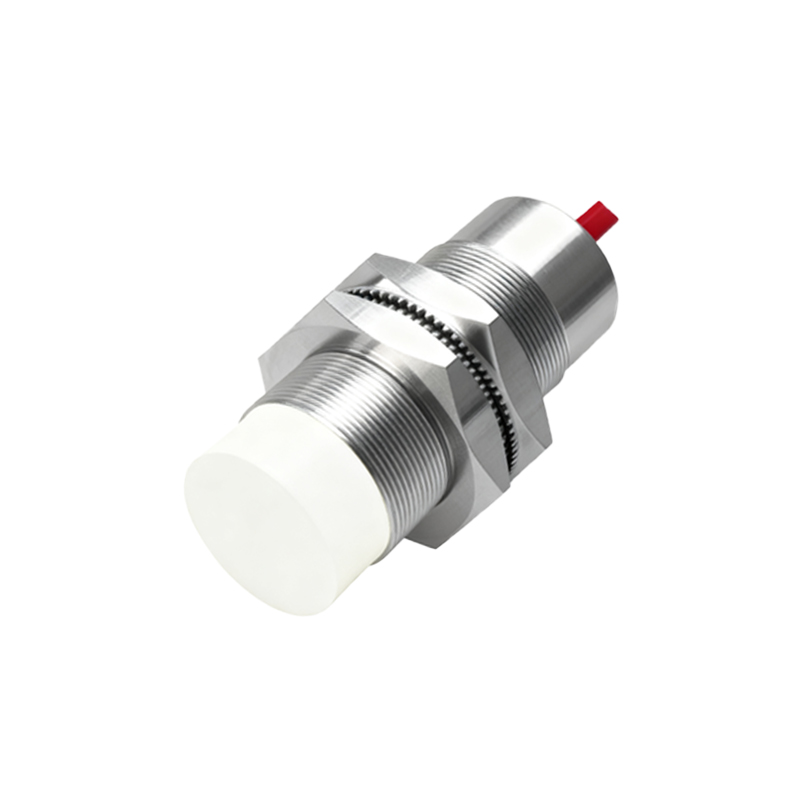
Key differences between diffuse sensors and proximity switches lie in their detection methods and target compatibility. Diffuse sensors excel with non-metallic objects and offer adjustable sensing ranges, but they may be affected by surface properties and environmental light. Proximity switches provide consistent performance with metals and are less sensitive to surface conditions, yet their range is generally shorter and limited to specific materials. For instance, in a bottling plant, a diffuse sensor might detect transparent plastic bottles based on light reflection, while an inductive proximity switch could monitor metal caps on a filling line.
When selecting between these sensors, engineers must consider factors such as target material, required sensing distance, environmental conditions (e.g., humidity, temperature, contaminants), response time, and output type (e.g., digital, analog). Diffuse sensors with background suppression are ideal for precise distance-based tasks, whereas proximity switches suit harsh industrial settings where reliability and durability are paramount. Integration with PLCs (Programmable Logic Controllers) and networking systems further enhances their functionality in automated processes.
In summary, diffuse sensors and proximity switches are indispensable tools in modern industrial automation, each offering unique advantages tailored to specific applications. By understanding their operating principles and limitations, professionals can optimize sensor selection to improve system performance, reduce downtime, and ensure operational safety. As technology advances, innovations like IO-Link connectivity and smart sensing features continue to expand their capabilities, driving efficiency in the evolving landscape of Industry 4.0.