In the world of industrial automation, consumer electronics, and safety systems, proximity sensor detection devices play a indispensable role. These non-contact sensors detect the presence or absence of an object within a specific range without any physical contact, enabling precise control, monitoring, and safety functions. Their operation hinges on various physical principles, primarily electromagnetic fields, capacitance, and light.
The most common type is the inductive proximity sensor. Designed to detect metallic objects, these sensors generate an oscillating electromagnetic field from a coil in the sensing face. When a conductive metal enters this field, it induces eddy currents within the target, which in turn dampens the sensor's oscillation. This change is detected by the internal circuitry, triggering a solid-state output signal. Inductive sensors are renowned for their robustness, high switching frequency, and immunity to environmental factors like dust, oil, or moisture. They are workhorses in manufacturing for tasks like counting metal parts, detecting piston position in cylinders, or ensuring machine tool positioning.
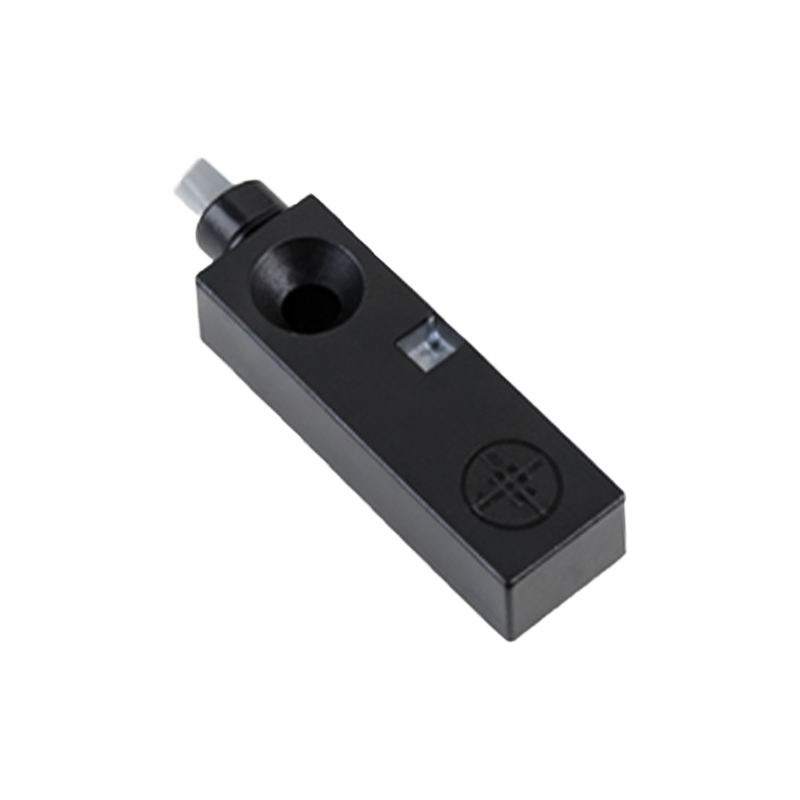
For non-metallic targets—such as wood, plastic, glass, or liquids—capacitive proximity sensors are the solution. These sensors function like an open capacitor. One plate is the sensor's active surface, and the other is the external ground. The sensor generates an electrostatic field. When any material with a different dielectric constant than air enters this field, it alters the capacitance, which is measured by the oscillator circuit. This change triggers the output. Capacitive sensors can detect almost any material and are often used in level detection for tanks (liquids or granules), material handling, and touch-sensitive interfaces.
Another major category is photoelectric sensors, which use a beam of light. These consist of a light emitter (usually LED) and a receiver. They operate in three main modes. Through-beam sensors have separate emitter and receiver units; an object is detected when it interrupts the light beam. This mode offers the longest sensing range and high reliability. Retro-reflective sensors house both emitter and receiver in one unit, using a reflector to bounce the light back; detection occurs when the beam is blocked. Diffuse or proximity-mode sensors also have a single housing, but they detect the light reflected directly off the target object itself. Photoelectric sensors are versatile for detecting objects of various colors and materials over varying distances and are common in packaging, conveyor systems, and automated doors.
Ultrasonic sensors form another key group, emitting high-frequency sound waves and evaluating the reflected echo. They measure the time interval between sending the signal and receiving the echo to calculate distance. Excellent for detecting clear objects, liquids, and uneven surfaces, they are widely used in parking assistance systems, tank level monitoring, and collision avoidance in robotics.
The selection of the right proximity sensor is critical for system performance. Key parameters include sensing distance (rated operating distance and factors like hysteresis), output type (PNP/NPN, NO/NC), supply voltage, response time, and environmental ratings (IP rating for dust/water resistance). The target material, size, and required sensing precision are primary determinants. For instance, a fast-paced bottling line might use a diffuse photoelectric sensor to detect transparent plastic bottles, while a metal stamping press would rely on a shielded inductive sensor to confirm the position of a steel plate.
Applications are vast and cross-industry. In automotive assembly, inductive sensors verify the presence of engine blocks. In smartphones, capacitive sensors disable the touchscreen when held near the ear. In warehouse automation, photoelectric sensors control sorting conveyors. Safety systems on machinery use them as part of guard interlocking to prevent operation when a door is open.
In conclusion, proximity sensor detection devices are fundamental components that bridge the physical and control worlds. Understanding their distinct operating principles—inductive, capacitive, photoelectric, and ultrasonic—allows engineers and designers to select the optimal device. This ensures reliable, efficient, and safe operation across countless applications, from the simplest object counting to the most complex robotic guidance systems, driving innovation and productivity forward.