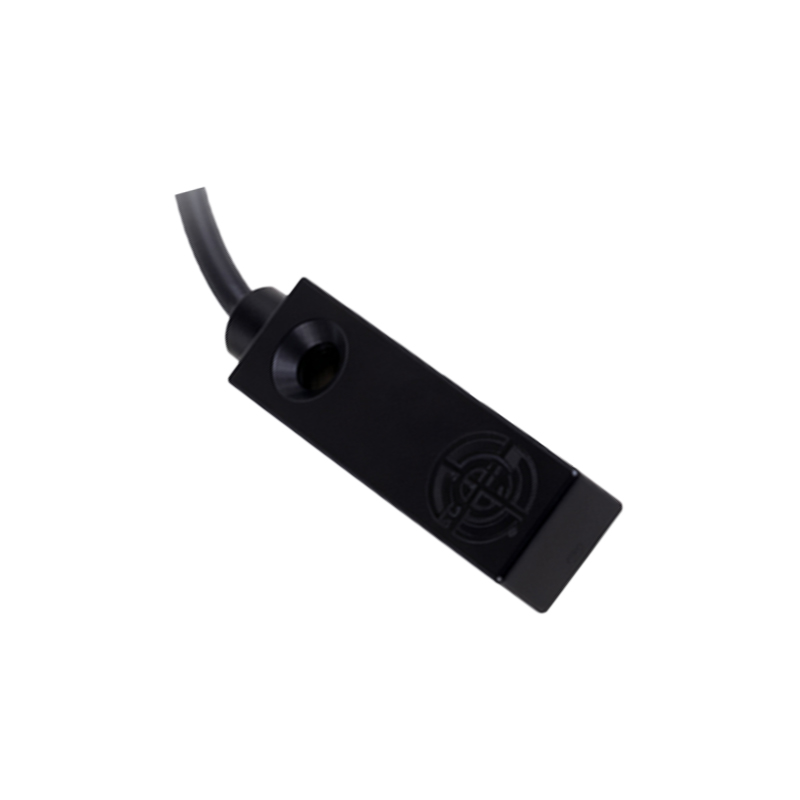
In the dynamic landscape of industrial automation, proximity sensors have become indispensable components for detecting the presence or absence of objects without physical contact. However, the full potential of these sensors is often unlocked not by the sensor alone, but through a carefully selected ecosystem of proximity sensor accessories. These supplementary components are critical for ensuring reliable operation, extending sensor lifespan, and adapting to challenging environments. Understanding the role and selection of these accessories is paramount for system integrators, maintenance engineers, and design professionals aiming to build robust and efficient automated systems.
One of the most fundamental categories of accessories is mounting hardware. Proximity sensors are deployed in diverse mechanical configurations, and standard brackets or housings may not suffice. Adjustable mounting brackets allow for fine-tuning the sensor's position post-installation, ensuring precise alignment with the target object. This is crucial in applications with tight tolerances or where machinery vibration might cause drift. Flange mounts and cylindrical mounting nuts provide secure fastening in drilled holes, while remote mounting heads enable the sensor's sensing face to be positioned separately from its electronics. This is particularly valuable in space-constrained or high-temperature areas, protecting the sensitive internal components from extreme conditions.

For sensors operating in harsh industrial environments, protective accessories are non-negotiable. Metal or high-grade polymer protective shrouds and caps shield the sensing face from physical impact, abrasion, and chip accumulation in machining applications like CNC lathes. In washdown environments found in food and beverage or pharmaceutical processing, stainless steel housings and sealed connectors (typically rated IP67, IP68, or IP69K) prevent ingress of water, chemicals, and cleaning agents. Similarly, protective sleeves for inductive sensors can guard against metallic swarf and extend service life dramatically. Without these protections, sensor failure rates can increase, leading to costly downtime.
Electrical connectivity and signal conditioning accessories form another vital group. Cable glands and strain relief devices secure the sensor's cable, preventing wire pull-out and maintaining the integrity of the environmental seal. For sensors with quick-disconnect capabilities, a range of pre-wired connectors and junction boxes simplify installation and replacement. In scenarios where the sensor's output signal needs modification, interface modules or amplifiers are employed. These devices can convert signals (e.g., from NPN to PNP output), amplify weak signals over long cable runs, or provide time-delay functions for filtering out false triggers. For network-integrated systems, IO-Link hubs and adapters transform standard sensors into smart devices, enabling parameter setting, diagnostics, and process data monitoring directly from the control system.
Application-specific accessories solve unique operational challenges. Non-ferrous sensing faces or anti-collision rings are used with inductive sensors to detect non-ferrous metals like aluminum or copper, which are otherwise difficult to sense. For capacitive sensors detecting non-metallic materials, special faceplates or extended sensing electrodes can focus the field for better sensitivity. In high-speed counting or precise positioning tasks, encoder wheels or gears paired with proximity sensors create simple yet effective rotary motion detection systems. Furthermore, alignment tools and testers are invaluable for maintenance personnel, allowing for quick verification of sensor operation and alignment without needing to interface with the main PLC, thus speeding up troubleshooting.

The selection of the correct accessory is not an afterthought; it is an integral part of the sensor system design. Engineers must consider the core application parameters: the target material, required sensing distance, environmental factors (temperature, humidity, contaminants), electrical requirements, and mechanical stresses. Consulting the sensor manufacturer's technical documentation for approved compatible accessories is always recommended, as using non-certified parts can void warranties and compromise performance.
In conclusion, proximity sensor accessories are the unsung heroes of industrial sensing. They transform a standard sensor into a tailored solution capable of withstanding the rigors of real-world operation. From robust mounting and environmental protection to sophisticated signal conditioning and specialized detection aids, these components enhance reliability, precision, and flexibility. Investing time in selecting the appropriate accessories translates directly into increased system uptime, reduced maintenance costs, and optimized process efficiency, ensuring that the automation system performs as intended over its entire operational lifecycle.