In the world of industrial automation, consumer electronics, and IoT devices, proximity sensors are the silent workhorses. They detect the presence or absence of an object without physical contact, enabling countless functionalities from smartphone screen blanking to complex robotic assembly lines. A common and crucial question for engineers, procurement specialists, and hobbyists alike is: "How much does a proximity sensor cost?" The answer is rarely a single figure. The price of a proximity sensor is a spectrum, influenced by a confluence of technical specifications, application requirements, and market dynamics. Understanding these factors is key to making a cost-effective purchase that doesn't compromise on performance.
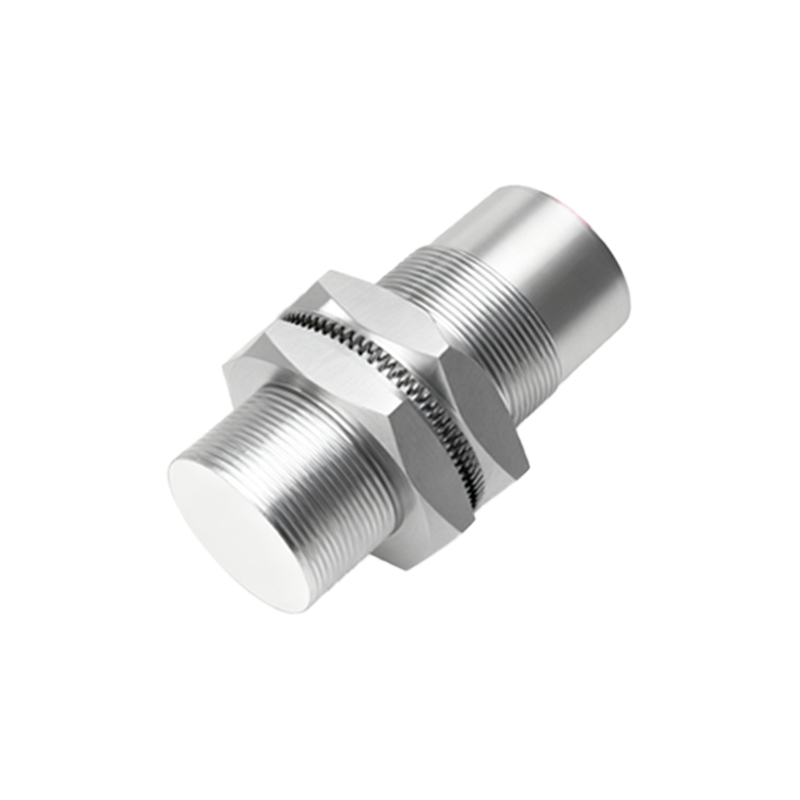
At the core of pricing is the underlying technology. Inductive proximity sensors, which detect metallic objects, are generally the most economical, with basic shielded barrel models starting as low as $15 to $30 USD. They are robust, widely available, and perfect for machine automation. Capacitive sensors, capable of detecting both metallic and non-metallic materials like liquids or plastics, typically carry a slight premium, often ranging from $25 to $50 for standard units. For longer ranges or precise positioning, ultrasonic sensors are a go-to, with prices commonly falling between $50 and $150, depending on range and output options. Photoelectric sensors, using infrared or laser light, offer the most variety and longest ranges; simple diffuse models can be found for $30-$60, while more advanced background suppression or through-beam models can cost $75 to $200 or more. Magnetic (reed switch or Hall effect) sensors are usually on the lower end, often between $10 and $40, but are limited to detecting magnets.
Beyond the core technology, specifications dramatically sway the price. Sensing range is a primary driver; a sensor with a 2mm range will cost significantly less than one with a 20mm range of the same type. The housing material also matters—stainless steel or specialized PBT housings for harsh environments (resistant to chemicals, extreme temperatures, or washdowns) command higher prices than standard nickel-plated brass or plastic. Output type is another factor. A basic two-wire AC sensor might be cheaper than a three-wire DC model with an NPN or PNP transistor output. Sensors with analog outputs (4-20mA, 0-10V) for distance proportionality, or those with IO-Link digital communication for advanced diagnostics and parameter setting, are positioned in the higher price brackets, easily reaching $100 to $300.
Brand reputation and supply chain play a significant role. Established global brands like Omron, Sick, Pepperl+Fuchs, and Balluff are associated with high reliability, extensive R&D, and global support networks, which is reflected in their pricing, often 20-50% higher than generic or lesser-known brands. These brands justify their cost with longer warranties, certified durability data (like MTBF ratings), and robust application engineering support. Conversely, many manufacturers, particularly from Asia, offer functionally equivalent sensors at highly competitive prices, making them attractive for cost-sensitive or high-volume projects where absolute top-tier branding is not critical.
Purchase volume is perhaps the most straightforward economic lever. Buying a single sensor from a distributor will incur the highest unit cost. OEMs or large integrators purchasing in bulk (hundreds or thousands of units) can negotiate substantial discounts, sometimes reducing the unit cost by half or more. The sales channel also affects price. Buying from an authorized distributor typically ensures authenticity and support but at a standard markup. Online marketplaces may offer lower prices but carry risks regarding warranty, authenticity, and technical documentation.
So, what does this mean for your budget? For simple machine automation (detecting a metal part on a conveyor), a standard inductive sensor might cost $20-$50. For a packaging line needing to detect transparent plastic bottles, a polarized retro-reflective photoelectric sensor could range from $50-$120. In a demanding food & beverage washdown area, a stainless-steel capacitive sensor for liquid level detection might be $80-$180. For precise positioning in a semiconductor fab, a high-end analog laser sensor could easily exceed $300.
The smartest purchasing strategy is to begin with a thorough application analysis. Precisely define what you need to detect, the required range, environmental conditions, output signal, and response speed. Avoid over-specifying; a sensor with a 30mm range when you only need 5mm is an unnecessary expense. Consider total cost of ownership, not just the unit price. A cheaper sensor that fails prematurely, causing production downtime, is far more expensive than a reliable, slightly pricier model. Finally, request samples from shortlisted suppliers to test in the actual application before committing to a large order. By aligning technical needs with commercial realities, you can navigate the proximity sensor market