In the rapidly evolving landscape of sensor technology, laser light sources have emerged as a cornerstone, driving unprecedented levels of precision, reliability, and application diversity. Unlike conventional light-emitting diodes (LEDs) or broadband sources, lasers provide coherent, monochromatic light that is essential for high-resolution measurements and detection across various industrial, medical, and environmental sectors. The fundamental principle hinges on stimulated emission, where photons are amplified to produce a narrow, intense beam. This characteristic is particularly advantageous in sensors requiring long-range operation, minimal interference, and exceptional signal-to-noise ratios.
Recent advancements in semiconductor laser diodes, such as Vertical-Cavity Surface-Emitting Lasers (VCSELs) and Distributed Feedback (DFB) lasers, have revolutionized sensor design. VCSELs, for instance, offer low power consumption, high efficiency, and excellent beam quality, making them ideal for proximity sensors in consumer electronics and automotive LiDAR systems. DFB lasers, with their stable single-mode output and narrow linewidth, are pivotal in gas detection sensors, where specific absorption spectra of molecules like methane or carbon dioxide must be accurately identified. The integration of these sources into compact, robust packages has further enabled their deployment in harsh environments, from manufacturing floors to outdoor monitoring stations.
Moreover, the development of tunable laser sources has expanded sensor capabilities in spectroscopic applications. By adjusting the wavelength precisely, these lasers allow for multi-parameter analysis without the need for multiple discrete sensors. This tunability, combined with advancements in fiber laser technology, has enhanced distributed sensing systems used in structural health monitoring of pipelines, bridges, and aerospace components. The ability to detect minute strains or temperature variations over kilometers of fiber optic cable exemplifies how laser光源 innovation translates into real-world safety and efficiency gains.
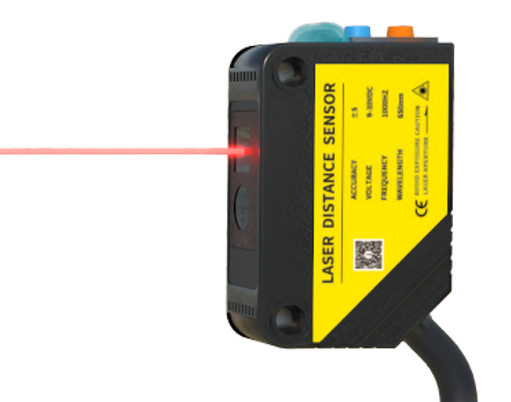
However, challenges persist, including thermal management, cost reduction for high-power variants, and ensuring long-term stability under continuous operation. Research is actively focusing on novel materials like quantum dots and photonic crystals to overcome these hurdles, promising even smaller form factors and higher performance. As the Internet of Things (IoT) and Industry 4.0 trends accelerate, the demand for smarter, more interconnected sensors will undoubtedly propel further innovation in laser light sources, solidifying their role as an indispensable component in modern sensing solutions.
In conclusion, the trajectory of laser light sources for sensors is marked by continuous refinement and adaptation. From enabling autonomous vehicles to "see" their surroundings to facilitating precise medical diagnostics, these光源 are not merely components but enablers of technological progress. Engineers and researchers must stay abreast of these developments to harness their full potential, ensuring that sensor systems remain at the forefront of innovation in an increasingly data-driven world.