In the realm of industrial automation and precision measurement, laser sensors have become indispensable tools. Among the leading technologies in this field, Fide laser sensors stand out for their reliability, accuracy, and versatility. This article delves into the operational principles, key features, and diverse applications of these sophisticated devices, providing a detailed overview for engineers and industry professionals.
At its core, a Fide laser sensor is a non-contact measurement device that utilizes a focused laser beam to detect the presence, position, or displacement of an object. The fundamental principle involves emitting a coherent laser light towards a target. The sensor then analyzes the reflected light. Different models employ various measurement methods, with the most common being triangulation and time-of-flight (ToF). Triangulation-based sensors are exceptional for high-precision, short-range measurements. A laser diode projects a spot onto the target surface, and the reflected light is focused onto a position-sensitive detector (PSD) or a CMOS/CCD array. The position of the light spot on the detector shifts proportionally to the distance of the target, allowing for micron-level resolution. Conversely, ToF sensors measure the time it takes for a laser pulse to travel to the target and back, calculating distance based on the speed of light. This method is ideal for longer ranges, though typically with slightly lower resolution compared to triangulation.

The engineering behind Fide laser sensors incorporates several advanced features that ensure robust performance in demanding environments. A critical component is the integrated microprocessor, which handles complex signal processing, filtering out ambient light interference and electronic noise to deliver stable and accurate readings. Many models feature automatic background suppression or advanced background evaluation, enabling them to ignore irrelevant objects beyond the set sensing window. This is particularly valuable in cluttered industrial settings. Furthermore, these sensors are often built with high-grade industrial housing, boasting IP67 or higher protection ratings. This makes them resistant to dust, water jets, oil, and mechanical impacts, ensuring longevity on factory floors, in outdoor installations, or in washdown areas. The use of visible red laser beams, as opposed to infrared, is another significant advantage. It simplifies installation, alignment, and troubleshooting, as the laser spot is clearly visible to the operator.
The application spectrum for Fide laser sensors is remarkably broad, spanning numerous industries. In automotive manufacturing, they are deployed for precise gap and flush measurement between body panels, checking part presence on assembly lines, and controlling robot positioning. The packaging industry relies on them for label detection, fill level control in bottles, and monitoring material web tension. In electronics assembly, their high precision is crucial for inspecting component placement on printed circuit boards (PCBs) and measuring solder paste height. Logistics and material handling utilize these sensors for palletizing, dimensioning parcels, and detecting objects on conveyor belts. Beyond these, they find use in wood processing for thickness monitoring, in metalworking for edge guidance and weld seam tracking, and in pharmaceutical applications for precise tablet counting and capsule inspection.
Selecting the appropriate Fide laser sensor requires careful consideration of several technical parameters. The sensing range, which defines the minimum and maximum distances for reliable operation, is paramount. Resolution, or the smallest detectable change in distance, determines the sensor's precision. Response time dictates how quickly the sensor can output a signal after detection, a vital factor for high-speed production lines. The type of output—whether digital (PNP/NPN), analog (4-20 mA, 0-10 V), or industrial bus protocols (IO-Link, PROFINET)—must be compatible with the existing control system. Environmental conditions such as temperature fluctuations, target surface properties (color, material, reflectivity), and potential exposure to contaminants must also be evaluated. For challenging surfaces like shiny metals or dark, absorbent materials, models with specialized teaching functions or diffuse reflection technology with coaxial optics are recommended to ensure consistent performance.
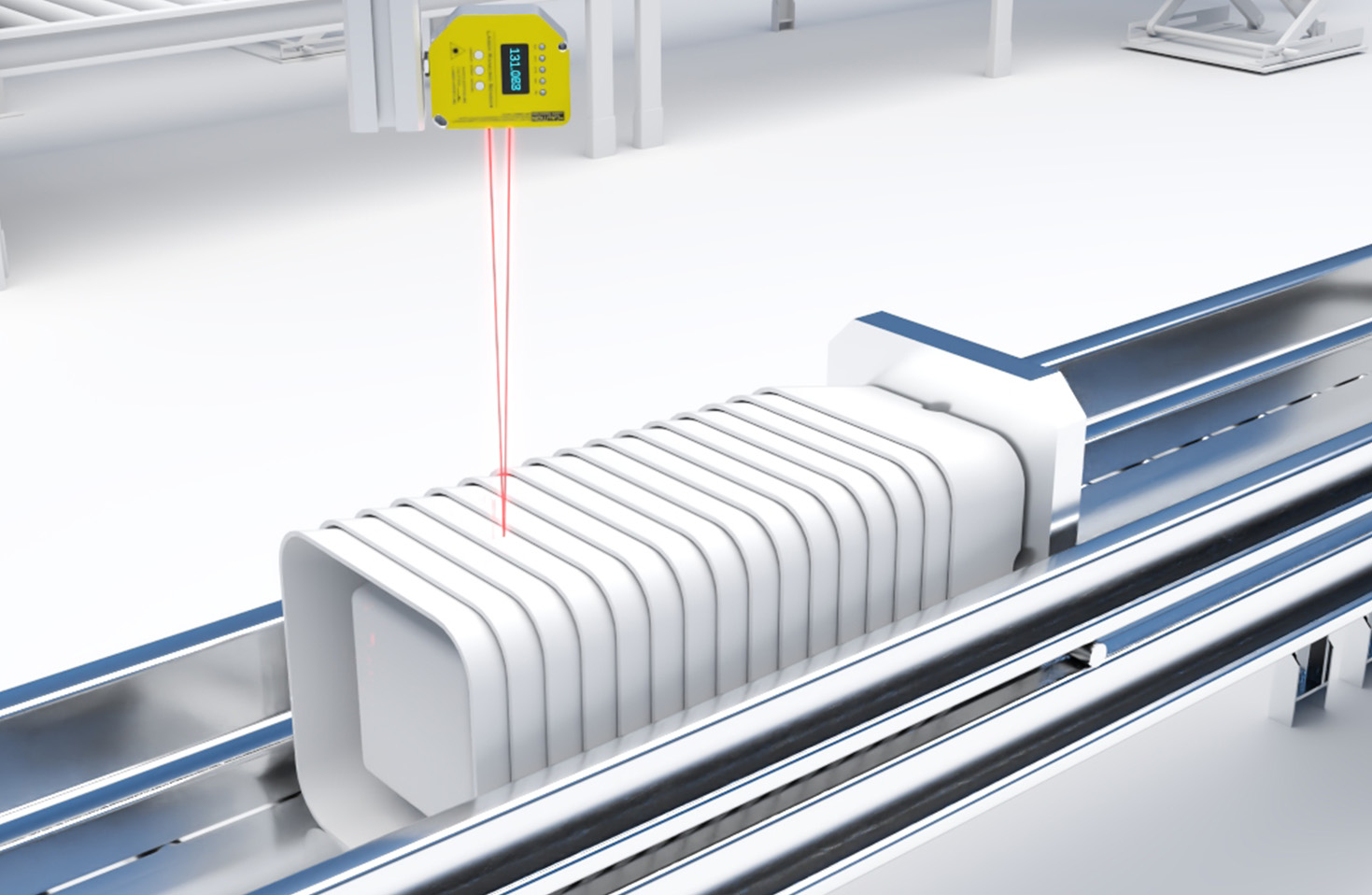
Installation and maintenance are straightforward but crucial for optimal operation. Proper mounting is essential to avoid mechanical stress and ensure a stable measurement path. The sensor should be aligned perpendicular to the target surface whenever possible to avoid cosine error. Regular cleaning of the lens with appropriate materials is necessary to prevent dust or grime from attenuating the laser beam. Most modern Fide sensors feature intuitive setup via teach-in buttons or software, allowing users to easily program switching points, output logic, and timing functions. Leveraging features like window mode, where only objects within a defined distance range are detected, can significantly enhance application reliability.
In conclusion, Fide laser sensors represent a pinnacle of optoelectronic measurement technology. Their combination of non-contact operation, high precision, environmental robustness, and application flexibility makes them a cornerstone of modern industrial automation. By understanding their working principles, key specifications, and implementation best practices, engineers can effectively harness their capabilities to improve quality control, enhance production efficiency, and enable more sophisticated automated processes. As Industry 4.0 and smart manufacturing continue to evolve, the role of precise, reliable, and connected sensors like those from Fide will only grow in importance.