In the realm of modern industrial manufacturing, the integrity and reliability of sensor connections are paramount. Sensor lead wire welding, particularly through laser technology, has emerged as a critical process for ensuring durable, high-performance electrical and mechanical bonds in a wide array of applications, from automotive and aerospace to medical devices and industrial automation. This article delves into the core principles, advantages, and best practices of laser welding for sensor leads, providing a technical overview for engineers and industry professionals.
Laser welding operates on the principle of using a highly focused beam of coherent light to generate intense localized heat. This heat melts the materials at the joint interface—typically the sensor's terminal pin (often made of alloys like Kovar, stainless steel, or copper) and the conductor wire (frequently copper, tinned copper, or specialized alloys). Upon solidification, a metallurgical bond is formed. The process is characterized by its non-contact nature, minimal heat-affected zone (HAZ), and exceptional precision. For delicate sensor components, which can be sensitive to thermal stress and mechanical shock, these attributes are invaluable.
The primary advantages of laser welding for sensor leads are numerous. First is precision and control. The laser spot size can be extremely small (down to microns), allowing for welds on miniature components without damaging adjacent sensitive elements like sensing membranes or ICs. This is crucial for MEMS sensors, pressure transducers, and temperature probes. Second is the strength and consistency of the weld joint. Laser welding produces deep, narrow welds with high depth-to-width ratios, resulting in superior tensile strength and excellent electrical conductivity compared to traditional methods like soldering or resistance welding. The absence of filler materials eliminates potential contamination and reduces joint resistance.
Third, the process offers remarkable repeatability and automation potential. Integrated with CNC systems or robotic arms, laser welders can perform thousands of identical welds with minimal variation, a necessity for high-volume production lines. Fourth, it is a clean process. There is no flux required, eliminating the need for post-weld cleaning to remove corrosive residues—a significant benefit for sensors used in sterile or harsh environments. Finally, the minimal thermal input reduces the risk of thermal distortion or damage to heat-sensitive internal sensor elements, preserving calibration and long-term stability.
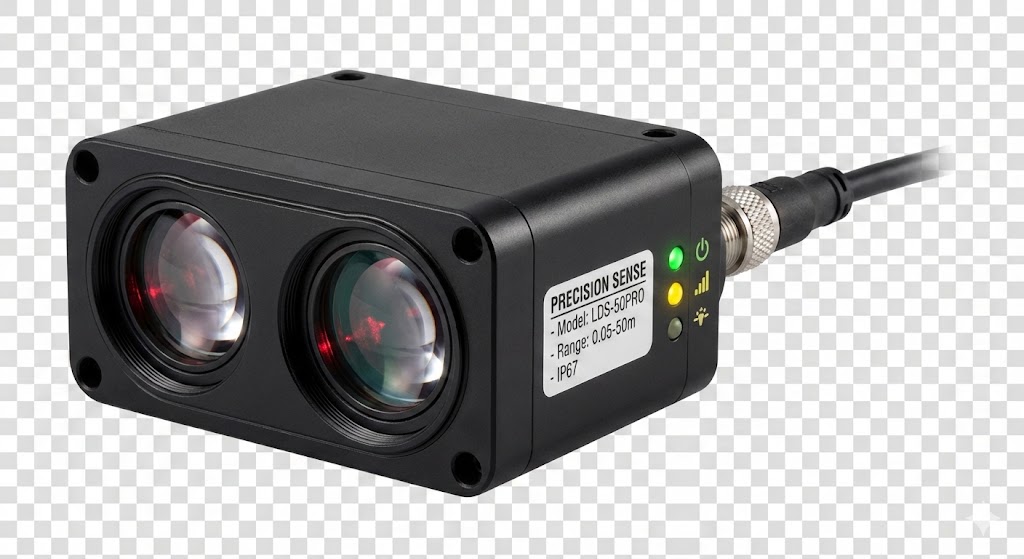
Key technical considerations for successful laser welding of sensor leads include material compatibility, joint design, and parameter optimization. Not all materials weld well together. Engineers must consider the metallurgical properties, such as thermal conductivity, reflectivity, and melting points. For instance, welding highly reflective materials like pure aluminum or copper requires specialized laser sources (e.g., green or blue lasers) or surface treatments to increase energy absorption. Joint design is equally critical; common configurations include lap joints, butt joints, and cross-wire welds. The design must ensure proper fit-up and alignment to guarantee consistent energy delivery and weld penetration.
Parameter optimization is a science in itself. The three main variables are laser power, welding speed, and pulse duration (for pulsed lasers). These parameters interact to control the heat input. Insufficient power or excessive speed leads to weak, incomplete fusion (lack of penetration). Excessive power or too slow speed can cause overheating, spatter, vaporization, or even burn-through, damaging the sensor. A systematic Design of Experiments (DOE) approach is often employed to find the optimal parameter window for a specific material pair and joint geometry.
Furthermore, the choice of laser type is pivotal. Fiber lasers, with their high beam quality and efficiency, are dominant in many industrial settings for welding metals. They offer excellent control for deep penetration welds. For very delicate or highly reflective materials, pulsed Nd:YAG lasers or newer disk lasers might be preferred. The shielding gas, typically argon or nitrogen, is used to protect the molten weld pool from oxidation, which can weaken the joint and increase electrical resistance.
In practical application, the process is often integrated into a controlled workstation. The sensor component is fixtured precisely, often under a microscope or camera for visual alignment. The laser path is programmed, and the weld is executed in a fraction of a second. Post-weld inspection is vital. Methods include visual inspection for surface defects, pull testing for mechanical strength, and microsection analysis to verify internal weld integrity and penetration depth.
The industry applications are vast. In automotive manufacturing, laser welding is used for oxygen sensor leads, crankshaft position sensors, and manifold pressure sensors, where vibration resistance and reliability under thermal cycling are critical. The aerospace sector relies on it for flight control sensors and engine monitoring probes, demanding the utmost in joint integrity. Medical device manufacturers use it for biosensors and implantable device connections, where biocompatibility and long-term stability are non-negotiable. In industrial settings, it ensures the robustness of pressure, flow, and level sensors in process control systems.
Despite its advantages, challenges persist. The initial capital investment for high-quality laser welding systems is significant. It requires skilled personnel for programming, maintenance, and process development. Additionally, for some dissimilar metal combinations, brittle intermetallic phases can form, potentially compromising joint durability, necessitating careful material selection and process tuning.
Looking ahead, trends point towards increased automation, smarter process monitoring using real-time sensors (like melt pool monitoring), and the integration of AI for adaptive parameter control and defect prediction. As sensors become smaller, more complex, and deployed in more extreme environments, the role of precision laser welding in ensuring their functional integrity will only grow more central. It is not merely a joining process but a fundamental enabler of innovation in sensor technology, providing the reliable electrical and mechanical lifeline that connects sensitive sensing elements to the wider world of data acquisition and control systems.