Proximity sensors are fundamental components in modern automation, robotics, and consumer electronics, enabling non-contact detection of objects. Their core functionality hinges on the sensing structure, which defines the method of detection, operational range, and suitability for specific environments. This article delves into the primary sensing structures employed in proximity sensors, explaining their principles and typical applications.
The most prevalent sensing structure is based on inductive technology. These sensors generate an electromagnetic field using a coil and oscillator circuit. When a metallic object enters this field, it induces eddy currents within the object, which in turn dampens the field's amplitude. The sensor's circuitry detects this change, triggering an output signal. Inductive proximity sensors are exceptionally robust, immune to dust, dirt, and moisture, making them ideal for harsh industrial settings like machine tools, conveyor systems, and automotive assembly lines. Their detection is limited to metals, with ferrous materials typically offering a longer sensing range than non-ferrous ones.
Capacitive sensing structures operate on a different principle. They generate an electrostatic field between a sensing electrode and ground. Any object, metallic or non-metallic, that enters this field alters the dielectric constant and thus the capacitance of the system. This change is measured by the internal circuitry. Capacitive sensors can detect a wide variety of materials, including liquids, plastics, glass, and wood. This versatility makes them suitable for level detection in tanks, material handling, and packaging applications. However, they can be more susceptible to environmental factors like humidity.
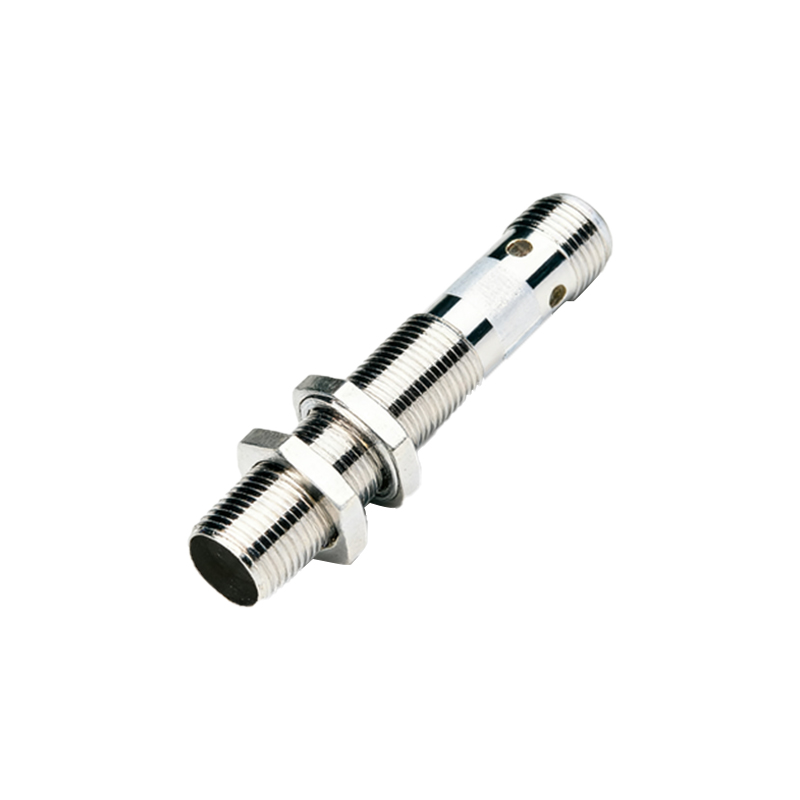
For longer-range detection and applications requiring precise distance measurement, ultrasonic sensing structures are dominant. These sensors emit high-frequency sound waves (typically beyond 20 kHz) and measure the time it takes for the echo to return from a target object. The time-of-flight calculation provides distance information. Ultrasonic sensors are excellent for detecting objects of virtually any material, shape, or color, and they perform well in challenging environments with dust or smoke. Common uses include parking assistance systems, bulk material level monitoring, and robotic obstacle avoidance.
Photoelectric sensors represent another major category, using light as the sensing medium. The basic structure involves an emitter (usually an LED or laser diode) and a receiver. They are configured in three main modes. Through-beam sensors have separate emitter and receiver units; an object is detected when it interrupts the light beam. Retro-reflective sensors use a single unit and a reflector, detecting an object when it blocks the reflected beam. Diffuse (proximity-mode) sensors have the emitter and receiver in one housing, detecting an object when it reflects the emitted light back to the receiver. Photoelectric sensors offer very long ranges and fast response times, ideal for counting, positioning, and assembly verification.
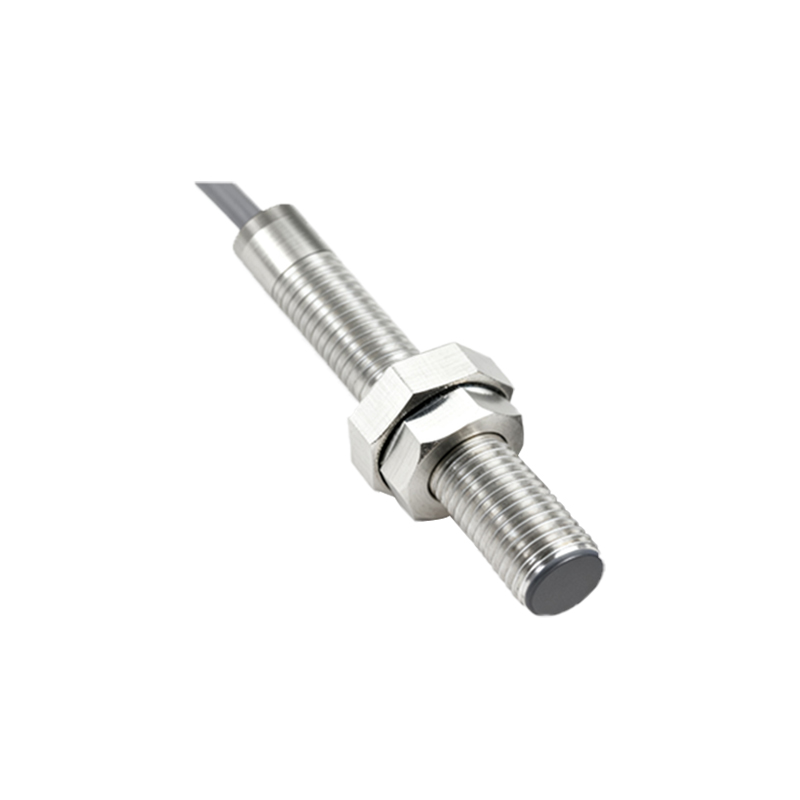
A specialized and increasingly important structure is the Hall-effect sensor. It detects the presence and strength of a magnetic field. When a permanent magnet or an electromagnet approaches the semiconductor chip within the sensor, it alters the voltage across the chip (the Hall voltage). This change is processed into a digital output. Hall-effect sensors are solid-state, wear-free, and extremely reliable, used extensively for detecting the position of rotating elements (e.g., in brushless DC motors), speed sensing, and as contactless limit switches.
The choice of sensing structure is a critical design decision. Engineers must consider the target material, required sensing distance, environmental conditions (temperature, contaminants), response speed, and cost. Inductive sensors excel with metals in dirty environments. Capacitive sensors handle diverse materials at shorter ranges. Ultrasonic sensors provide reliable long-range detection. Photoelectric sensors offer speed and precision with light. Hall-effect sensors deliver durability for magnetic sensing. Understanding these core structures is the first step toward selecting the right proximity sensor for any application, ensuring reliable performance and system integrity.