In the world of automation and smart devices, proximity sensors are the unseen sentinels. They detect the presence or absence of an object within a specific range without any physical contact. This non-contact detection principle is fundamental to countless modern technologies, from smartphones to advanced industrial robotics. Understanding how these sensors work opens a window into the seamless interaction we have with machines daily.
At its core, a proximity sensor operates by emitting a field or a beam of electromagnetic radiation, such as infrared light, an inductive electromagnetic field, or ultrasonic sound waves. The sensor then monitors for changes in this emitted field. When an object enters the detection zone, it interacts with the field. This interaction—be it reflecting light, disturbing an electromagnetic field, or absorbing sound—is detected by the sensor's receiver. The sensor's internal circuitry processes this signal change and triggers an output, typically an electrical switch signal. This entire process happens in milliseconds, enabling real-time response.
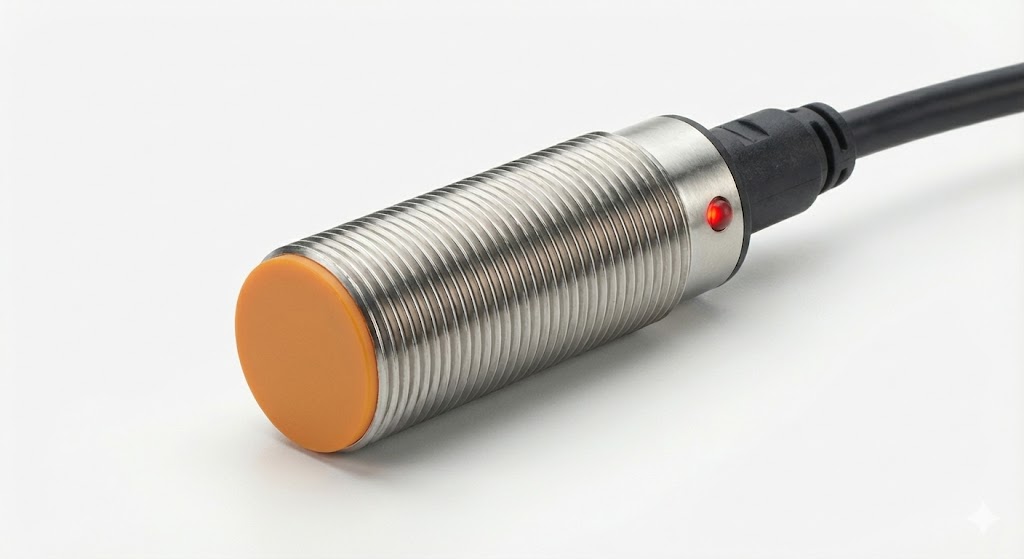
The working principle varies significantly based on the type of proximity sensor, each suited to different materials and environments. The most common types are inductive, capacitive, photoelectric, and ultrasonic.
Inductive proximity sensors are the workhorses of metal detection in industrial settings. They generate an oscillating electromagnetic field from a coil of wire at the sensing face. When a metallic object enters this field, eddy currents are induced on the metal's surface. These currents draw energy from the sensor's oscillator, causing its amplitude to decrease. The sensor's detection circuit monitors this amplitude drop and switches the output. A key advantage is their robustness; they are unaffected by dust, oil, or non-metallic debris, making them ideal for harsh factory floors. However, they only detect metals, with different metals affecting the sensing range.
For non-metallic objects like wood, plastic, liquids, or even a human hand, capacitive proximity sensors are the solution. They function similarly to inductive sensors but generate an electrostatic field instead. The sensor acts as one plate of a capacitor, and the target object acts as the other. When an object enters the field, it changes the capacitance of the system. The sensor's circuitry is tuned to a specific threshold; once the capacitance change exceeds this threshold, the output state changes. This makes them perfect for level detection in tanks, touch-sensitive interfaces, and detecting materials through non-metallic containers.
Photoelectric sensors use light, usually infrared or laser, to detect objects. They consist of an emitter and a receiver. In the most common through-beam configuration, the emitter and receiver are separate units. The object is detected when it breaks the light beam between them. In a retro-reflective setup, both units are in one housing, and a reflector bounces the light back; detection occurs when the beam is interrupted. Finally, in a diffuse or proximity mode, the sensor emits light and detects what is reflected directly from the target object. Photoelectric sensors offer long detection ranges and can sense virtually any material, but their performance can be affected by ambient light, color, and surface reflectivity.
Ultrasonic sensors operate on a principle akin to sonar. They emit high-frequency sound pulses (inaudible to humans) and measure the time it takes for the echo to return after bouncing off an object. By calculating the time-of-flight, the sensor can determine the distance to the object. This technology excels in applications requiring precise distance measurement or level sensing of liquids and bulk solids, even in challenging conditions like fog or dust where optical sensors might fail.
The choice of sensor depends heavily on the application's requirements: target material, required sensing distance, environmental conditions (temperature, contaminants), required response speed, and electrical output needs. In a smartphone, a miniature infrared proximity sensor detects when the phone is held to the ear during a call, turning off the display to save power and prevent accidental touches. In an automotive assembly line, an inductive sensor verifies that a metal component is correctly positioned before a robot welds it. In a public restroom, a capacitive sensor detects a person's hand to activate automatic faucets, promoting hygiene.
The evolution of proximity sensing continues with advancements in technology. Modern sensors are becoming smaller, more energy-efficient, and smarter with integrated diagnostics and digital communication capabilities like IO-Link. This allows for remote configuration and monitoring, predictive maintenance, and seamless integration into the Industrial Internet of Things (IIoT). From enabling simple presence detection to facilitating complex positioning and automation tasks, the humble proximity sensor remains a cornerstone of modern electromechanical design, its principle of non-contact interaction making our world more efficient, safe, and intuitive.