In the world of industrial automation, consumer electronics, and robotics, the ability to detect the presence or absence of an object and measure its distance without physical contact is fundamental. This capability is primarily enabled by proximity sensors. While often discussed as a single technology, the relationship between "proximity sensor" and "distance" is nuanced. Not all proximity sensors measure exact distance; many are designed for binary detection—simply indicating whether an object is within a predefined range. However, advancements have led to a significant category that provides precise, continuous distance data. Understanding this distinction is key to selecting the right sensor for any application.
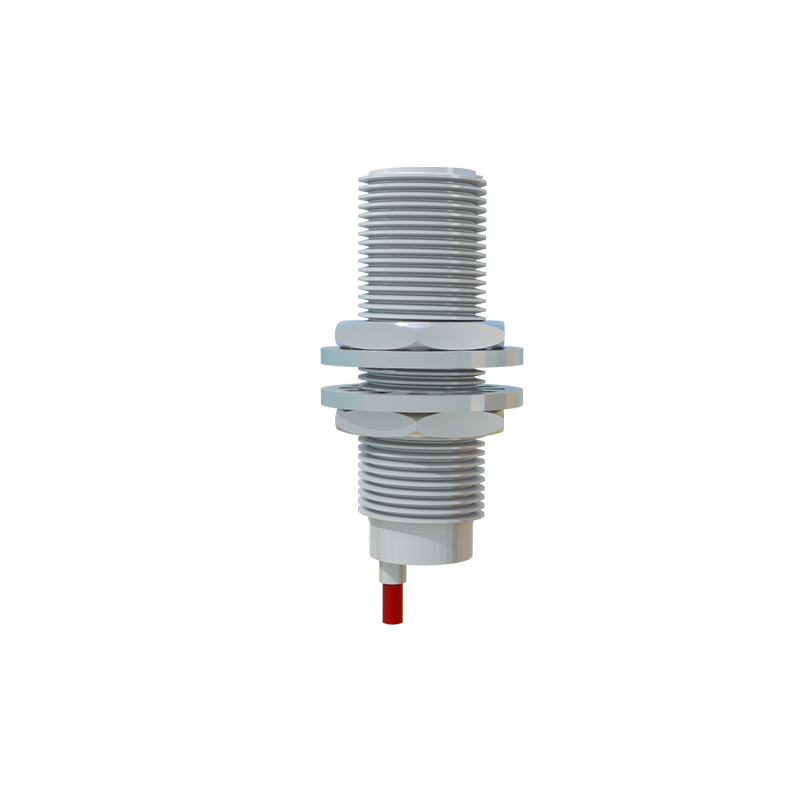
At its core, a proximity sensor is a device that emits a field or beam to sense the presence of a nearby object. The interaction with the target alters the field, and this change is converted into an electrical signal. The critical factor is the "sensing distance" or "range," which is the maximum distance at which the sensor can reliably detect a standard target. For simple inductive or capacitive sensors, this range is fixed and relatively short. An inductive sensor, for instance, generates an electromagnetic field to detect metallic objects. It triggers an output switch when a metal object enters its field, but it does not typically report how far away that object is—only that it is "close enough."
True distance measurement, or ranging, requires sensors that can quantify the change in the emitted field. The most common technologies for this purpose are ultrasonic sensors, laser distance sensors (LiDAR), and certain advanced infrared sensors. An ultrasonic sensor calculates distance by measuring the time-of-flight (ToF) of a sound pulse. It emits a high-frequency sound wave and listens for the echo. Since the speed of sound in air is known, the distance to the object is half the time delay multiplied by the speed of sound. These sensors are excellent for longer ranges (up to several meters) and are unaffected by object color or transparency, but they can be influenced by temperature and air turbulence.
Laser-based sensors, often using LiDAR or laser triangulation principles, offer high precision and speed. A laser ToF sensor works similarly to ultrasonic but uses light, providing micron-level accuracy over longer distances. Laser triangulation sensors project a laser spot onto the target; the reflected light strikes a position-sensitive detector. The spot's position on the detector shifts linearly with the target's distance, allowing for extremely precise measurement. These are ideal for demanding applications like robotic guidance, profile scanning, and thickness measurement.
Another prominent method is using infrared light with the ToF principle, commonly found in modern smartphones for autofocus and gesture control. These sensors integrate a modulated IR LED and a sensor that measures the phase shift between the emitted and reflected light, directly correlating to distance.
The choice between a simple proximity detector and a precise distance sensor hinges entirely on the application's requirements. For tasks like counting objects on a conveyor belt, detecting a door's open/closed state, or preventing machine collisions, a standard inductive or capacitive proximity switch is cost-effective and reliable. Its output is a clean digital signal: ON or OFF.
Conversely, applications such as liquid level monitoring in a tank, controlling the precise gap between a robot gripper and a part, mapping an environment for an autonomous vehicle, or enabling touchless gesture interfaces necessitate continuous analog output or digital data representing the exact distance. Here, ultrasonic, laser, or IR ToF sensors are indispensable. They provide an analog voltage or current signal proportional to distance, or communicate via digital protocols like I2C, SPI, or IO-Link.
When integrating a sensor for distance measurement, several environmental and target factors must be considered. The target material, color, and surface finish dramatically affect optical and ultrasonic sensors. A shiny, reflective surface can deflect a laser beam, while a soft, porous material may absorb ultrasonic waves. Ambient light can interfere with infrared sensors, and dust or fog can scatter both laser and ultrasonic signals. The required update speed is also crucial; laser sensors operate in microseconds, while ultrasonic sensors may require milliseconds for a full measurement cycle, making them unsuitable for very high-speed processes.
In summary, the term "proximity sensor" encompasses a broad spectrum. From simple switches that detect presence to sophisticated systems that map 3D environments with millimeter accuracy, the capability to measure distance is a powerful subset of this technology. By clearly defining whether the need is for binary detection or continuous ranging, and by carefully evaluating the operating environment and performance specifications, engineers and designers can leverage these sensors to create smarter, safer, and more efficient automated systems. The ongoing miniaturization and cost reduction of ToF technology are further blurring the lines, bringing precise distance measurement into an ever-wider array of products, from factory floors to our everyday devices.