In the realm of industrial automation and control systems, sensors act as the critical sensory organs, providing machines with the ability to perceive their environment. Among the diverse sensor families, ultrasonic and proximity sensors stand out for their non-contact detection capabilities, playing pivotal roles in countless applications from factory floors to smart buildings. This article delves into the operational principles, key applications, and practical considerations for selecting and deploying these essential components.
Ultrasonic sensors operate on a principle inspired by nature, specifically echolocation used by bats and dolphins. They generate high-frequency sound waves, typically above 20 kHz, which are inaudible to the human ear. The sensor emits a burst of these ultrasonic pulses and then listens for the echo. By precisely measuring the time interval between the emission and the reception of the reflected wave, the sensor calculates the distance to the target object using the known speed of sound in the medium (usually air). This time-of-flight (ToF) measurement enables highly accurate distance sensing, level detection, and presence checking, even for objects with complex surfaces or under challenging environmental conditions like dust, fog, or varying light levels.
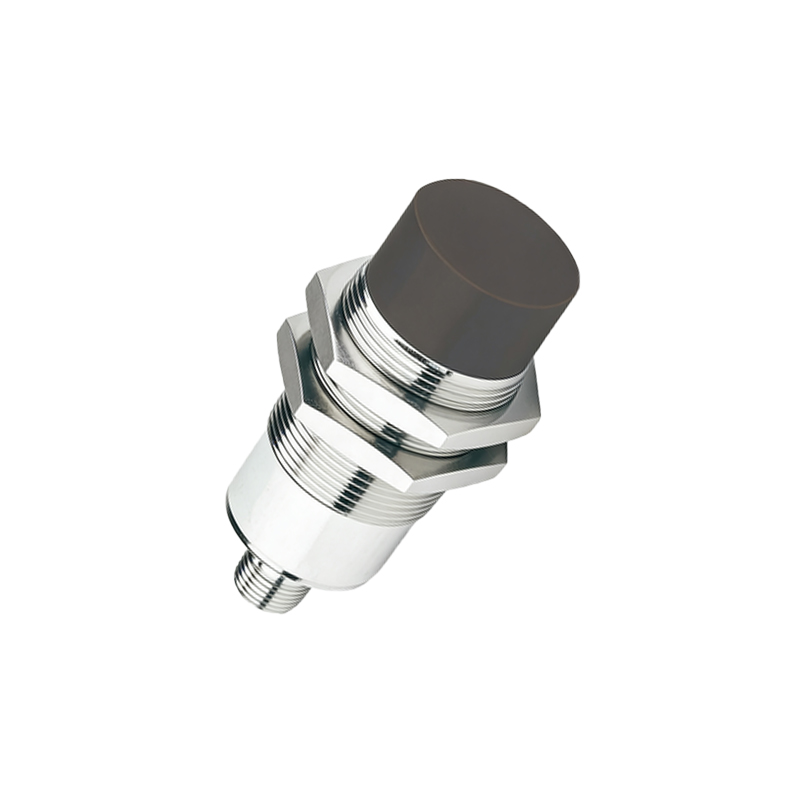
Proximity sensors, on the other hand, encompass a broader category of devices designed to detect the presence or absence of an object within a defined range without physical contact. The most common types include inductive, capacitive, and photoelectric sensors. Inductive proximity sensors detect metallic objects by generating an electromagnetic field and sensing changes caused by eddy currents induced in the target. Capacitive sensors can detect both metallic and non-metallic materials (liquids, plastics, wood) by measuring changes in capacitance caused by the object entering an electrostatic field. Photoelectric sensors use a light beam (visible, infrared, or laser) and detect interruptions or reflections of that beam.
The applications for these sensors are vast and integral to modern industry. Ultrasonic sensors are extensively used for continuous level measurement in tanks containing liquids, slurries, or bulk solids. They are ideal for controlling filling processes, preventing overflows, and managing inventory. In material handling and logistics, they guide autonomous mobile robots (AMRs), ensure precise pallet positioning, and detect objects on conveyor belts. Furthermore, they are employed in parking assistance systems, security perimeters, and even in clean environments for wafer handling in semiconductor fabrication.
Inductive proximity sensors are the workhorses of metal detection in manufacturing. They are crucial for part positioning on assembly lines, checking for the presence of metal components, counting metallic objects, and monitoring rotational speed via gear tooth sensing. Capacitive sensors find their niche in detecting non-metallic materials, such as monitoring plastic bottle levels, controlling wood or glass processing, and sensing liquid levels through container walls. Photoelectric sensors offer long-range detection and are perfect for object counting on high-speed packaging lines, detecting transparent films, and ensuring registration marks are correctly aligned.
Selecting the right sensor for an application requires careful analysis of several parameters. For ultrasonic sensors, key factors include the required sensing range, the beam angle (which affects resolution and blind zone), the target material and surface characteristics, and environmental factors like temperature fluctuations, air turbulence, and acoustic noise. The response time must be compatible with the process speed. For proximity sensors, the primary selection criteria are the sensing distance, the target material (metal, plastic, liquid), the required output type (PNP/NPN, analog, IO-Link), environmental robustness (IP rating, resistance to chemicals), and switching frequency.
Installation and maintenance are also critical for reliable operation. Ultrasonic sensors must be mounted securely to minimize vibration, and the sensing path should be clear of obstructions that could cause false echoes. Regular cleaning of the transducer surface is necessary to maintain accuracy. Proximity sensors must be positioned with respect to their specified nominal sensing distance, considering factors like embeddability and mutual interference when multiple sensors are placed close together. Ensuring a stable power supply and protecting cables from mechanical damage are universal best practices.
The evolution of Industry 4.0 and the Industrial Internet of Things (IIoT) is pushing these sensors toward greater intelligence and connectivity. Modern ultrasonic and proximity sensors increasingly feature integrated diagnostics, parameterization via software, and direct communication via industrial Ethernet protocols or IO-Link. This allows for predictive maintenance, remote monitoring, and seamless integration into larger control architectures, transforming raw detection data into actionable insights for optimizing entire production processes.
In conclusion, ultrasonic and proximity sensors are indispensable tools for achieving efficiency, safety, and precision in automated systems. Understanding their distinct operating principles, strengths, and limitations is fundamental for engineers and technicians tasked with designing, implementing, and maintaining modern industrial applications. By making an informed selection based on the specific demands of the task, one can ensure reliable performance and contribute to the creation of smarter, more responsive manufacturing and operational environments.