In the realm of industrial automation, the reliable detection of objects without physical contact is paramount. The JHL-L211DC24V stands as a robust and widely utilized inductive proximity sensor engineered to meet the rigorous demands of modern manufacturing and control systems. This article delves into the technical specifications, fundamental operating principles, and typical application scenarios for this DC 24V model, providing a comprehensive overview for engineers and technicians.
The JHL-L211DC24V is a cylindrical, shielded inductive proximity sensor. Its core function is to detect the presence of metallic objects—primarily ferrous metals like steel and iron, though it can also sense non-ferrous metals like aluminum, brass, and copper at a reduced sensing range. The "DC24V" designation indicates it operates on a 24 Volts Direct Current power supply, which is the standard industrial control voltage, offering a good balance between safety and performance. The sensor typically features a three-wire configuration: brown wire for DC+, blue wire for DC-, and a black wire for the switched output signal. This output is usually in the form of an NPN (sinking) or PNP (sourcing) transistor, providing a clean, fast switching signal compatible with Programmable Logic Controllers (PLCs), counters, and other control devices.
The operating principle is based on electromagnetic induction. Inside the sensor's face, an oscillator generates a high-frequency alternating magnetic field. When a metallic target enters this field, eddy currents are induced on the target's surface. These currents absorb energy from the oscillator, causing its amplitude to decrease. A detection circuit monitors this change. Once the amplitude drop reaches a predetermined threshold (corresponding to the rated sensing distance), the circuit triggers the solid-state output switch to change state—either from OFF to ON or vice-versa, depending on the sensor's logic (normally open or normally closed). This entire process occurs without any physical contact, eliminating mechanical wear and ensuring a long operational life, often rated in millions of cycles.
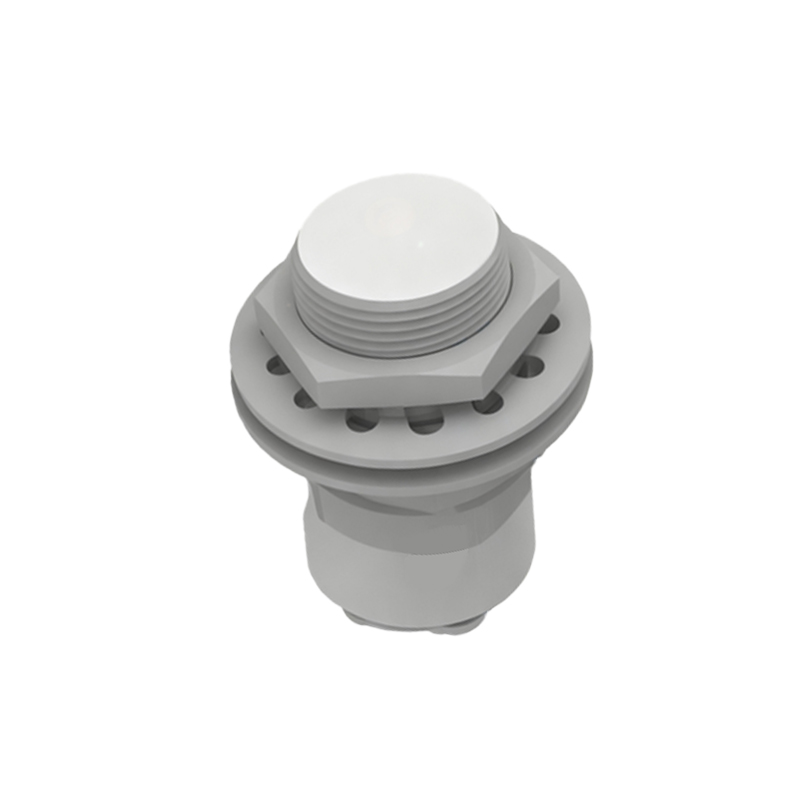
Key technical parameters for the JHL-L211DC24V are critical for proper selection and integration. The sensing distance, often 2mm for this model type, is nominal. It is crucial to consider factors like the target material, size, and shape, as they affect the actual effective range. The sensor features a built-in hysteresis, a small difference between the switch-on and switch-off points, to prevent output chatter when a target is at the exact sensing limit. Response frequency, indicating how many times per second the sensor can detect objects, is typically in the range of several hundred Hz to 1 kHz, suitable for high-speed counting or positioning tasks. Other vital specs include protection class (commonly IP67, making it dust-tight and capable of withstanding temporary immersion), temperature range, short-circuit and reverse polarity protection, and LED status indication for diagnostics.
In practical industrial applications, the JHL-L211DC24V proves its versatility. It is extensively used for position verification, such as confirming if a cylinder piston has fully extended or retracted. In conveyor systems, it detects the passage of metal parts for counting, sorting, or stopping mechanisms. It serves as a limit switch in automated machinery, providing end-of-travel signals. On rotary equipment, it can detect the presence of gear teeth or keyways for speed monitoring. Its robust housing allows it to perform reliably in harsh environments with vibration, coolant, or metal chips, common in CNC machining centers, packaging lines, and automotive assembly plants.
Installation and wiring require attention to detail. The sensor must be mounted securely, ensuring the target approaches the sensing face axially for maximum range. Adequate clearance from surrounding metal (non-target metals) is necessary to avoid false triggering—a specification detailed as the "embedded flush mountable" nature of shielded sensors. When connecting to a PLC input module, one must match the sensor's output type (NPN or PNP) with the PLC input sink/source requirements. Always refer to the manufacturer's datasheet for precise wiring diagrams and specifications.
In conclusion, the JHL-L211DC24V inductive proximity sensor is a fundamental component in industrial electrical engineering. Its non-contact operation, durability, and compatibility with standard DC control systems make it an indispensable tool for automation. Understanding its specifications, how it works, and its application best practices enables engineers to design more reliable, efficient, and maintainable control systems, ensuring seamless operation in diverse industrial settings.