In the rapidly evolving landscape of industrial automation, the demand for robust, precise, and reliable sensing solutions has never been greater. Among the critical components driving efficiency and safety are proximity sensors, and within this category, the EV Series of self-contained proximity sensors stands out as a benchmark of engineering excellence. Designed to meet the rigorous demands of diverse applications—from automotive assembly lines and packaging machinery to material handling and robotic systems—these sensors offer a blend of advanced technology, durability, and ease of integration that is essential for modern manufacturing environments.
Self-contained proximity sensors, such as those in the EV Series, are distinguished by their all-in-one design. Unlike modular sensors that require separate amplifiers or controllers, these units integrate sensing elements, signal conditioning, and output circuitry into a single, compact housing. This integration simplifies installation, reduces wiring complexity, and minimizes potential points of failure, leading to enhanced system reliability. The EV Series leverages this design philosophy to deliver consistent performance in challenging conditions, including exposure to dust, moisture, vibration, and electromagnetic interference.
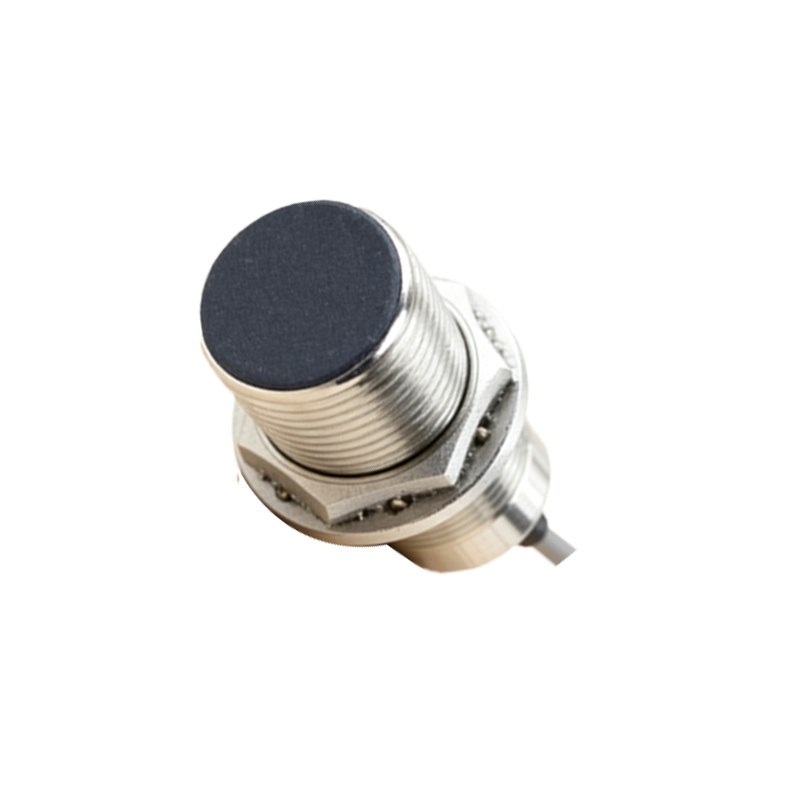
A key feature of the EV Series is its utilization of high-frequency oscillation technology for non-contact detection. These sensors are capable of detecting metallic objects—such as steel, aluminum, or copper—without physical contact, thereby eliminating mechanical wear and extending operational lifespan. Depending on the model, detection ranges can vary from a few millimeters to several centimeters, with high repeat accuracy ensuring precise positioning and counting tasks. The sensors are available in both shielded and unshielded configurations, allowing for flexible mounting in space-constrained applications where adjacent metal surfaces might otherwise cause interference.
Output options in the EV Series cater to a wide array of control system requirements. Standard models include NPN or PNP transistor outputs, as well as analog voltage or current outputs (e.g., 0-10V or 4-20mA) for applications requiring proportional feedback. Many variants also feature short-circuit and overload protection, reverse polarity protection, and LED status indicators for easy diagnostics. This versatility ensures seamless compatibility with PLCs (Programmable Logic Controllers), motor drives, and other industrial electronics, facilitating quick integration into existing automation networks.
Durability is a cornerstone of the EV Series design. Housings are typically constructed from stainless steel or ruggedized plastics, rated for IP67 or higher ingress protection. This makes them resistant to water, oil, and particulate matter, suitable for use in washdown environments or outdoor installations. Operating temperature ranges are broad, often spanning from -25°C to +70°C, ensuring functionality in both refrigerated storage facilities and high-temperature industrial ovens. Such resilience translates to reduced maintenance intervals and lower total cost of ownership over the sensor’s lifecycle.
Application scenarios for EV Series sensors are extensive. In automotive manufacturing, they are employed for part presence verification, robotic arm positioning, and conveyor belt monitoring. In food and beverage processing, their sealed designs allow for detection tasks in hygienic zones. Logistics and packaging industries benefit from their high-speed response times for sorting and filling operations. Furthermore, the sensors’ immunity to ambient light and color variations makes them ideal for use in environments with fluctuating lighting conditions.
When selecting an EV Series sensor, engineers should consider factors such as target material, required sensing distance, output type, environmental conditions, and mounting constraints. Proper alignment and installation are crucial for optimal performance; for instance, maintaining the recommended gap between the sensor face and the target prevents false triggers. Regular calibration and inspection, though minimal due to the sensors’ stability, help sustain long-term accuracy.
In conclusion, the EV Series self-contained proximity sensors represent a fusion of innovative design and practical engineering. By offering a reliable, maintenance-free solution for object detection, they contribute significantly to the optimization of automated processes. As industries continue to embrace Industry 4.0 and smart manufacturing principles, the role of precise sensing technology like the EV Series will only grow in importance, driving productivity, safety, and operational excellence across the globe.