Proximity sensors are ubiquitous in modern automation and electronics, silently performing critical detection tasks without physical contact. Understanding their internal structure and key components is fundamental to selecting the right sensor for an application and ensuring reliable operation. While designs vary significantly by sensing principle, most proximity sensors share a common architectural framework.
At the heart of any proximity sensor is the sensing element or oscillator. This is the core component that generates or modulates the field used for detection. In inductive sensors, this is a coil wound around a ferrite core, which creates an oscillating electromagnetic field. Capacitive sensors utilize conductive plates or the sensor face itself to form an electrostatic field. Photoelectric sensors employ a light-emitting element, typically an LED or laser diode. The design and material of this element directly determine the sensor's range, sensitivity, and target material compatibility.
Adjacent to the sensing element is the detection circuit. This circuitry monitors changes in the field or signal caused by a target's presence. In an inductive sensor, the circuit detects the damping of the oscillator's amplitude when a metallic object enters the field. A capacitive sensor's circuit measures changes in capacitance. For photoelectric types, a phototransistor or photodiode acts as the receiver, and the circuit interprets the intensity of the returned light. This stage converts a physical phenomenon into a weak electrical signal.
The signal from the detection circuit is then processed by the amplifier and signal conditioning unit. This is a critical component block, often an application-specific integrated circuit (ASIC). It amplifies the weak detection signal, filters out electrical noise and environmental interference, and compares the signal to a preset threshold. The threshold, often adjustable via a potentiometer or teach-in function, defines the precise switching point. This unit ensures stable switching despite supply voltage fluctuations or temperature variations.
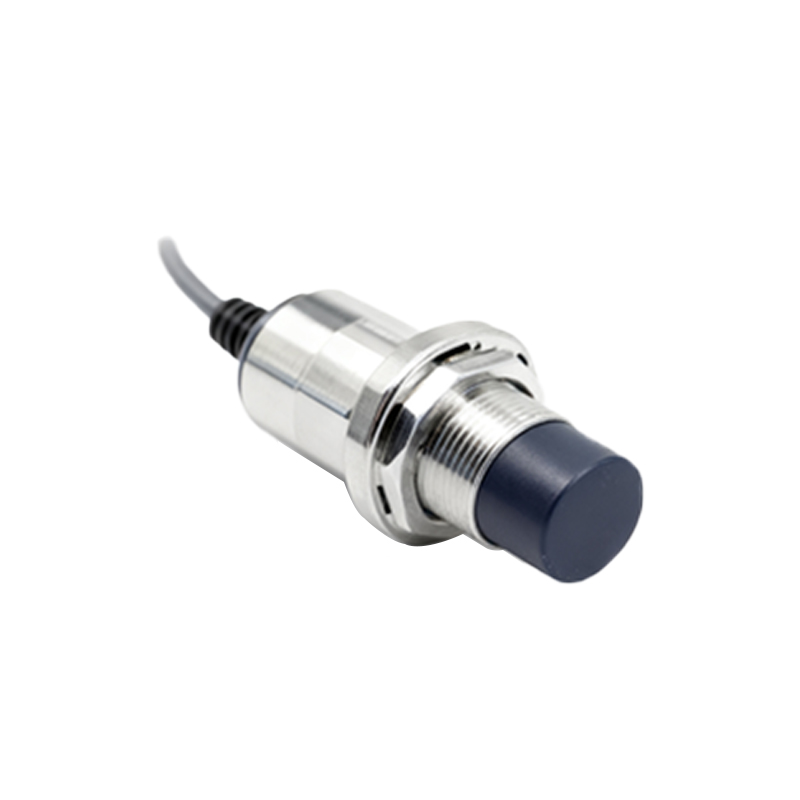
Following signal conditioning is the output stage. This component switches the final load. Solid-state switches like transistors (for DC sensors) or thyristors/TRIACs (for AC sensors) are most common. They provide a clean, fast, and wear-free switching action. Some sensors incorporate electromechanical relays in the output stage, though these are less common in standard proximity sensors due to slower switching and mechanical wear. The output stage is protected against short-circuits, overloads, and reverse polarity by integrated protection circuits.
Encasing and protecting these internal electronics is the housing. Typically made of metal (like brass or stainless steel) for inductive sensors or plastic (PBT, PVC) for capacitive and photoelectric types, the housing provides mechanical strength, environmental sealing (rated by IP codes), and chemical resistance. The front face, or sensing face, is a specially designed window. In inductive sensors, it is often a molded epoxy or ceramic compound that allows the magnetic field to pass while shielding the coil. Photoelectric sensors use lenses made of glass or optical-grade plastic to focus light.
Essential auxiliary components include the connection method, which can be pre-wired cables or quick-disconnect connectors, and status indicators. Almost all sensors feature an LED indicator that shows power status and output switching, crucial for diagnostics. For sensing elements that can be influenced by external factors, such as capacitive sensors, a sensitivity adjustment or shielding mechanism is integrated to minimize false triggers from non-target materials.
The physical arrangement of these components differs. In a standard cylindrical inductive sensor, the coil is wound around the longitudinal axis inside the head, with the oscillator and amplifier circuits positioned behind it, all potted in resin within a metal barrel. In a rectangular photoelectric sensor, the emitter and receiver are precisely aligned on opposite sides of a plastic housing, with the processing circuitry mounted on a printed circuit board between them.
In summary, the structure of a proximity sensor is a carefully integrated system where the sensing element interacts with the target, the detection and conditioning circuits interpret this interaction with high precision, and the robust output stage and housing translate this into a reliable industrial signal. Each component, from the ferrite core to the status LED, plays a vital role in achieving the non-contact detection that defines these versatile devices.