In the rapidly evolving landscape of electrical engineering and automation, the demand for reliable, non-contact human detection systems has never been greater. Proximity infrared (IR) sensors have emerged as a cornerstone technology in this domain, offering a sophisticated blend of precision, efficiency, and safety. These sensors operate on a fundamental principle: they emit an infrared light beam and detect changes in the received signal caused by the presence of an object, typically a human body, within a defined field of view. Unlike simple motion detectors, modern proximity IR sensors are engineered to distinguish the specific infrared signature of a human, minimizing false triggers from other heat sources or inanimate objects.
The core technology hinges on passive infrared (PIR) and active infrared sensing mechanisms. PIR sensors are widely used for occupancy detection. They do not emit IR radiation themselves but are sensitive to the thermal infrared energy radiated by all objects. A human body, with its distinct temperature profile, creates a detectable change in the infrared energy levels in the sensor's environment. The sensor contains a pyroelectric material that generates a temporary electrical voltage when exposed to infrared radiation. This voltage change is processed by a specialized circuit to confirm human presence. For more precise distance measurement or detection in controlled lighting, active IR sensors are employed. These consist of an IR LED emitter and a photodiode or phototransistor receiver. The sensor emits a modulated IR beam. When a person enters the detection zone, the beam is reflected back to the receiver. The time delay or the intensity of the reflected signal is analyzed to determine proximity. Advanced versions use triangulation or time-of-flight calculations for highly accurate distance ranging.
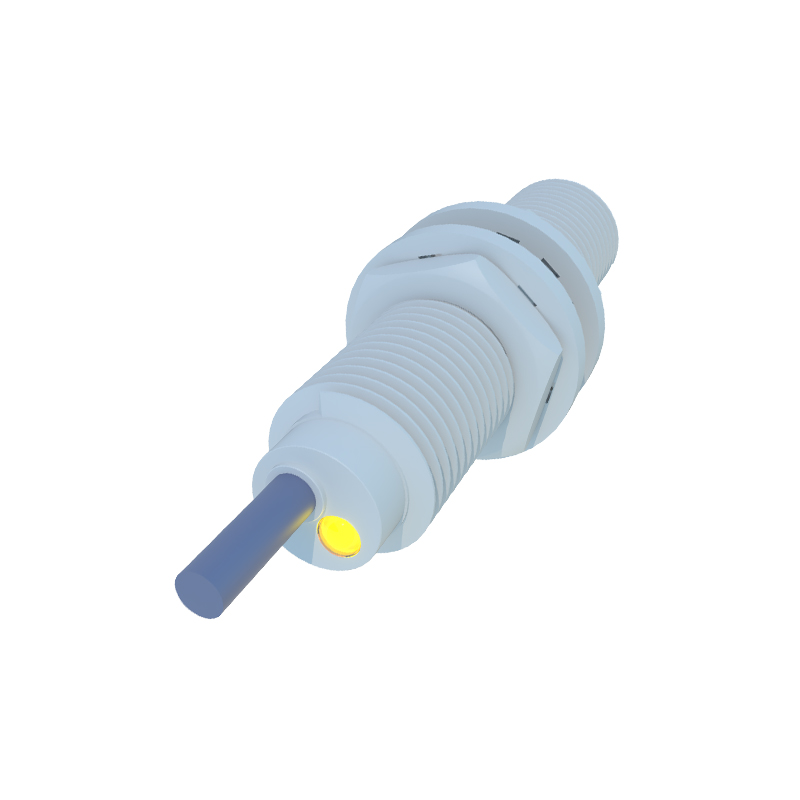
The applications within electrical and building systems are vast and critical. In building automation, these sensors are integral to energy conservation strategies, enabling smart lighting and HVAC systems that activate only when a space is occupied. In industrial settings, they form a vital part of safety interlocks on machinery, ensuring equipment halts operation when a worker is too close to a hazardous zone, thereby preventing accidents. They are also pivotal in security systems, automating alarms or access controls upon unauthorized intrusion. Furthermore, in consumer electronics and modern appliances, proximity IR sensors enable touchless interfaces, such as automatic faucets, soap dispensers, and hand dryers, promoting hygiene and convenience.
Designing and integrating these sensors requires careful consideration of several electrical and environmental parameters. The detection range, which can vary from a few centimeters to several meters, must be matched to the application. The field of view, expressed in degrees, defines the coverage area; a wider angle is suitable for room occupancy, while a narrow beam is ideal for precise point detection. Ambient temperature and the presence of other IR sources, like sunlight or heating vents, can interfere with PIR sensors. Shielding with Fresnel lenses helps focus IR radiation and can segment the detection zone into multiple sectors for improved discrimination. For active sensors, the reflectivity of the target's clothing and environmental factors like dust or fog can affect performance. Electrical engineers must also address power consumption, output signal type (digital or analog), and interfacing with microcontrollers or programmable logic controllers (PLCs) through standard protocols.
The future of human proximity sensing is leaning towards multi-technology fusion. Combining IR data with inputs from microwave radar, ultrasonic sensors, or video analytics creates robust systems that overcome the limitations of any single technology. For instance, while PIR is excellent for detecting presence, it provides little velocity or direction data, which radar can supplement. Additionally, the miniaturization of components and the advent of low-power, wide-area networking (LPWAN) are enabling wireless, battery-operated sensor nodes for the Internet of Things (IoT), facilitating large-scale, smart infrastructure deployments.
In conclusion, proximity infrared sensors represent a mature yet continuously advancing field in electrical engineering. Their ability to provide reliable, non-intrusive human detection makes them indispensable for safety, efficiency, and automation across residential, commercial, and industrial domains. A deep understanding of their operating principles, types, and integration challenges is essential for engineers tasked with designing the intelligent systems of today and tomorrow.