In the realm of industrial automation and control systems, the reliability and efficiency of sensing technology are paramount. Among the diverse array of sensors available, the square two-wire proximity sensor switch stands out as a fundamental component for countless applications. This article delves into the operational principles, key features, advantages, and typical use cases of these robust and versatile devices.
At its core, a square two-wire proximity sensor is a non-contact electronic device designed to detect the presence or absence of a metallic target object without any physical contact. The "square" designation refers to its housing shape, which is often preferred for easier mounting and integration into machinery with flat surfaces. The "two-wire" configuration is a significant aspect of its design simplicity. Unlike three-wire or four-wire sensors that require separate power, output, and sometimes ground wires, a two-wire sensor integrates seamlessly into the control circuit. It is wired in series with the load (such as a PLC input, relay, or indicator lamp), significantly simplifying installation and reducing wiring costs and complexity. It operates similarly to a conventional switch but does so electronically and without moving parts.
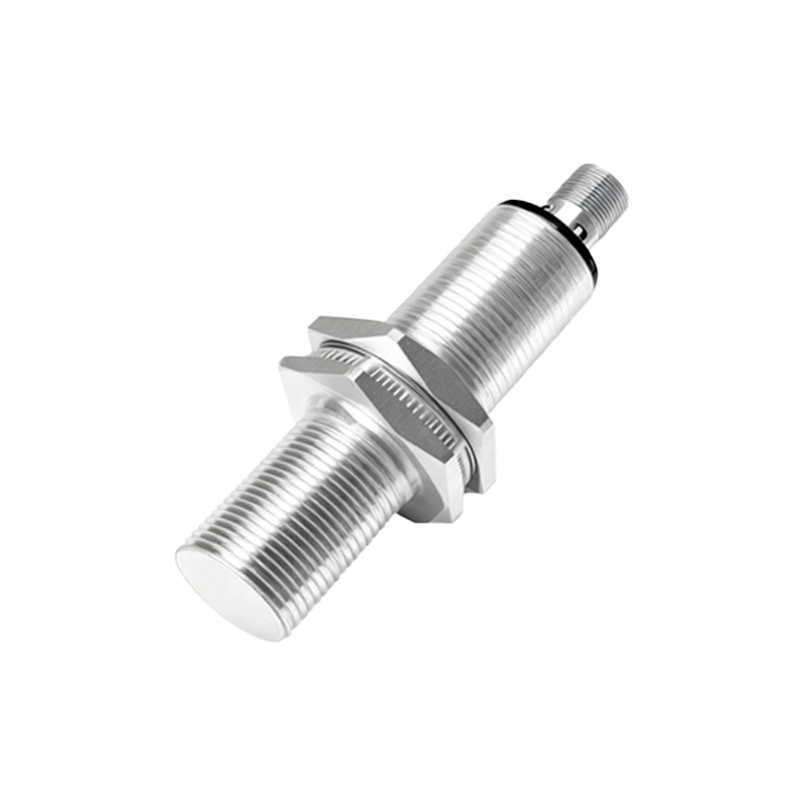
These sensors primarily function on the inductive sensing principle. An internal oscillator generates a high-frequency electromagnetic field at the active face of the sensor. When a ferrous or non-ferrous metal target enters this field, eddy currents are induced in the target. This causes a change in the oscillation amplitude or frequency within the sensor. An evaluation circuit detects this change and triggers a solid-state switching action. In a two-wire DC system, the sensor essentially acts as a variable resistance, allowing current to flow to the load when a target is detected (or absent, depending on the switching logic—Normally Open or Normally Closed).
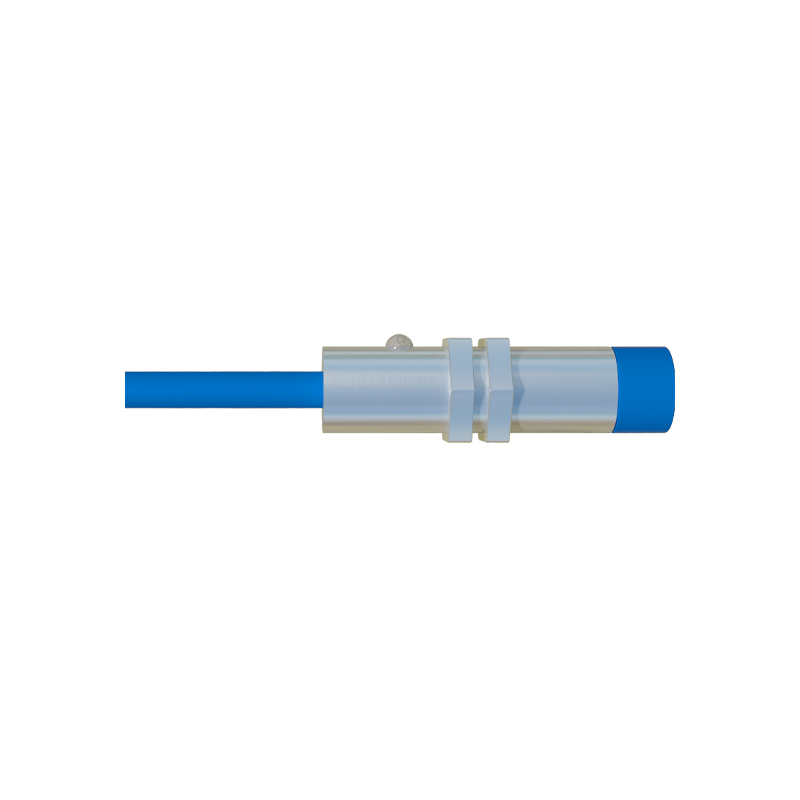
The advantages of square two-wire proximity sensors are numerous. Their rugged, typically IP67-rated square housing offers excellent resistance to dust, moisture, oils, and coolants, making them ideal for harsh industrial environments. The absence of mechanical contacts eliminates issues like wear, contact bounce, and arcing, leading to an exceptionally long operational life and maintenance-free performance. Their high switching frequency allows for detection of rapidly moving objects on production lines. The simple two-wire connection drastically cuts down on installation time, potential wiring errors, and material costs. Furthermore, their compact square design allows for dense mounting in confined spaces.
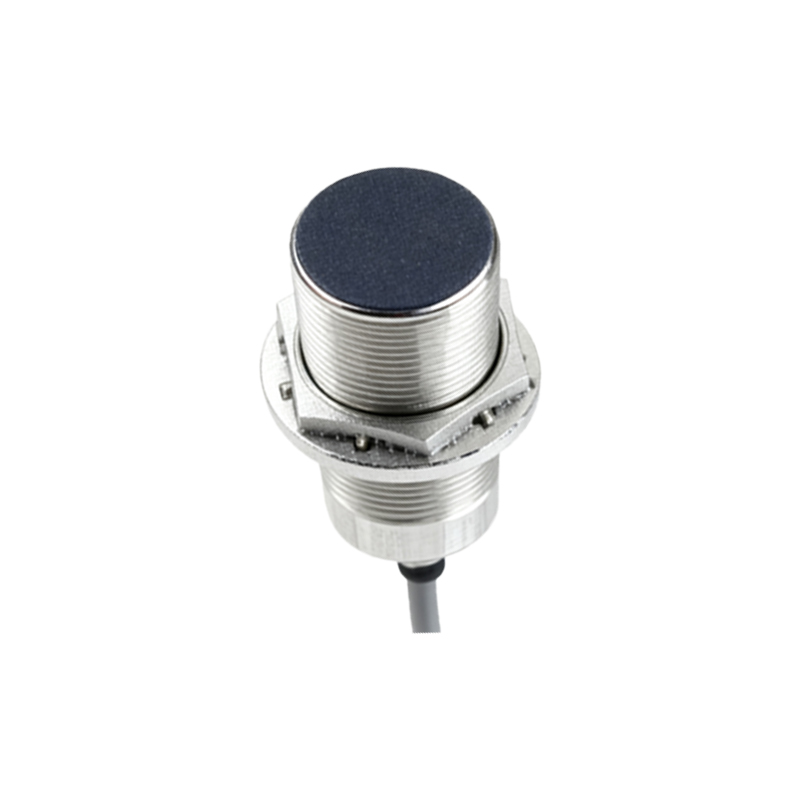
When selecting a square two-wire proximity sensor, several critical specifications must be considered. The sensing distance, or nominal range, is crucial and must be chosen with a safety margin to account for target material, size, and environmental factors. The operating voltage range (e.g., 10-30V DC) must be compatible with the control system. The switching current and leakage current are vital parameters; the sensor must be able to handle the load current, and the residual leakage current when "off" must be low enough not to inadvertently activate the connected load. Output function (NO or NC) and housing material (often nickel-plated brass or stainless steel) are also key selection criteria.
Typical applications are widespread across manufacturing and processing industries. They are extensively used for position sensing—detecting the presence of a metal part on a conveyor, verifying the open/closed status of a metal door or guard, or confirming the end position of a pneumatic cylinder. They serve as vital components in automated assembly lines for part counting and object detection. In packaging machinery, they ensure correct product placement. Their robustness also makes them suitable for use in machine tools, material handling equipment, and automotive production systems.
In conclusion, the square two-wire proximity sensor switch represents an optimal blend of simplicity, durability, and performance. Its straightforward integration, non-contact operation, and resilience under demanding conditions make it an indispensable tool for engineers and system integrators. By understanding its operating principles and specifications, professionals can effectively deploy these sensors to enhance the reliability, safety, and efficiency of modern industrial automation systems, ensuring seamless and continuous operation.