Proximity sensors are indispensable components in modern industrial automation and control systems. Their primary function is to detect the presence or absence of an object within a specified range without any physical contact. This non-contact detection capability is the cornerstone of their widespread adoption. The key features that define their performance and suitability for various applications can be examined across several technical and operational dimensions.
First and foremost, the non-contact sensing principle is the defining characteristic. Unlike mechanical limit switches, proximity sensors operate by emitting an electromagnetic field, beam, or ultrasonic waves. The presence of a target object alters this field, which is then detected by the sensor. This eliminates mechanical wear and tear, significantly enhancing operational lifespan and reliability. It also allows for the detection of fragile, delicate, or fast-moving objects that could be damaged by physical contact.
The high switching frequency and fast response time are critical for high-speed automation. Modern inductive and capacitive proximity sensors can achieve switching frequencies in the kilohertz range, with response times measured in microseconds. This enables precise detection and positioning in rapid assembly lines, packaging machinery, and robotic applications, ensuring process synchronization and efficiency.
Environmental robustness is a paramount feature. Industrial-grade proximity sensors are designed to withstand harsh conditions. They typically feature robust housings made of materials like nickel-plated brass, stainless steel, or PBT plastic, offering high resistance to vibration, shock, and mechanical stress. Many models possess high Ingress Protection (IP) ratings (e.g., IP67, IP69K), making them resistant to dust, water jets, and even temporary immersion. This durability ensures consistent performance in demanding environments such as metalworking, food processing, and outdoor applications.
Another significant feature is exceptional sensing accuracy and repeatability. Proximity sensors provide precise and consistent detection points. The repeatability, often within micrometers, ensures that a machine or process is triggered at the exact same position every cycle, which is vital for quality control and precision manufacturing. Factors like temperature fluctuations and supply voltage variations have minimal impact on their sensing performance due to built-in compensation circuits.
The diverse sensing ranges and object material compatibility cater to a wide array of needs. Inductive sensors are ideal for detecting metallic objects, with sensing ranges varying from a few millimeters to several centimeters, depending on the target metal's properties. Capacitive sensors can detect both metallic and non-metallic materials (plastics, wood, liquids, granules), making them versatile for level detection or material handling. Ultrasonic sensors offer even longer ranges and can detect objects regardless of color or material transparency.
Output configuration flexibility enhances integration into control systems. Proximity sensors are available with various output types, including DC NPN/PNP (sourcing or sinking), Analog (4-20 mA, 0-10V), and IO-Link digital communication outputs. NPN and PNP transistor outputs are standard for simple on/off switching, while analog outputs provide continuous distance information. IO-Link enabled sensors offer advanced diagnostics, parameterization, and process data exchange, aligning with Industry 4.0 smart factory concepts.

Electrical characteristics and wiring simplicity contribute to ease of use. Most sensors operate on a wide range of DC voltages (commonly 10-30V DC) or AC voltages. They often feature short-circuit and reverse polarity protection, preventing damage from wiring errors. The standard 3-wire or 2-wire designs simplify installation and connection to Programmable Logic Controllers (PLCs) or other control units.
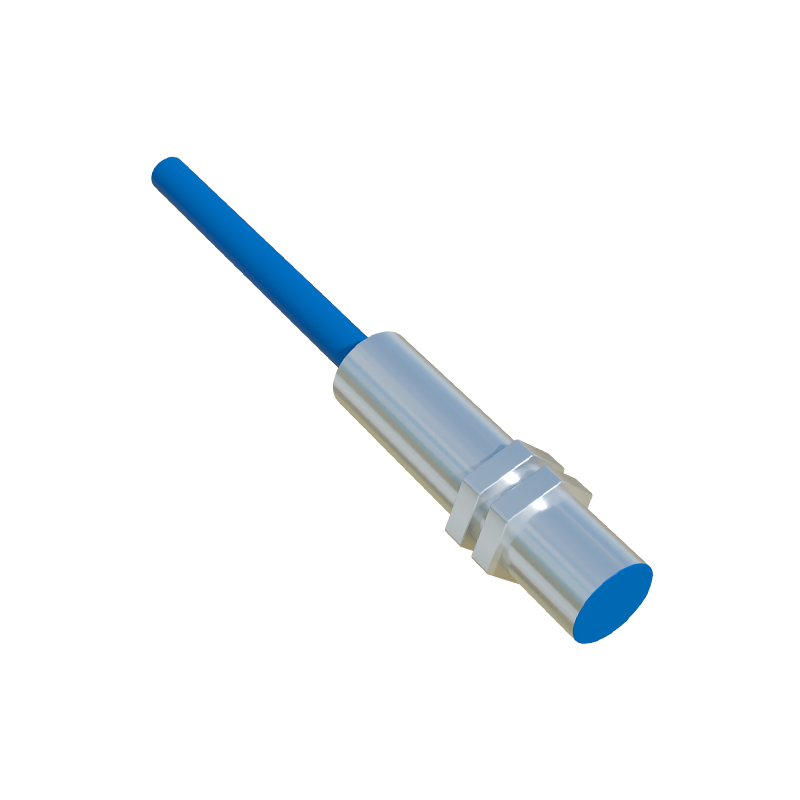
Finally, compact design and mounting versatility allow for installation in space-constrained locations. Manufacturers offer sensors in tubular (e.g., M8, M12, M18, M30 threads) and rectangular form factors. Various mounting options, such as flush-mountable and non-flush-mountable styles, provide solutions for different installation requirements and sensing field configurations.
In summary, the combination of non-contact operation, high speed, environmental durability, precision, material versatility, flexible outputs, and compact design makes proximity sensors a fundamental and highly reliable choice for object detection, positioning, counting, and inspection across countless industrial sectors, from automotive manufacturing to pharmaceutical production.