Capacitive M18 proximity sensors are versatile and robust devices widely used in industrial automation for non-contact detection of various objects. Unlike inductive sensors that only detect metals, capacitive sensors can detect a broad range of materials, including liquids, plastics, glass, and granular substances, by measuring changes in capacitance. The M18 housing, with its 18mm diameter threaded barrel, is a standard form factor offering excellent mechanical strength and easy installation in diverse industrial environments.
The operating principle of a capacitive M18 sensor is based on the formation of an electrostatic field between its active face and the target object. The sensor contains an oscillator circuit that generates this field. When a target enters the detection zone, it alters the dielectric properties of the field, causing a change in capacitance. This change is evaluated by the sensor's internal circuitry, which then triggers a switching output—typically a PNP, NPN, or analog signal. A key feature is the adjustable sensitivity potentiometer, often located on the rear or side of the housing. This allows technicians to fine-tune the sensing range to ignore background materials (like a container wall) and reliably detect the target material, even through non-metallic barriers.
Applications for capacitive M18 sensors are extensive across multiple sectors. In packaging and food & beverage industries, they are indispensable for level detection of liquids, powders, or granules inside non-metallic tanks, silos, or hoppers. They can reliably detect the presence of plastic bottles, glass containers, or cardboard boxes on conveyor lines. In woodworking and paper processing, they monitor the presence of materials where inductive sensors would fail. Another critical use is in assembly automation, where they verify the presence of non-metallic components, such as rubber gaskets or plastic caps, ensuring process completeness. Their sealed construction (often meeting IP67 or IP69K ratings) makes them suitable for washdown areas in pharmaceutical or dairy plants.
When selecting a capacitive M18 proximity sensor, several technical parameters must be considered. The sensing range, typically from 2mm to 15mm for standard models, is a primary factor. It is crucial to note that the rated sensing distance is defined for a grounded metal target; for non-metallic materials, the effective range is reduced and varies with the material's dielectric constant. The output type must match the control system's input requirements: a 3-wire DC PNP (sourcing) or NPN (sinking) transistor output is most common for discrete signals, while analog outputs (4-20mA or 0-10V) are used for continuous level monitoring. Supply voltage compatibility (commonly 10-30V DC) and current rating are essential for electrical integration. Environmental robustness is dictated by the housing material (often nickel-plated brass or stainless steel) and the Ingress Protection (IP) rating. For challenging conditions involving dust, moisture, or chemical exposure, sensors with high IP ratings and specialized housing materials are mandatory.
Installation and setup practices significantly impact sensor performance. Maintaining the proper clearance around the sensor's active face—known as the flush or non-flush mounting requirement—is critical to prevent false triggers from the surrounding metal. Non-flush mountable sensors offer longer ranges but require lateral clearance. The sensitivity adjustment should be performed with the target material in the actual application position to achieve reliable switching while avoiding interference from the background. Regular maintenance involves checking for buildup of material residues on the sensing face, which can degrade performance, and ensuring electrical connections remain secure.
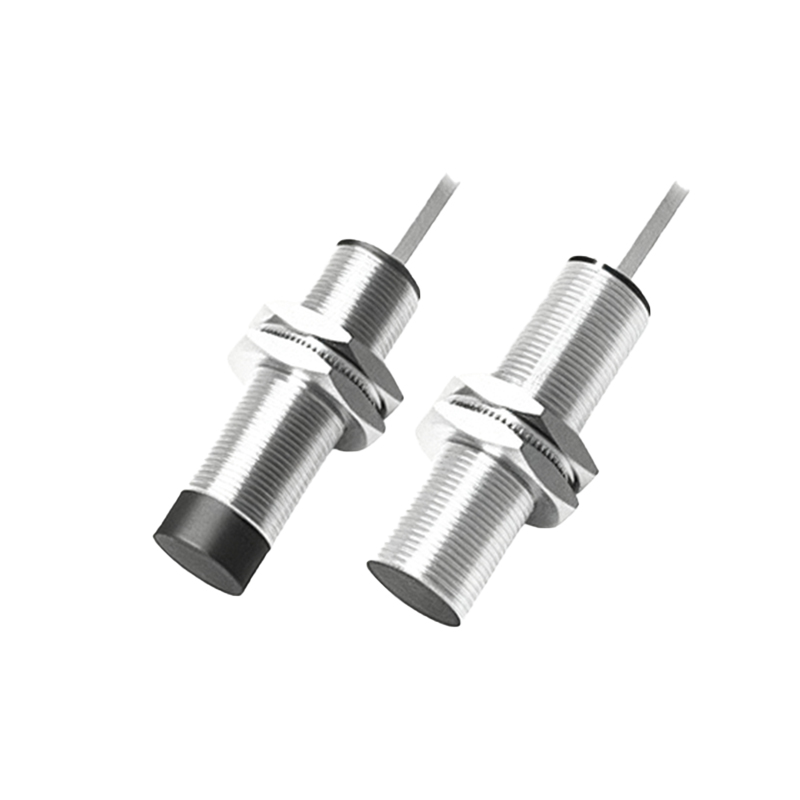
In summary, the capacitive M18 proximity sensor is a fundamental component in modern industrial sensing, prized for its material versatility and durability. Its ability to detect through non-metallic walls and its adjustable sensitivity make it a flexible solution for complex detection tasks. By understanding its operating principles, key specifications, and application best practices, engineers and technicians can effectively deploy these sensors to enhance automation system reliability, improve process control, and reduce downtime across a wide spectrum of industries.