Proximity sensors represent a cornerstone technology in modern industrial automation, enabling non-contact detection of objects and materials. This article synthesizes key findings from prominent English-language literature, providing an overview of sensor types, operating principles, applications, and emerging trends for engineering professionals.
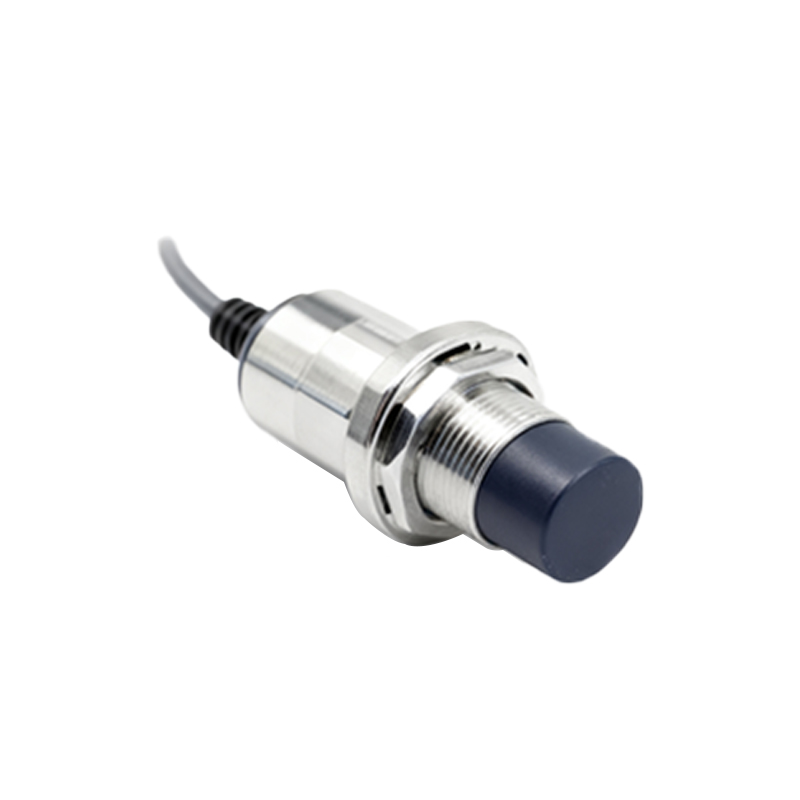
Fundamentally, proximity sensors detect the presence or absence of an object within a specified range without physical contact. The primary technologies, as extensively documented in technical handbooks and IEEE publications, include inductive, capacitive, ultrasonic, and photoelectric sensors. Inductive sensors, detailed in works like "Sensor Technology Handbook" by Jon S. Wilson, are predominantly used for detecting metallic objects. They operate on the principle of electromagnetic induction, where an oscillator creates a fluctuating magnetic field. The introduction of a metallic target into this field induces eddy currents, causing a change in the oscillator's amplitude that is detected and converted into a switching signal. Their robustness, insensitivity to non-metallic contaminants, and high switching frequencies make them indispensable in metalworking, machine tools, and automotive assembly lines.
Capacitive sensors, in contrast, can detect both metallic and non-metallic materials such as plastics, glass, liquids, and granular substances. Technical literature, including application notes from major manufacturers like Pepperl+Fuchs and Siemens, explains that these sensors function by generating an electrostatic field. Any object entering this field alters the sensor's capacitance, triggering an output state change. This versatility finds application in level detection of liquids or bulk materials, packaging industries, and presence detection of non-metallic objects. A key consideration, often highlighted in installation guides, is their sensitivity to environmental factors like humidity and temperature, necessitating careful calibration.
Ultrasonic sensors emit high-frequency sound waves and evaluate the reflected signal. As reviewed in journals like "IEEE Sensors Journal," they measure the time-of-flight of the sound pulse to determine distance, making them effective for both presence sensing and precise distance measurement over longer ranges. They perform reliably in challenging environments with dust, smoke, or light interference, common in material handling, logistics, and collision avoidance systems for automated guided vehicles (AGVs). However, literature cautions about their potential limitations with sound-absorbing materials or in environments with significant air turbulence.
Photoelectric sensors, comprising through-beam, retro-reflective, and diffuse reflective types, utilize a light emitter and receiver. Through-beam sensors, offering the longest range and highest reliability, are frequently discussed in automation texts for applications like object counting on high-speed conveyors or break-in detection in safety curtains. Diffuse sensors, where the target reflects light back to the receiver, are common for detecting objects at shorter ranges where installing a separate receiver is impractical. Recent literature, such as papers from SPIE conferences, emphasizes advancements in background suppression and focused beam control, enhancing their precision.
The selection criteria for these sensors, a recurrent theme in engineering manuals, involve a multi-factorial analysis. Key parameters include sensing distance (rated versus effective), target material and size, required output type (e.g., NPN/PNP, analog, IO-Link), environmental conditions (IP rating, temperature range), and response time. The integration of smart sensor technology with industrial communication protocols like IO-Link is a significant trend documented in recent literature. This enables remote configuration, real-time diagnostics, and parameter switching, contributing to the Industry 4.0 paradigm of flexible and data-driven manufacturing.
Emerging research directions, as seen in proceedings from conferences like the IEEE International Conference on Industrial Technology (ICIT), focus on enhancing sensor intelligence, miniaturization, and multi-functionality. Developments in MIMO (Multiple-Input, Multiple-Output) radar-based proximity sensing and the fusion of sensor data with machine learning algorithms for predictive maintenance and advanced object classification are areas of active exploration. Furthermore, the demand for sensors capable of operating in extreme environments, such as high-temperature foundries or sterile pharmaceutical settings, continues to drive material and design innovation.
In conclusion, the extensive body of English literature on proximity sensors provides a robust framework for understanding their operational mechanics and strategic deployment. For the practicing engineer, a firm grasp of these principles is essential for designing efficient, reliable, and increasingly intelligent automated systems. The evolution of sensor technology remains tightly coupled with the broader advancement of industrial automation, promising greater precision, connectivity, and adaptability in the factories of the future.