Dynamic laser sensors represent a pivotal advancement in industrial measurement and automation, leveraging the principles of laser interferometry, time-of-flight, and triangulation to achieve high-precision, non-contact detection. These sensors operate by emitting a focused laser beam toward a target object. The interaction between the laser light and the object—whether through reflection, scattering, or modulation—is captured and analyzed to determine critical parameters such as distance, displacement, velocity, and surface profile.
One foundational principle is laser triangulation. Here, a laser diode projects a spot onto the target surface. The reflected light is focused onto a position-sensitive detector, typically a CCD or CMOS array. As the target distance changes, the position of the reflected spot shifts on the detector. Using geometric relationships and calibrated algorithms, the sensor calculates the exact distance with micron-level resolution. This method is extensively used in quality control for measuring thickness, vibration, and contour dimensions on production lines.
Another core technology is time-of-flight (ToF) measurement. The sensor emits short laser pulses and measures the time delay between emission and reception of the reflected signal. Since the speed of light is constant, the distance is derived from the formula: distance = (speed of light × time delay) / 2. Modern dynamic laser sensors enhance ToF with phase-shift analysis, where the phase difference between modulated outgoing and incoming continuous-wave laser beams is measured, allowing for even higher accuracy in dynamic ranging applications, such as autonomous vehicle navigation and large-scale 3D mapping.
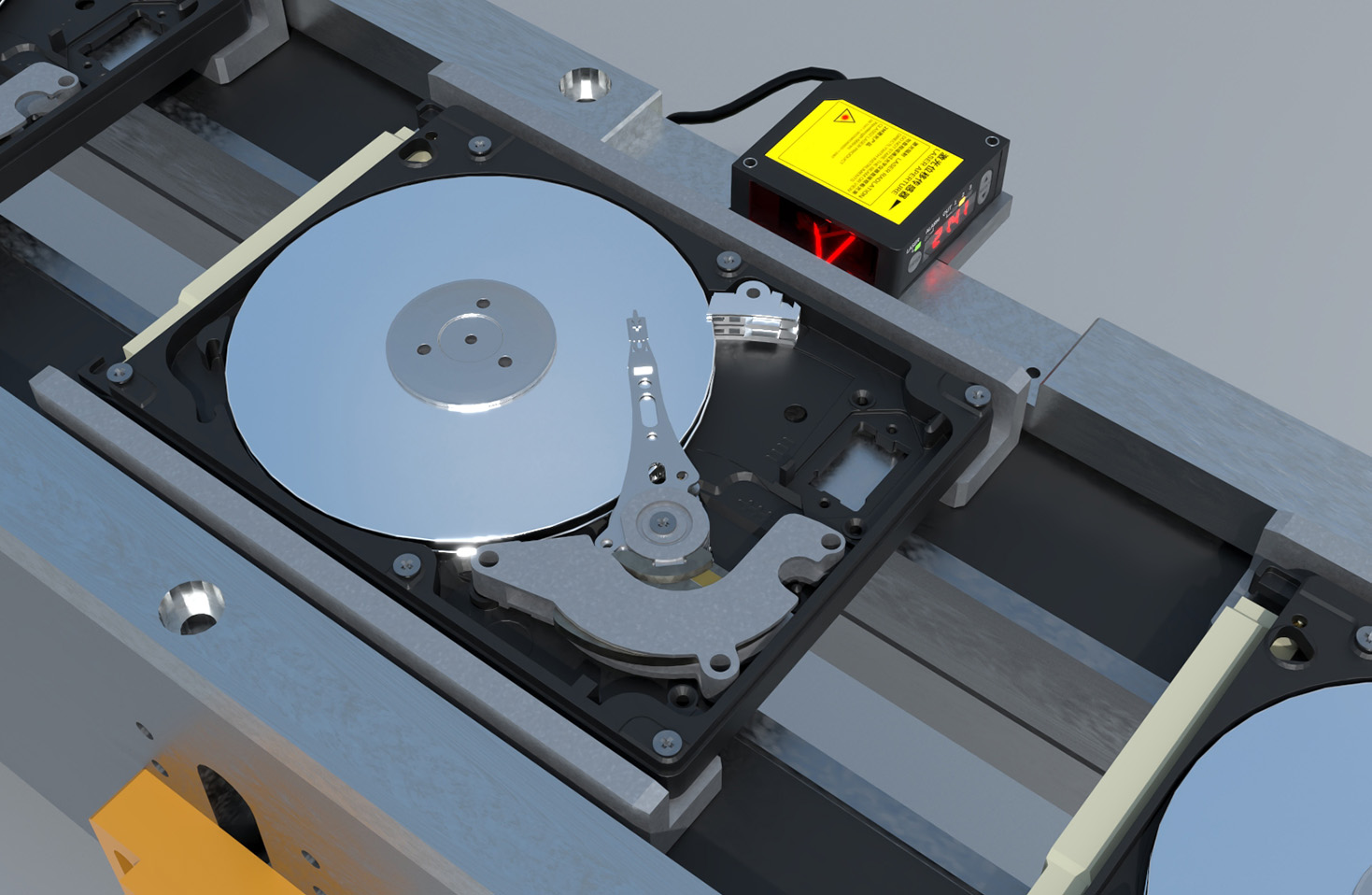
Laser Doppler vibrometry is a specialized dynamic sensing technique. It exploits the Doppler effect: when laser light reflects from a moving surface, its frequency shifts proportionally to the velocity of the target. By detecting this frequency shift using interferometers, the sensor can measure minute vibrations, oscillations, and velocities without physical contact. This is crucial in predictive maintenance for rotating machinery, aerospace component testing, and structural health monitoring.
Key components enabling these functionalities include high-coherence laser sources (e.g., semiconductor lasers, fiber lasers), precision optics for beam shaping and focusing, advanced photodetectors, and high-speed signal processing units. The integration of embedded microprocessors and real-time algorithms allows for adaptive filtering, noise reduction, and compensation for environmental variables like ambient light or temperature fluctuations.

In industrial practice, dynamic laser sensors offer unparalleled advantages. Their non-contact nature eliminates mechanical wear and avoids altering delicate targets. High sampling rates, often exceeding 100 kHz, enable real-time monitoring of fast-moving processes. Applications span diverse sectors: in automotive manufacturing, they ensure precise weld seam tracking and panel gap inspection; in electronics, they verify component placement and solder joint quality; in logistics, they facilitate rapid parcel dimensioning and robotic guidance.

Moreover, the advent of smart sensor networks and Industry 4.0 has propelled the evolution of these devices. Modern dynamic laser sensors can communicate via industrial Ethernet, PROFINET, or IO-Link, integrating seamlessly into digital twins and predictive analytics platforms. They provide continuous data streams that drive automated decision-making, reducing downtime and enhancing overall equipment effectiveness (OEE).
Despite their robustness, challenges persist. Specular reflections from shiny surfaces, extreme environmental conditions (dust, steam, or high temperatures), and the inherent trade-off between measurement range and resolution require careful sensor selection and system design. Ongoing research focuses on multi-wavelength lasers to mitigate interference, machine learning-enhanced calibration for adaptive performance, and miniaturization for embedded applications in portable devices and drones.
In conclusion, dynamic laser sensors are indispensable tools in contemporary industrial ecosystems. By harnessing the fundamental properties of light, they deliver accurate, reliable, and rapid measurements that underpin automation, quality assurance, and innovation. As technology progresses, these sensors will continue to evolve, offering greater intelligence, versatility, and integration capabilities to meet the ever-growing demands of modern engineering and smart manufacturing.