In the rapidly evolving landscape of embedded systems and IoT, the integration of precise sensing technology is paramount. For engineers, hobbyists, and makers utilizing the Arduino platform, laser sensors represent a critical category of components enabling high-accuracy, non-contact measurement and detection. Unlike infrared or ultrasonic alternatives, laser sensors offer superior precision, smaller spot sizes, and often faster response times, making them indispensable for applications ranging from industrial automation to advanced robotics.
Arduino-compatible laser sensors typically operate on one of several fundamental principles. The most common types for the maker and prototyping community are laser distance sensors and laser break-beam sensors. Laser distance sensors, often based on Time-of-Flight (ToF) or triangulation methods, emit a laser pulse and measure the time or angle of the reflected beam to calculate distance with millimeter or even sub-millimeter accuracy. Modules like the VL53L0X or the longer-range TF-Luna are popular ToF sensors easily interfaced via I2C. Laser break-beam sensors consist of a separate transmitter and receiver; an object is detected when it interrupts the laser beam path, providing a simple digital signal ideal for counting, security, or limit sensing.
The electrical and digital interface of these sensors with an Arduino board is typically straightforward, a key factor in their popularity. Most modules are designed to operate at 3.3V or 5V, aligning with Arduino's logic levels. Communication is commonly handled through standard protocols: I2C, UART (serial), or a simple analog voltage output proportional to the measured value. For instance, connecting a VL53L0X involves merely wiring the VCC, GND, SDA, and SCL pins to the corresponding Arduino pins and utilizing a well-supported library. This plug-and-play philosophy, backed by extensive open-source libraries and community tutorials, significantly lowers the barrier to implementing sophisticated sensing.
However, successful implementation requires careful consideration of several engineering factors. Environmental conditions pose the most significant challenges. Ambient light, particularly direct sunlight, can saturate the receiver in some sensors, necessitating optical filters or controlled lighting. The target surface's properties are equally crucial; dark, matte, or absorbent surfaces can weaken the reflected signal, while transparent or reflective surfaces can cause erroneous readings. For break-beam sensors, precise alignment of the transmitter and receiver is critical over longer distances, often requiring mounting fixtures. Engineers must also consider the sensor's update rate, field of view, and minimum/maximum range specifications against the dynamic requirements of their application.
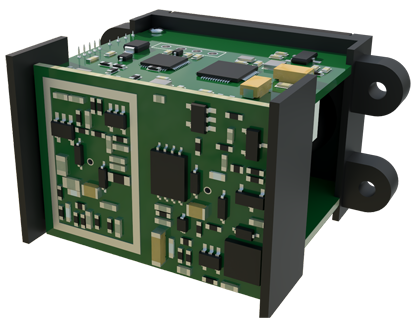
Real-world applications for Arduino laser sensors are vast and growing. In robotics, they are used for obstacle avoidance, SLAM (Simultaneous Localization and Mapping), and precise positioning. For DIY CNC machines or 3D printers, they can act as non-contact limit switches or bed leveling probes. In industrial prototyping, they facilitate quality control measurements, object sorting on conveyor belts, and liquid level detection. Furthermore, creative interactive installations use break-beam sensors to trigger audio-visual effects when a person crosses the beam.
Looking forward, the trend is toward sensors that are more integrated, lower power, and smarter. Sensors with on-chip signal processing that output filtered, calibrated data are becoming standard, reducing the computational load on the Arduino microcontroller. The convergence of laser sensing with other technologies, such as integrating a laser distance sensor with an inertial measurement unit (IMU) for complex navigation, opens new frontiers. For the Arduino engineer, this means an ever-expanding toolkit to solve measurement and detection problems with unprecedented accuracy and reliability. The key to mastery lies not just in wiring the module, but in understanding the underlying physics, meticulously reading the datasheet, and rigorously testing under real operating conditions to ensure robust system performance.