In the rapidly evolving landscape of industrial automation and precision measurement, laser sensors have become indispensable tools. Their accuracy, speed, and non-contact nature make them ideal for applications ranging from object detection and positioning to thickness gauging and quality control. A critical, yet often overlooked, component in the design and deployment of these sensors is the protective window or housing made from transparent plastics. The selection of the appropriate polymer is not merely a mechanical or cost decision; it is fundamentally an optical engineering choice that directly impacts sensor performance, reliability, and longevity.
The primary function of a transparent plastic cover in a laser sensor system is to protect sensitive internal components—such as the laser diode, lens assemblies, and photodetectors—from environmental contaminants like dust, moisture, oils, and mechanical abrasion. However, this protective barrier must minimally interfere with the laser light's journey. Key optical properties become paramount. Transmission, or transmittance, refers to the percentage of incident light that passes through the material at the laser's specific wavelength. For common laser sensors using visible red (e.g., 650 nm) or infrared (e.g., 850 nm, 905 nm) diodes, high transmission (>90%) is essential to maintain signal strength. Materials like Polycarbonate (PC) and Polymethyl Methacrylate (PMMA or acrylic) generally offer excellent visible light transmission but can exhibit varying performance in the near-IR spectrum.
Beyond simple transmission, the phenomenon of light scattering and haze must be considered. Inhomogeneities within the plastic, such as micro-voids, impurities, or surface imperfections, can scatter the coherent laser beam. This scattering reduces the intensity of the primary beam and can create optical noise, potentially leading to false readings or reduced signal-to-noise ratio. For applications requiring precise beam shaping or focusing, low haze and high clarity grades of optical plastics are mandatory. Furthermore, the refractive index of the plastic is crucial. When a laser beam passes through a plastic-air interface at an angle (not perfectly perpendicular), it bends according to Snell's law. This refraction must be accounted for in the sensor's optical design and calibration to ensure accurate distance or position measurements. In some sensing modes, like triangulation, the plastic window becomes an integral part of the optical path.
Material selection is a balance of optical, mechanical, thermal, and chemical properties. Polycarbonate (PC) is renowned for its high impact strength and good temperature resistance (typically up to ~120°C), making it suitable for harsh industrial environments. Its transmission in the visible range is very good, though it can absorb more in the lower IR regions compared to PMMA. It is also susceptible to scratching, which can degrade optical performance over time, often necessitating hard-coat treatments. Polymethyl Methacrylate (PMMA) offers superior optical clarity, lower haze, and better UV stability than PC. Its transmission across a broad spectrum, including parts of the IR, is excellent. However, PMMA is more brittle and has a lower continuous service temperature (~80-90°C). For demanding applications involving higher temperatures or aggressive chemicals, materials like Cyclic Olefin Copolymer (COC) or Copolymer (COP) are gaining traction. These polymers offer very high transparency, low birefringence (reducing polarization effects on the laser beam), excellent moisture barrier properties, and good resistance to many acids and bases.
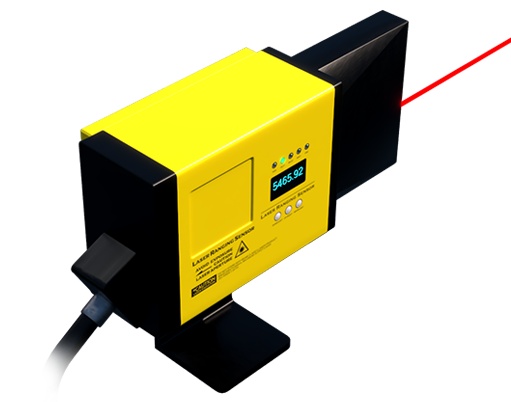
Environmental and operational factors impose additional constraints. Prolonged exposure to UV radiation, either from ambient sunlight or from the laser source itself in some cases, can cause photodegradation in certain plastics. This leads to yellowing, embrittlement, and a drop in transmission, particularly at shorter wavelengths. UV-stabilized or inherently UV-resistant grades (like some COC/COP or special PMMA grades) are essential for outdoor or long-life applications. Thermal expansion is another factor; the plastic housing must maintain a secure seal and dimensional stability across the sensor's operating temperature range to prevent misalignment or ingress of contaminants. Chemical resistance is vital in factories where sensors may be exposed to cleaning solvents, lubricants, or process chemicals that could craze or cloud the plastic.
From a design and manufacturing perspective, the chosen plastic must be amenable to precision molding to achieve the required optical surfaces with minimal sink marks, flow lines, or internal stresses. Internal stresses can induce birefringence, altering the polarization state of a laser beam, which is critical in sensors relying on polarized light. Post-processing, such as polishing or applying anti-reflective (AR) coatings, can further enhance performance. An AR coating applied to the plastic surfaces can significantly reduce Fresnel reflections, increasing overall transmission and reducing stray light within the sensor housing that could cause interference.

In conclusion, specifying "clear plastic" for a laser sensor is insufficient. Engineers must engage in a holistic analysis, correlating the laser's wavelength, required optical performance, and the operational environment with the nuanced property profiles of advanced optical polymers. The optimal material ensures the laser sensor delivers its promised precision and reliability, safeguarding the investment in automation. As laser technology advances towards new wavelengths and higher powers, and as applications extend into more aggressive environments, the development and selection of tailored transparent plastics will remain a key enabler for innovation in sensor technology.
