In the realm of automation and smart technology, the human body sensor proximity switch stands as a pivotal component, seamlessly bridging the gap between human presence and automated system response. Unlike traditional mechanical switches, these devices detect the presence or proximity of a person without any physical contact, enabling a more intuitive, efficient, and often energy-saving interaction with various systems.
At its core, a human body sensor proximity switch is an electronic device designed to detect the approach or presence of a human body within a defined range. The underlying technology primarily relies on sensing changes in the environment caused by a person's physical attributes. The most prevalent technologies employed are Passive Infrared (PIR), Microwave, and Ultrasonic sensing, each with distinct operational principles and ideal use cases.
Passive Infrared (PIR) sensors are arguably the most common. They work by detecting changes in infrared radiation levels within their field of view. All objects emit some level of infrared radiation; the human body, being warmer than typical room surroundings, emits a significantly different infrared signature. When a person moves into the sensor's detection zone, the sensor picks up the change in IR radiation and triggers a switch signal. PIR sensors are highly effective for motion detection but are generally less sensitive to very slow movements or stationary presence.
Microwave sensors, also known as radar sensors, operate by emitting continuous microwave signals and analyzing the reflected waves. When a person enters the detection area, the movement causes a Doppler shift in the frequency of the reflected waves, which the sensor interprets as a trigger event. These sensors can often detect motion through certain non-metallic materials like thin walls or glass, making them versatile. They are typically more sensitive to minor movements compared to PIR sensors.
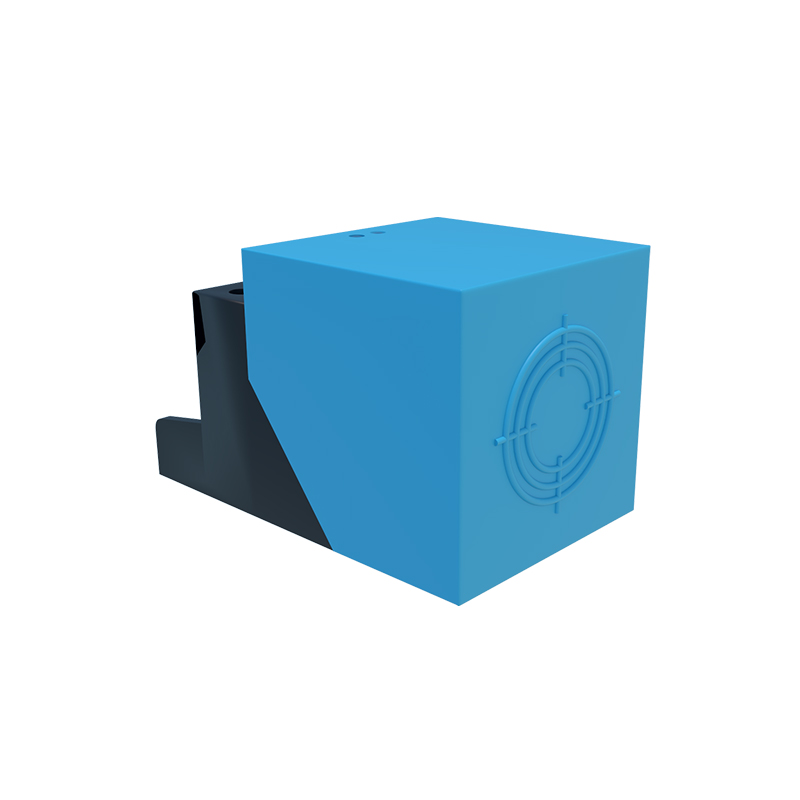
Ultrasonic sensors function similarly to microwave sensors but use high-frequency sound waves instead of radio waves. They emit ultrasonic pulses and measure the time it takes for the echo to return. Movement within the detection zone alters the echo pattern or time-of-flight, prompting the switch to activate. These are effective in complex environments but can sometimes be triggered by air currents or other non-human movements.
The applications for human body sensor proximity switches are vast and continually expanding. In commercial and residential lighting systems, they are fundamental to occupancy-based control, turning lights on when a room is occupied and off after a period of vacancy, leading to substantial energy conservation. In security and safety systems, they act as non-intrusive triggers for alarms, surveillance camera activation, or automatic door locks. Within the realm of smart homes and buildings, they enable touchless control of appliances, faucets, hand dryers, and doors, promoting hygiene and convenience—a feature whose importance was magnified during global health concerns. Industrial automation also leverages these switches for personnel safety near machinery, ensuring equipment operates only when a safe perimeter is clear.
When selecting and implementing a human body sensor proximity switch, several critical factors must be considered. The detection range and angle define the coverage area. Sensitivity adjustments allow fine-tuning to ignore pets or small objects. The response time determines how quickly the system reacts upon detection. Environmental robustness is crucial for outdoor or harsh industrial applications, requiring switches with appropriate Ingress Protection (IP) ratings against dust and moisture. Furthermore, modern switches often incorporate features to minimize false triggers, such as dual-technology sensors (combining PIR and microwave, for instance) that require both sensors to be triggered before activating, thereby increasing reliability.
Looking ahead, the future of human body sensor technology is intertwined with the growth of the Internet of Things (IoT) and Artificial Intelligence (AI). Next-generation sensors are becoming smarter, smaller, and more integrated. They are evolving from simple binary detection (presence/absence) to capable of discerning more nuanced information, such as counting people, tracking movement patterns, or even identifying simple gestures. Integration with wireless communication protocols like Zigbee, Z-Wave, or Bluetooth Low Energy (BLE) allows them to become nodes in a larger, intelligent network, enabling complex automation scenarios based on aggregated sensor data.
In conclusion, the human body sensor proximity switch is a transformative technology that has moved far beyond a simple automatic light switch. It is an enabler of efficiency, safety, hygiene, and intelligent automation. As sensing technologies advance and become more cost-effective, their adoption will permeate even more aspects of daily life and industrial processes, creating environments that are more responsive, adaptive, and attuned to human presence without requiring conscious effort from the individual. The silent, unseen operation of these switches is a testament to how technology can create a smoother, more intuitive interface between people and the spaces they inhabit.