In the rapidly evolving landscape of electrical engineering, laser RF sensors have emerged as a pivotal technology, bridging the gap between optical precision and radio frequency (RF) measurement capabilities. These sensors utilize laser-based mechanisms to detect, analyze, and monitor RF signals with exceptional accuracy and minimal interference, making them indispensable in various industrial and research settings. The core principle involves converting RF signals into optical domains through modulation techniques, allowing for high-resolution data acquisition even in electrically noisy environments. This integration not only enhances signal integrity but also enables remote sensing applications where traditional electronic sensors may falter due to electromagnetic interference or physical constraints.
One of the key advantages of laser RF sensors is their ability to operate across a broad frequency spectrum, from microwave to millimeter-wave ranges. This versatility supports applications in telecommunications, where they aid in optimizing network performance by monitoring signal strength and quality without direct contact. In power systems, these sensors facilitate non-invasive diagnostics of high-voltage equipment, detecting partial discharges or insulation failures that could lead to catastrophic failures. By leveraging fiber-optic components, they ensure safety by isolating measurement points from hazardous electrical fields, thereby reducing risks for personnel and infrastructure.

Recent advancements have focused on miniaturization and integration with Internet of Things (IoT) platforms. Modern laser RF sensors now feature compact designs, low power consumption, and wireless connectivity, enabling real-time data transmission to cloud-based analytics systems. This evolution supports predictive maintenance strategies in smart grids, where continuous monitoring of RF emissions from transformers or transmission lines can forecast potential faults before they escalate. Additionally, in aerospace and defense sectors, these sensors are deployed for radar signal analysis and electronic warfare, offering stealthy detection capabilities due to their passive nature and immunity to jamming.
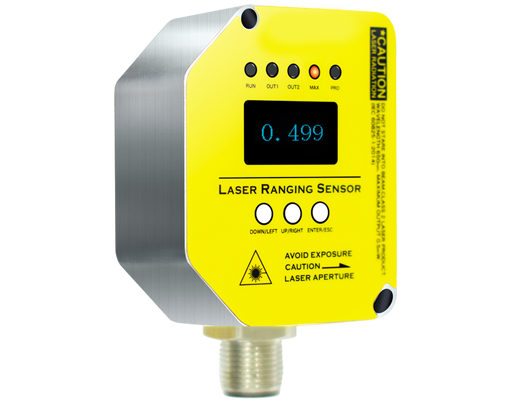
The development of quantum-enhanced laser RF sensors represents a cutting-edge frontier. By incorporating quantum technologies, such as entangled photon sources, these sensors achieve unprecedented sensitivity levels, surpassing classical limits. This innovation holds promise for scientific research, including radio astronomy and particle physics, where detecting weak RF signals from distant cosmic sources is critical. Moreover, in medical engineering, laser RF sensors are being explored for non-invasive imaging techniques, such as monitoring brain activity through RF-induced optical changes, opening new avenues for diagnostics and treatment.
Despite their benefits, challenges remain in scaling production and reducing costs. Material science plays a crucial role, with ongoing research into novel photonic crystals and metamaterials to enhance sensor efficiency and bandwidth. Standardization efforts are also underway to ensure interoperability across global industries, fostering wider adoption. As electrical systems become more complex and interconnected, the demand for reliable, high-performance sensing solutions will continue to drive innovation in laser RF technology. Engineers and researchers must collaborate to address technical hurdles, such as environmental stability and calibration precision, to unlock the full potential of these sensors in next-generation applications.
In summary, laser RF sensors are transforming electrical engineering by offering a synergistic blend of optical and RF methodologies. Their applications span from industrial automation to advanced scientific exploration, underpinning the transition toward smarter, safer, and more efficient systems. As technology progresses, these sensors will likely become integral to emerging fields like autonomous vehicles and renewable energy management, where precise RF monitoring is essential for operational excellence. By staying abreast of trends and investing in R&D, the electrical industry can harness laser RF sensors to navigate future challenges and opportunities with confidence.