Laser distance sensors, also known as laser rangefinders or LiDAR sensors in specific configurations, have become indispensable tools in modern industrial automation and measurement systems. These devices operate on the principle of Time-of-Flight (ToF), phase-shift, or triangulation to determine the distance between the sensor and a target object with exceptional accuracy and speed. The core component is a laser diode that emits a focused beam of light, typically in the visible red or infrared spectrum. This beam reflects off the target and returns to a photodetector within the sensor. By precisely measuring the time delay between emission and reception (ToF method) or the phase shift of the modulated laser beam, the sensor's internal processor calculates the distance with resolutions often down to the sub-millimeter level.
The advantages of laser distance sensors over traditional ultrasonic or mechanical contact methods are profound. They offer non-contact measurement, eliminating wear and tear and allowing for use with delicate, hot, or moving objects. Their high measurement frequency, often in the kilohertz range, enables real-time process control in dynamic environments. Furthermore, the small, focused laser spot allows for precise measurement of specific points, even on complex surfaces. Common industrial applications are vast and varied. In material handling and logistics, they are used for warehouse level monitoring, palletizing, and dimensioning packages. In robotics, they provide crucial guidance for autonomous mobile robots (AMRs) and precise positioning for robotic arms. The automotive industry relies on them for assembly line gap and flush measurement, while in the metals industry, they monitor roll diameters, coil thickness, and sheet flatness. In construction and civil engineering, laser distance sensors are integral to stationery and handheld devices for surveying, alignment, and volume calculation.
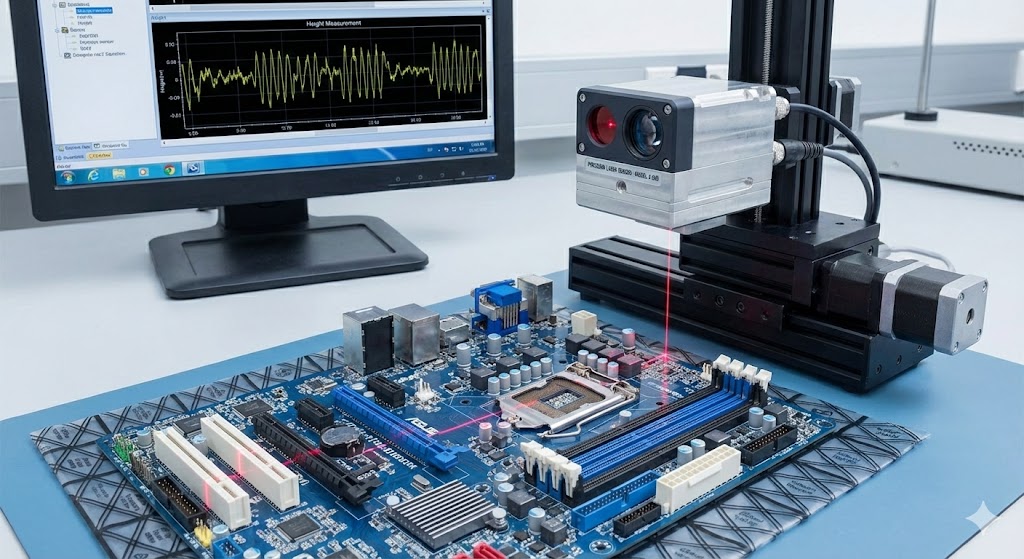
Selecting the appropriate laser distance sensor requires careful consideration of several key parameters. The measuring range is the first criterion, varying from a few centimeters to several hundred meters depending on the model and technology. Accuracy and repeatability define the sensor's performance; high-precision applications in semiconductor manufacturing demand micron-level accuracy, while bulk material level sensing may tolerate centimeter variances. The response time or measurement rate must align with the process speed. Environmental factors are critical: industrial sensors often require robust housing with high Ingress Protection (IP) ratings (e.g., IP67) to withstand dust, moisture, and coolant sprays. Temperature stability is vital for foundries or outdoor use. The type of output interface—analog (4-20 mA, 0-10 V), digital (RS-232, RS-485), or industrial fieldbus protocols (PROFIBUS, EtherCAT, IO-Link)—must integrate seamlessly with the existing PLC or control system. Target surface properties also influence performance; while most sensors work well on diffuse surfaces, specialized models are needed for transparent materials like glass or highly reflective surfaces like polished metal, sometimes requiring the use of a retro-reflector.
Installation and commissioning are straightforward but demand attention to detail. The sensor must be securely mounted to minimize vibration. Alignment is crucial; the laser beam must strike the target perpendicularly for optimal signal return, especially for long-range measurements. Many modern sensors feature integrated alignment aids like visible laser pointers or digital displays. Configuration is typically done via software or teach-in buttons to set measurement windows, output scaling, and filtering parameters. For optimal performance and longevity, regular maintenance is advised. This includes keeping the front lens clean from obstructions, verifying calibration against a known reference periodically, and ensuring stable power supply and signal cable integrity. As Industry 4.0 advances, the integration of laser distance sensors into IoT frameworks is growing. Smart sensors with embedded diagnostics and predictive maintenance capabilities, communicating via OPC UA or MQTT, are enhancing system reliability and data analytics for predictive quality control and optimized production flow.
In conclusion, laser distance sensors represent a mature yet continuously evolving technology that provides a critical layer of precise, reliable spatial data for automated systems. Their versatility, speed, and accuracy make them a cornerstone of efficiency and quality assurance across countless industrial sectors. Understanding their operating principles, selection criteria, and application best practices is essential for engineers and system integrators aiming to leverage their full potential for automation and measurement challenges.