In the rapidly evolving landscape of automotive engineering, the quest for precision, reliability, and efficiency has led to the adoption of advanced sensing technologies. Among these, the laser crankshaft position sensor represents a significant leap forward from traditional inductive or Hall-effect sensors. This article delves into the operational principles, key advantages, and application considerations of this sophisticated component, which is becoming increasingly integral to modern engine management systems.
At its core, a laser crankshaft position sensor is designed to detect the precise angular position and rotational speed of the engine's crankshaft. This information is critical for the engine control unit (ECU) to accurately time fuel injection, ignition spark, and variable valve timing, thereby optimizing combustion, power output, and emissions. Unlike conventional sensors that rely on magnetic fields and metallic targets, laser sensors utilize optical principles. A laser diode emits a focused beam of light towards a specially encoded target wheel attached to the crankshaft. This target wheel, often featuring a high-resolution pattern of reflective and non-reflective segments, modulates the laser beam as it rotates. A photodetector then captures the reflected light pattern, converting these optical signals into precise digital electrical pulses that the ECU can interpret.
The shift to laser-based technology offers several compelling advantages. First and foremost is unparalleled accuracy and resolution. Laser sensors can detect minute angular displacements, providing real-time, high-fidelity data even at extremely high engine speeds. This level of precision enables more refined engine calibration, leading to improved fuel efficiency and reduced harmful emissions. Secondly, laser sensors exhibit exceptional stability and longevity. They are inherently immune to electromagnetic interference (EMI) from surrounding components like ignition coils or alternators, a common challenge for magnetic sensors. Furthermore, they are less susceptible to contamination from oil mist, metallic debris, or temperature variations within the harsh engine bay environment, as the optical path can be effectively sealed. The non-contact nature of the measurement also eliminates mechanical wear, contributing to a longer service life and reduced maintenance needs.
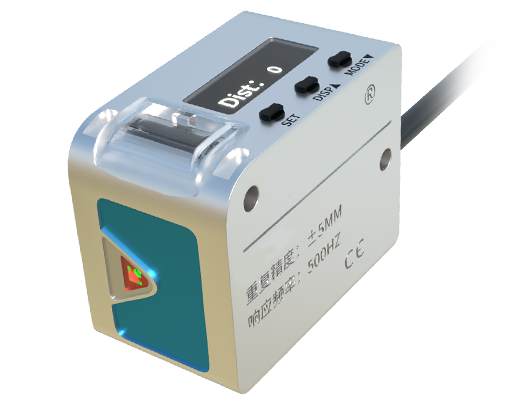
However, the implementation of laser crankshaft sensors is not without its engineering considerations. The primary challenge lies in ensuring long-term reliability of the optical components. While sealed, any compromise in the integrity of the lens or window due to thermal cycling, vibration, or chemical exposure can lead to signal degradation. Therefore, robust packaging and high-grade materials are paramount. Additionally, the cost of laser diodes and associated optics is typically higher than that of traditional sensor elements, though this is often offset by the system-level benefits in performance and durability. Calibration during manufacturing and installation is also more critical, requiring precise alignment between the sensor head and the target wheel to ensure an uninterrupted optical path.
In practical application, these sensors are a cornerstone of advanced powertrain strategies, including those in hybrid and high-performance vehicles. Their ability to deliver precise crank angle data is essential for technologies like cylinder deactivation, where seamless transition between operating modes is required, and in stop-start systems, where instant and accurate crankshaft position data is needed for rapid engine restart. As the automotive industry marches towards stricter emission norms and higher efficiency standards, the role of precise sensing will only grow. Future developments may see the integration of laser sensors with other optical measurement systems or the use of novel materials and wavelengths to enhance performance further.
In conclusion, the laser crankshaft position sensor is a transformative technology that addresses the growing demands for accuracy and robustness in engine management. By leveraging the principles of optics, it provides a cleaner, more reliable, and highly precise alternative to conventional magnetic sensors. For automotive engineers and technicians, understanding its operation, benefits, and integration challenges is crucial for designing, maintaining, and troubleshooting the next generation of intelligent and efficient vehicular powertrains. Its continued evolution will undoubtedly play a key role in shaping the future of automotive propulsion systems.