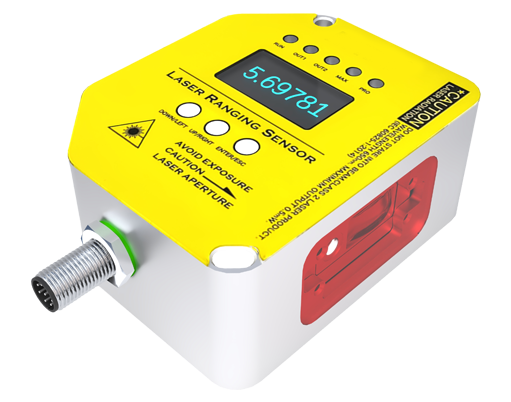
The automotive industry is undergoing a transformative shift towards higher levels of automation, connectivity, and safety. At the heart of this evolution lies a critical enabling technology: the intelligent laser sensor. These advanced sensing systems, primarily Light Detection and Ranging (LiDAR) and its sophisticated derivatives, have become indispensable for perception and environmental modeling in modern vehicles. Unlike traditional radar or camera systems, laser sensors emit rapid pulses of light to measure distances with exceptional precision, creating high-resolution, three-dimensional point cloud maps of the surrounding environment in real-time. This capability is fundamental for Advanced Driver-Assistance Systems (ADAS) and the development of autonomous vehicles.
The core principle of automotive laser sensing is time-of-flight measurement. A laser diode emits a focused beam of light, which travels until it strikes an object. The sensor then detects the reflected signal and calculates the distance based on the time elapsed. By scanning the laser beam across a field of view—typically through rotating mirrors, MEMS (Micro-Electro-Mechanical Systems), or solid-state phased arrays—the sensor builds a detailed 360-degree representation. Modern intelligent sensors integrate powerful onboard processors. This edge computing capability allows for real-time object classification, distinguishing between a pedestrian, a cyclist, a vehicle, or static infrastructure, and predicting trajectories. This intelligence moves beyond mere detection to contextual understanding, a prerequisite for safe autonomous decision-making.
Key technical advancements are driving adoption. Solid-state LiDAR, with no moving parts, offers greater reliability, compactness, and lower cost compared to earlier mechanical spinning units. The development of longer-wavelength lasers (e.g., 1550 nm) improves performance in adverse weather conditions like fog or rain, a historical challenge for optical systems. Furthermore, sensor fusion is paramount. Intelligent laser sensors do not operate in isolation; their data is seamlessly combined with inputs from high-resolution cameras, radars, and ultrasonic sensors. A centralized computing platform, often powered by AI, synthesizes this multi-modal data to create a robust, redundant, and comprehensive perception model, ensuring system reliability even if one sensor modality is temporarily compromised.

The applications are vast and critical. In ADAS, laser sensors enable features like adaptive cruise control with stop-and-go, emergency automatic braking, and lane-keeping assistance with unprecedented accuracy. For autonomous driving (Level 3 and above), they form the primary "eyes" of the vehicle, essential for navigating complex urban environments, highway merging, and handling edge-case scenarios. Beyond driving dynamics, these sensors are also used in smart parking systems, providing centimeter-level accuracy for automated parking maneuvers and obstacle avoidance in tight spaces.
However, challenges remain on the path to ubiquitous deployment. Cost reduction is a persistent focus for OEMs aiming for mainstream vehicle integration. Standardization of data formats and interfaces across different sensor manufacturers is needed to simplify integration. Regulatory frameworks concerning laser eye safety and performance validation under all operating conditions are still evolving globally. Finally, managing the immense computational load and data bandwidth from high-resolution, high-frame-rate sensors requires continuous innovation in vehicle electrical/electronic architectures.
Looking ahead, the trajectory for intelligent laser sensors points toward higher resolution, longer range, and lower power consumption. The integration of artificial intelligence directly into the sensor hardware—a concept known as "sensing with cognition"—will further accelerate processing and reduce latency. As the automotive industry marches toward a future of zero accidents and full autonomy, the intelligent laser sensor will remain a cornerstone technology, its evolving capabilities directly shaping the safety, efficiency, and intelligence of the next generation of vehicles.