Area laser distance sensors represent a significant advancement in industrial measurement and automation technology. Unlike traditional point or line sensors, these devices capture distance data across a two-dimensional plane, generating a rich point cloud that provides detailed spatial information about an object or environment. This capability is revolutionizing quality control, robotics, logistics, and safety systems across numerous sectors.
The core technology typically involves time-of-flight (ToF) or phase-shift measurement principles. A laser emitter projects a modulated beam that is often diffused or scanned to cover a defined area. The sensor's receiver, equipped with a specialized CMOS or CCD array, detects the reflected light. By calculating the time delay or phase difference between the emitted and received signals for each pixel, the sensor constructs a precise distance map, or depth map, of the entire field of view. Modern sensors integrate powerful processors to handle this complex data in real-time, outputting not just distance values but also 2D profiles and 3D data sets.
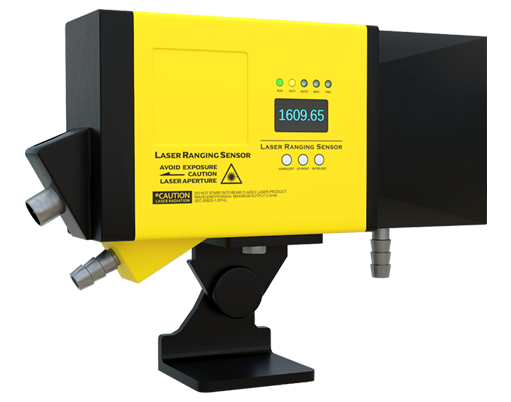
Key advantages of area laser sensors are their speed, precision, and non-contact nature. They can perform complete inspections of complex surfaces, detect minute dimensional deviations, and guide robotic arms with sub-millimeter accuracy—all without touching the target. In automotive assembly, for instance, they are used to verify gap dimensions between body panels and door seals. In warehouse automation, they enable precise pallet dimensioning and volume calculation for optimal storage and shipping. Furthermore, their ability to monitor large zones makes them ideal for intrusion detection in hazardous areas or for safeguarding collaborative robot workspaces.
Selecting the right area laser sensor requires careful consideration of several parameters. The measurement range defines the minimum and maximum distances over which the sensor operates effectively. The field of view (FOV), expressed in degrees horizontally and vertically, determines the size of the area captured. Resolution, often specified as angular or spatial resolution, indicates the smallest detail the sensor can distinguish. Other critical factors include measurement speed (frame rate), environmental ratings (IP protection against dust and water), resistance to ambient light interference, and the type of output interface (Ethernet, EtherCAT, PROFINET, etc.).
Integration into an existing control system is a crucial step. Most modern sensors offer sophisticated software suites that allow users to configure measurement windows, set tolerances, and define output triggers. They can be programmed to output simple pass/fail signals, detailed profile data, or even full 3D point clouds for advanced analysis. Compatibility with industrial communication protocols ensures seamless data exchange with PLCs and SCADA systems.

Looking ahead, the evolution of area laser distance sensors is geared towards higher speeds, greater accuracy, and enhanced intelligence. The integration of AI algorithms directly at the sensor edge will enable real-time object classification and anomaly detection without relying on external PCs. Miniaturization and cost reduction will further broaden their adoption in new applications, from agricultural machinery to consumer electronics manufacturing. As Industry 4.0 and smart factory initiatives mature, the demand for robust, precise, and versatile spatial data will solidify the area laser sensor's role as an indispensable tool in the industrial metrology and automation toolkit.

In conclusion, area laser distance sensors offer a powerful solution for applications demanding comprehensive spatial awareness. By providing detailed, non-contact measurements across an entire area, they enhance automation, improve quality, and increase operational safety. Engineers and system integrators must understand their operating principles and specifications to fully leverage their potential in solving complex industrial measurement challenges.