In the rapidly evolving landscape of industrial automation and precision measurement, laser distance sensors have emerged as a cornerstone technology. These devices utilize laser beams to accurately determine the distance to a target object, offering unparalleled precision, speed, and reliability. The fundamental principle involves emitting a laser pulse towards the target and measuring the time it takes for the reflection to return to the sensor. This time-of-flight (ToF) method, or variations like phase-shift analysis, enables measurements with sub-millimeter accuracy even over considerable distances.
The selection of an optimal laser distance sensor solution hinges on several critical application parameters. Key considerations include measurement range, required accuracy, response time, environmental conditions, and target surface properties. For instance, in logistics and warehousing, sensors with ranges up to several hundred meters facilitate inventory management and automated guided vehicle (AGV) navigation. In contrast, high-precision manufacturing, such as semiconductor or automotive assembly, often demands sensors with micron-level resolution for quality control and robotic guidance.
Modern laser sensor solutions integrate advanced features to tackle industrial challenges. Robust housing with high Ingress Protection (IP) ratings ensures reliable operation in harsh environments with dust, moisture, or temperature extremes. Intelligent onboard processors now offer real-time data analysis, enabling functions like edge detection, profile monitoring, and in-line tolerance checking without external controllers. Furthermore, the integration of IO-Link and industrial Ethernet protocols (e.g., PROFINET, EtherNet/IP) facilitates seamless communication within Industry 4.0 frameworks, allowing for predictive maintenance and centralized data analytics.
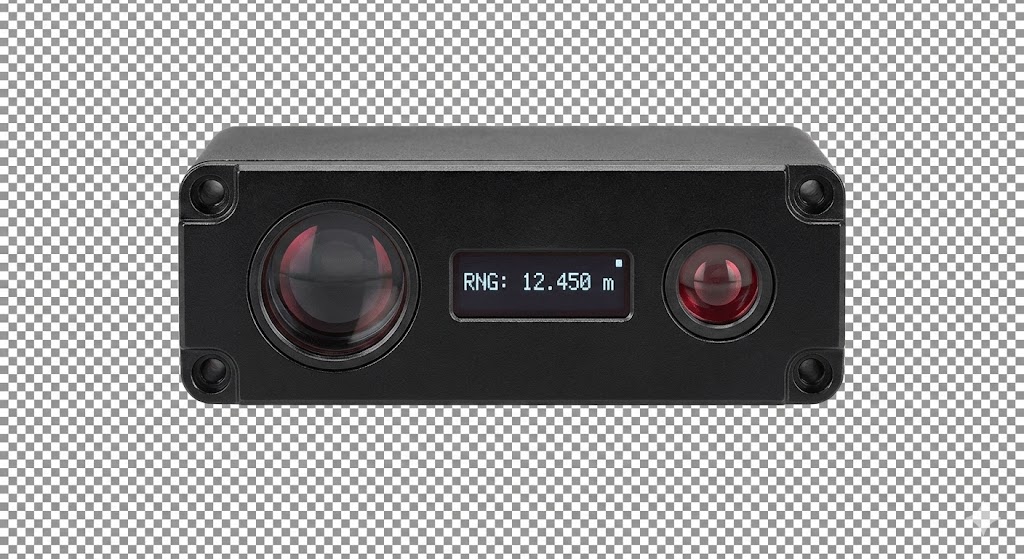
A significant trend is the miniaturization of sensor packages without compromising performance. Compact laser sensors can be easily integrated into space-constrained robotic end-effectors or intricate machinery. Additionally, the development of blue laser technology has improved performance on challenging surfaces, such as dark or transparent materials, which traditionally absorb or poorly reflect standard red lasers.
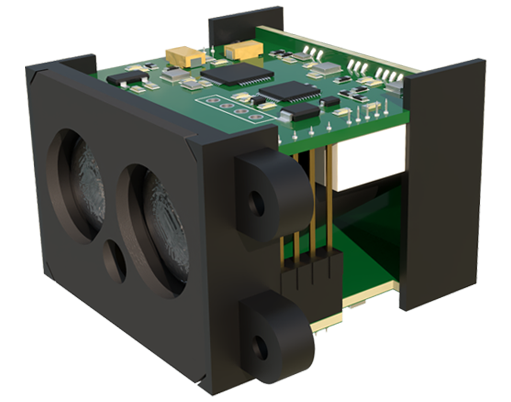
Implementing a laser distance sensor system requires careful planning. Mounting stability is paramount, as vibrations can induce measurement errors. Ambient light interference, particularly from strong industrial lighting, must be mitigated, often through optical filters or modulated laser signals. Regular calibration against known references maintains long-term accuracy. For complex tasks like 3D profiling, multiple sensors are often deployed in synchronized arrays, controlled by sophisticated software that stitches data points into a comprehensive digital model.
In conclusion, laser distance sensors represent a versatile and powerful tool for modern industry. By providing non-contact, high-speed, and precise measurement, they enhance efficiency, safety, and quality across diverse sectors from construction and mining to electronics and pharmaceuticals. As sensor intelligence and connectivity continue to advance, their role in enabling fully automated, data-driven smart factories will only become more pivotal. Engineers and system integrators are encouraged to conduct thorough feasibility studies, partnering with reputable sensor manufacturers to tailor the ideal solution for their specific operational demands.