In the realm of industrial automation and precision manufacturing, environmental control is paramount. Among the critical parameters, humidity stands out due to its profound impact on material properties, process stability, and product quality. Traditional humidity sensing methods, such as capacitive or resistive sensors, have served well for decades. However, the advent of CNC (Computer Numerical Control) Laser Humidity Sensors represents a significant technological leap, offering unparalleled accuracy, speed, and reliability for demanding industrial applications.
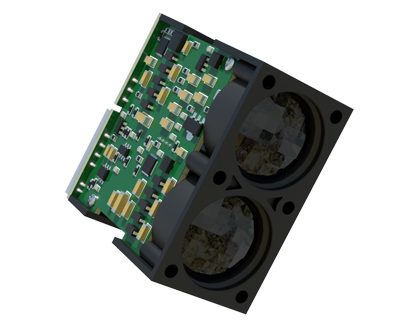
At its core, a CNC Laser Humidity Sensor operates on the principle of tunable diode laser absorption spectroscopy (TDLAS). A precisely controlled laser beam, typically in the near-infrared spectrum, is directed through the gas sample. Water vapor molecules absorb specific wavelengths of this laser light. The sensor's sophisticated detection system measures the attenuation of the laser beam at these absorption lines. The CNC component is integral, not for mechanical movement as in machining, but for the digital precision in controlling the laser's frequency modulation, data acquisition timing, and real-time signal processing. This computer-numerical control allows for extreme stability, minimal drift, and the ability to perform rapid, continuous measurements without physical contact with the measured medium.
The advantages of this technology are substantial. First and foremost is precision. These sensors can detect water vapor concentrations with parts-per-million (ppm) sensitivity, far exceeding the capabilities of most conventional sensors. Their response time is exceptionally fast, often in the millisecond range, enabling real-time process control in dynamic environments. Since the measurement is optical and non-contact, the sensor is immune to contamination, corrosion, or poisoning from harsh chemicals—a common failure point for traditional probes. This leads to dramatically reduced maintenance requirements and higher long-term stability. Furthermore, they can operate effectively in high-temperature, high-pressure, or vacuum conditions where other sensors would fail.
The applications of CNC Laser Humidity Sensors are diverse and growing. In semiconductor fabrication and microelectronics manufacturing, even trace amounts of moisture can ruin intricate circuits. These sensors provide critical monitoring in cleanrooms, deposition chambers, and during wafer handling. In lithium-ion battery production, controlling humidity is essential for electrolyte filling and sealing processes to ensure battery safety and longevity. The pharmaceutical industry employs them to monitor and control humidity in lyophilization (freeze-drying) processes and in packaging lines to guarantee product stability. Additionally, they are vital in advanced materials research, aerospace testing (e.g., fuel and oxygen systems), and in monitoring industrial gas purity for applications like welding or laser cutting.
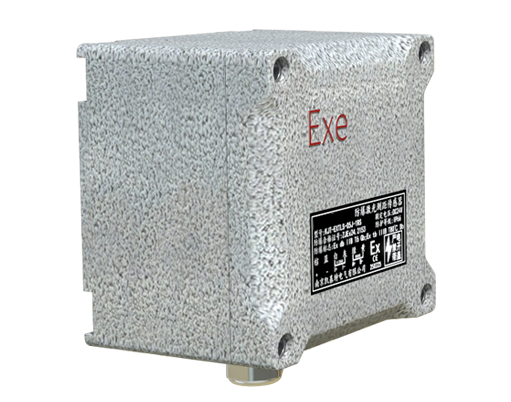
Implementing these advanced sensors requires careful consideration. The initial investment is higher compared to conventional humidity sensors. System integration involves not just the sensor head but also the associated laser driver, detector, and control electronics, which need to be properly configured with the plant's control network (e.g., via 4-20mA, Ethernet/IP, or Profinet). Calibration, though infrequent, must be performed using traceable standards to maintain metrological integrity. Users must also ensure the optical path is clear of obstructions and significant particulate matter, which might require simple purge systems in dusty environments.
Looking forward, the future of CNC Laser Humidity Sensors is intertwined with Industry 4.0 and the Industrial Internet of Things (IIoT). We can expect further miniaturization of the optical components, reducing the sensor footprint. Integration with wireless communication protocols will facilitate easier deployment in large-scale facilities. Perhaps most importantly, the fusion of sensor data with AI and machine learning algorithms will enable predictive analytics—not just reporting humidity levels but predicting dew point events, diagnosing process anomalies, and optimizing energy consumption in drying or climate control systems autonomously.
In conclusion, CNC Laser Humidity Sensors are no longer niche laboratory instruments. They have matured into robust, industrial-grade solutions that address the limitations of traditional sensing technologies. By delivering contactless, high-speed, and supremely accurate humidity data, they empower engineers to achieve tighter process control, enhance product quality, improve yield, and reduce operational costs. As industrial processes become more precise and automated, the role of these sophisticated sensors will only become more central, solidifying their position as a cornerstone technology for smart, data-driven manufacturing.