In the realm of industrial automation and quality control, achieving micron-level precision is not just an advantage—it's a necessity. Laser displacement sensors have emerged as a cornerstone technology for non-contact measurement, offering unparalleled accuracy, speed, and versatility. This article delves into the operational principles, diverse applications, and critical factors for selecting the right sensor for your specific needs.
At its core, a laser displacement sensor operates on the principle of optical triangulation. The sensor projects a focused beam of laser light, typically from a Class 2 laser diode, onto the target surface. The diffusely reflected light from this point is then captured by a receiving lens and focused onto a position-sensitive detector, such as a CMOS or CCD linear array. The precise position of the light spot on this detector shifts proportionally to the distance of the target. By calculating this shift, the sensor's internal processor determines the exact displacement or distance with high resolution. Advanced models may utilize confocal or spectral interferometry principles for even higher precision on challenging surfaces like transparent or highly reflective materials.

The applications for laser displacement sensors are vast and span numerous industries. In automotive manufacturing, they are indispensable for measuring critical gaps and flushness between body panels, inspecting brake disc thickness, and profiling tire treads. In the electronics sector, these sensors ensure the coplanarity of semiconductor leads, measure solder paste height on PCBs, and verify the thickness of wafer substrates. The metal processing industry relies on them for precise thickness gauging of sheets, profile measurement of extruded shapes, and vibration analysis of rotating machinery. Furthermore, they play a vital role in robotics for precise guidance and positioning, and in logistics for dimensioning packages and detecting object presence.
When selecting a laser displacement sensor, several key specifications must be carefully evaluated to match the application requirements. The primary parameters include:
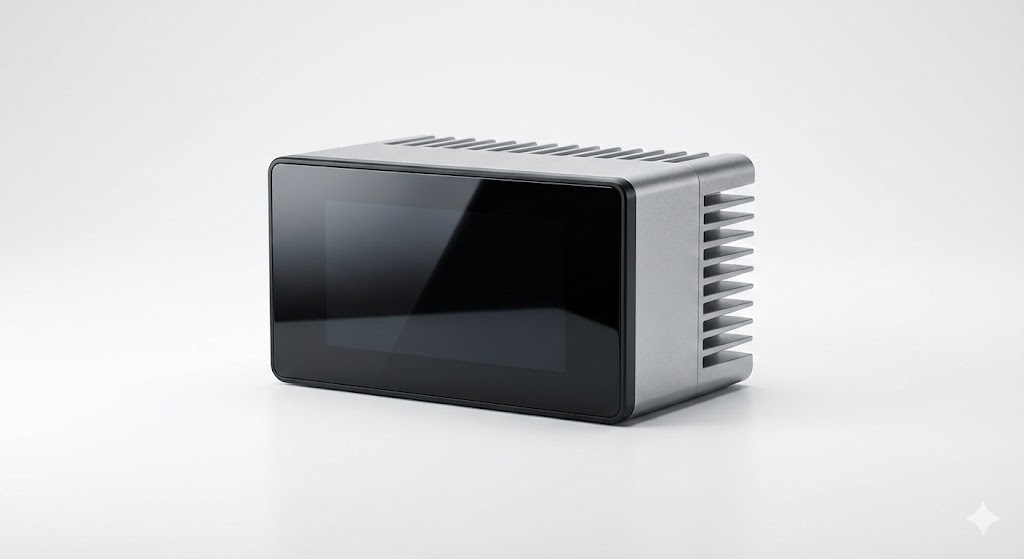
* Measuring Range: The distance over which the sensor can operate accurately. Choices vary from a few millimeters to several meters.
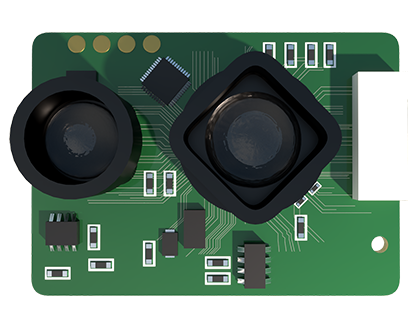
* Resolution: The smallest detectable change in distance, often in the sub-micron range for high-end models.
* Sampling Rate/Speed: The frequency at which measurements are taken, critical for high-speed production lines or dynamic motion analysis.
* Spot Size: The diameter of the laser point on the target. A smaller spot allows for measurement of finer details or edges.
* Linearity: The deviation of the sensor's output from a perfectly straight line across its measuring range.
* Environmental Robustness: Factors like IP rating (for dust and water resistance), temperature stability, and resistance to vibrations are crucial for harsh industrial environments.
Beyond specifications, the nature of the target surface significantly impacts performance. Standard sensors work well on matte, diffusely reflecting surfaces like white paper or machined metal. However, measuring shiny, mirror-like, transparent, or black surfaces presents challenges. For these, specialized sensors with features like polarized light, coaxial designs, or blue-violet lasers (which are less absorbed by dark materials) are often required to ensure stable and accurate readings.
Integration into an automation system is another critical consideration. Modern laser sensors offer a variety of digital and analog outputs (e.g., EtherCAT, PROFINET, RS-485, 4-20mA, 0-10V) for seamless communication with PLCs, robots, and data acquisition systems. Built-in programmable logic and multi-point measurement functions further enhance their utility for complex inspection tasks.
In conclusion, laser displacement sensors are powerful tools that bridge the gap between physical dimensions and digital control data. Their non-contact nature eliminates mechanical wear and allows measurement of delicate or hot objects. By understanding the fundamental technology, recognizing the vast application potential, and meticulously evaluating specifications against operational demands, engineers and system integrators can harness this technology to drive improvements in product quality, manufacturing efficiency, and process reliability. As Industry 4.0 advances, these sensors will continue to be pivotal in creating smarter, more precise, and data-driven industrial ecosystems.