Square hole proximity sensors represent a specialized category of non-contact detection devices widely utilized in industrial automation, packaging machinery, and material handling systems. These sensors are engineered to detect the presence or absence of objects through a square-shaped sensing face, offering distinct advantages in applications requiring precise alignment or integration into specific mechanical designs. Unlike standard cylindrical sensors, the square hole variant facilitates easier mounting in machined slots or enclosures, enhancing stability and reducing installation complexity.
The fundamental operating principle of square hole proximity sensors is based on electromagnetic induction for inductive types or capacitive changes for capacitive types. Inductive sensors, the most common in industrial settings, generate an oscillating electromagnetic field via a coil and ferrite core arranged within the square housing. When a metallic object enters this field, eddy currents are induced on the object's surface, causing a change in the oscillation amplitude. This alteration is detected by the sensor's circuitry, which triggers a switching action—typically outputting a digital signal to a controller. The square hole design often incorporates shielding to minimize lateral interference, ensuring detection is focused perpendicular to the sensing face. This makes it ideal for applications like counting metal parts on conveyor belts or verifying component positioning in assembly lines.
Capacitive square hole proximity sensors operate by measuring changes in capacitance between the sensor's electrode and the target object. They can detect both metallic and non-metallic materials, such as plastics, liquids, or wood, by sensing shifts in dielectric properties. The square form factor allows for larger electrode surfaces, potentially increasing sensitivity for low-dielectric materials. These sensors are commonly used in level detection or material identification where environmental factors like dust or moisture are present.
Key technical aspects include sensing range, which typically ranges from 1 to 20 mm for inductive models, and response frequency, often up to several kilohertz for high-speed operations. The square hole design may also integrate temperature compensation and overload protection to ensure reliability in harsh industrial environments. Engineers often select these sensors for their mechanical robustness, as the shape resists rotation and provides consistent alignment in vibrating machinery.
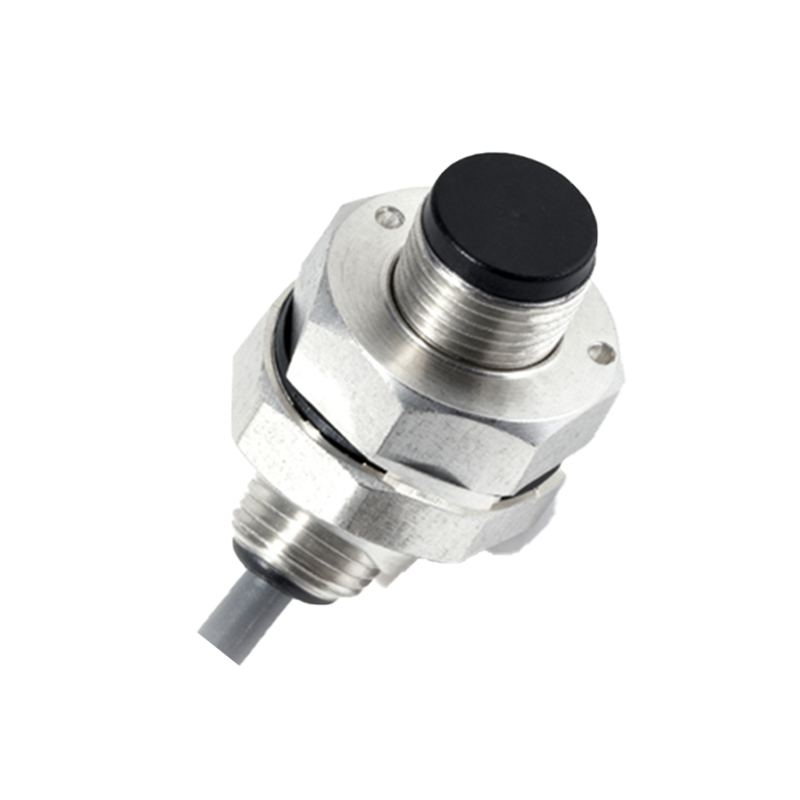
In practice, square hole proximity sensors contribute to automation efficiency by enabling non-contact detection without physical wear, reducing maintenance needs. Their design aligns with DIN or ISO standards for industrial mounting, facilitating global interoperability. As Industry 4.0 advances, these sensors are increasingly equipped with IO-Link or analog outputs for smart factory integration, allowing real-time monitoring and diagnostics. By understanding their principles, engineers can optimize system designs for precision, safety, and productivity in diverse industrial sectors.