In the realm of industrial automation, proximity sensors play a pivotal role in enabling non-contact detection, ensuring efficiency, safety, and reliability. Among the myriad of options available, the Proximity Sensor M400 stands out as a robust and versatile solution designed to meet the demanding requirements of modern manufacturing and processing environments. This article delves into the technical specifications, operational principles, application scenarios, and key advantages of the M400, providing a detailed overview for engineers and technicians seeking to optimize their sensing systems.
The Proximity Sensor M400 is an inductive-type sensor, engineered to detect metallic objects without physical contact. It operates on the principle of electromagnetic induction, where an oscillator generates a high-frequency electromagnetic field from its sensing face. When a metallic target enters this field, eddy currents are induced in the target, causing a change in the oscillation amplitude. This change is detected by the sensor's circuitry, which then triggers a switching action—typically outputting a signal to a programmable logic controller (PLC) or other control systems. The M400 is renowned for its high switching frequency and precise detection capabilities, making it ideal for applications involving fast-moving parts or precise positioning.
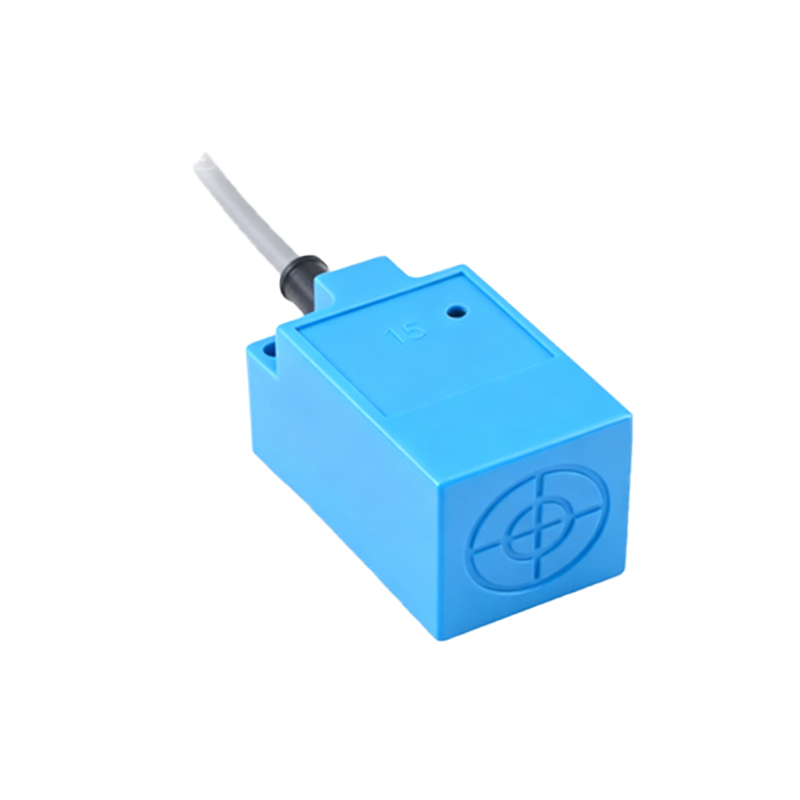
One of the defining features of the M400 is its rugged construction. Housed in a stainless-steel or nickel-plated brass body, it offers exceptional resistance to mechanical stress, vibrations, and harsh industrial conditions, including exposure to oils, coolants, and dust. Many models are rated with IP67 or higher ingress protection, ensuring reliable operation in wet or dirty environments. The sensor is available in various form factors, such as cylindrical threaded barrels (e.g., M12, M18, M30 sizes) or rectangular shapes, allowing for flexible integration into diverse machinery setups. Electrical configurations include both NPN (sinking) and PNP (sourcing) outputs, with options for normally open (NO) or normally closed (NC) contacts, catering to different control logic requirements. Operating voltage ranges typically span from 10-30V DC, compatible with standard industrial power supplies.
The sensing range of the M400 varies by model but generally falls between 2mm to 15mm for standard ferrous metals like steel. It is crucial to note that the effective sensing distance can be influenced by the target material's properties; for non-ferrous metals like aluminum or copper, the range may be reduced, often necessitating derating factors specified in the datasheet. Additionally, the M400 incorporates built-in features such as short-circuit protection, reverse polarity protection, and LED status indicators, enhancing its durability and ease of maintenance. Temperature stability is another strong suit, with operational ranges typically from -25°C to +70°C, ensuring performance consistency across seasonal changes or in thermally challenging settings.
Application-wise, the Proximity Sensor M400 finds extensive use across multiple industries. In automotive manufacturing, it is employed for part presence verification on assembly lines, robot positioning, and end-of-arm tooling detection. In packaging machinery, it monitors fill levels, counts products, and detects cap placement. Material handling systems utilize it for pallet positioning, conveyor belt jam detection, and automated guided vehicle (AGV) navigation. The food and beverage sector benefits from its hygienic designs (often with FDA-compliant materials) for bottle cap sensing or container tracking. Moreover, in metalworking, the M400 aids in tool breakage detection, spindle positioning, and CNC machine automation. Its immunity to ambient light and sound interference makes it superior to optical or ultrasonic sensors in many metallic, oily, or noisy environments.
When selecting and installing the M400, several best practices should be followed. First, ensure the sensor is mounted securely to minimize vibration-induced false triggers. Maintain the recommended clearance from surrounding metal objects (typically 1-2 times the sensor diameter) to prevent shielding effects. For flush-mounted models, they can be installed level with metal surfaces, whereas non-flush versions require a free space around the sensing face. Wiring should adhere to manufacturer guidelines, using shielded cables in electrically noisy areas to prevent electromagnetic interference. Regular testing with the intended target material during commissioning is advised to verify detection consistency. For maintenance, periodic cleaning of the sensing face from debris and checking for physical damage can prolong service life.
Compared to alternatives like capacitive or photoelectric sensors, the M400 excels in environments where only metals need detection, offering higher precision and resistance to contaminants. Its main limitations include inability to detect non-metallic objects and potential interference from adjacent metallic structures, which can be mitigated through proper installation. Future trends may see the integration of IO-Link or other industrial communication protocols in advanced versions, enabling predictive maintenance and data exchange for Industry 4.0 initiatives.
In conclusion, the Proximity Sensor M400 represents a cornerstone technology in industrial sensing, combining durability, accuracy, and versatility. By understanding its technical nuances and application strategies