Laser sensors are pivotal components in modern industrial automation, offering high precision, reliability, and versatility. This article explores common laser sensor schematics, their operational principles, and typical applications across various sectors. Understanding these diagrams is essential for engineers and technicians involved in system design, installation, and maintenance.
One of the most fundamental schematics is the through-beam laser sensor setup. This configuration consists of two separate units: a transmitter and a receiver. The transmitter emits a continuous or modulated laser beam, which is detected by the receiver positioned opposite. When an object interrupts the beam, the receiver triggers an output signal. This simple yet effective design is widely used for object detection, counting, and safety curtains in manufacturing lines. The schematic typically includes symbols for the laser diode, phototransistor or photodiode in the receiver, power supply connections, and output switching circuits. Key advantages include long sensing distances (often exceeding 100 meters) and high immunity to ambient light interference.
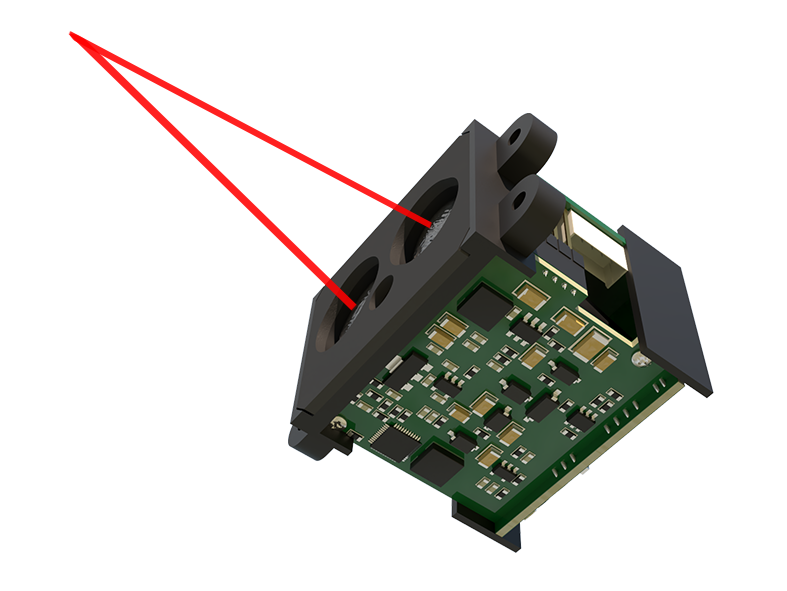
Another prevalent schematic is the retro-reflective laser sensor. In this arrangement, both the transmitter and receiver are housed in a single unit. The laser beam is directed toward a reflector, such as a corner-cube retroreflector, which bounces the beam back to the receiver. Object detection occurs when the reflected beam is blocked. The schematic illustrates internal components like the laser emitter, receiving lens, signal processing IC, and often a polarization filter to distinguish the reflected beam from stray light. This setup is common in packaging, material handling, and automated guided vehicles (AGVs) where space is limited, offering sensing ranges typically up to 30 meters.

Diffuse reflective laser sensors, or proximity sensors, represent a more compact schematic. Here, the sensor emits a laser beam and detects the light scattered back from the target object itself. The diagram details the optical path, including the emitter, receiver aligned at a specific angle, and often background suppression technology via triangulation. Components such as analog-to-digital converters (ADCs) and microcontrollers for distance calculation are highlighted. These sensors are ideal for detecting small objects, color marks, or precise positioning in robotics and assembly systems, with ranges usually under 2 meters.
Advanced schematics include laser distance sensors and profile sensors. Distance sensors, based on time-of-flight (ToF) or phase-shift principles, feature complex diagrams with pulsed laser drivers, high-speed detectors, and timing circuits. They are used in level monitoring, dimension checking, and collision avoidance. Profile sensors, or laser line scanners, incorporate rotating mirrors or laser line generators with CMOS/CCD arrays, depicted in schematics showing scanning mechanisms and data interfaces like Ethernet or USB. These enable 3D contour measurement in quality control and reverse engineering.
Each schematic emphasizes electrical connections, such as power inputs (12-24V DC), output types (NPN/PNP, analog, IO-Link), and protective circuits against overvoltage or electromagnetic interference. Proper interpretation ensures optimal sensor selection—considering factors like response time, resolution, and environmental conditions (e.g., dust, vibration).
In practice, integrating these sensors requires adherence to schematics for wiring, grounding, and shielding to prevent noise. For instance, through-beam sensors may need alignment aids in diagrams, while diffuse sensors often include potentiometer symbols for sensitivity adjustment. Emerging trends show schematics incorporating IoT connectivity, with wireless modules or cloud interfaces for predictive maintenance.
Overall, mastering laser sensor schematics empowers professionals to enhance automation efficiency, reduce downtime, and innovate in fields from automotive to pharmaceuticals. Always refer to manufacturer datasheets for specific details, as designs evolve with technology advancements.