Capacitive sensor laser cutting represents a sophisticated integration of sensing technology and precision manufacturing, widely applied in the electrical engineering industry. This technology utilizes capacitive sensors to detect material surfaces and positions, enabling high-precision laser cutting processes. Capacitive sensors operate based on changes in capacitance between the sensor and the target material. When the distance or dielectric properties of the material alter, the sensor generates electrical signals that guide the laser cutter for accurate adjustments. This method ensures minimal material waste and enhanced cutting quality, particularly for delicate components in electrical systems.
In electrical engineering, capacitive sensor laser cutting is commonly used for processing conductive and non-conductive materials, such as copper plates, insulating films, and composite substrates. The non-contact nature of capacitive sensors prevents damage to sensitive surfaces, making it ideal for manufacturing circuit boards, transformers, and other precision electrical parts. For instance, in PCB production, capacitive sensors help maintain consistent cutting depths and avoid over-cutting, which could compromise circuit integrity. Additionally, this technology supports real-time monitoring, allowing for immediate corrections during high-speed operations.
The advantages of capacitive sensor laser cutting include high accuracy, efficiency, and adaptability. Compared to traditional mechanical cutting, it reduces tool wear and operational costs. Engineers can program the system for complex patterns, enabling mass customization in electrical component fabrication. However, challenges such as environmental interference (e.g., humidity or temperature fluctuations) may affect sensor performance. To mitigate this, advanced systems incorporate calibration algorithms and shielding techniques.
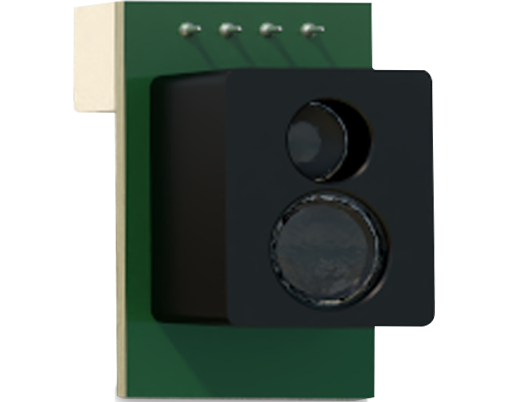
Looking ahead, trends in automation and Industry 4.0 are driving further innovations in capacitive sensor laser cutting. Integration with AI and IoT enables predictive maintenance and smarter production lines, boosting productivity in electrical manufacturing. As materials evolve, this technology is expected to expand into emerging areas like flexible electronics and renewable energy systems. Overall, capacitive sensor laser cutting plays a pivotal role in advancing electrical engineering, offering a reliable solution for precision-driven applications.
